



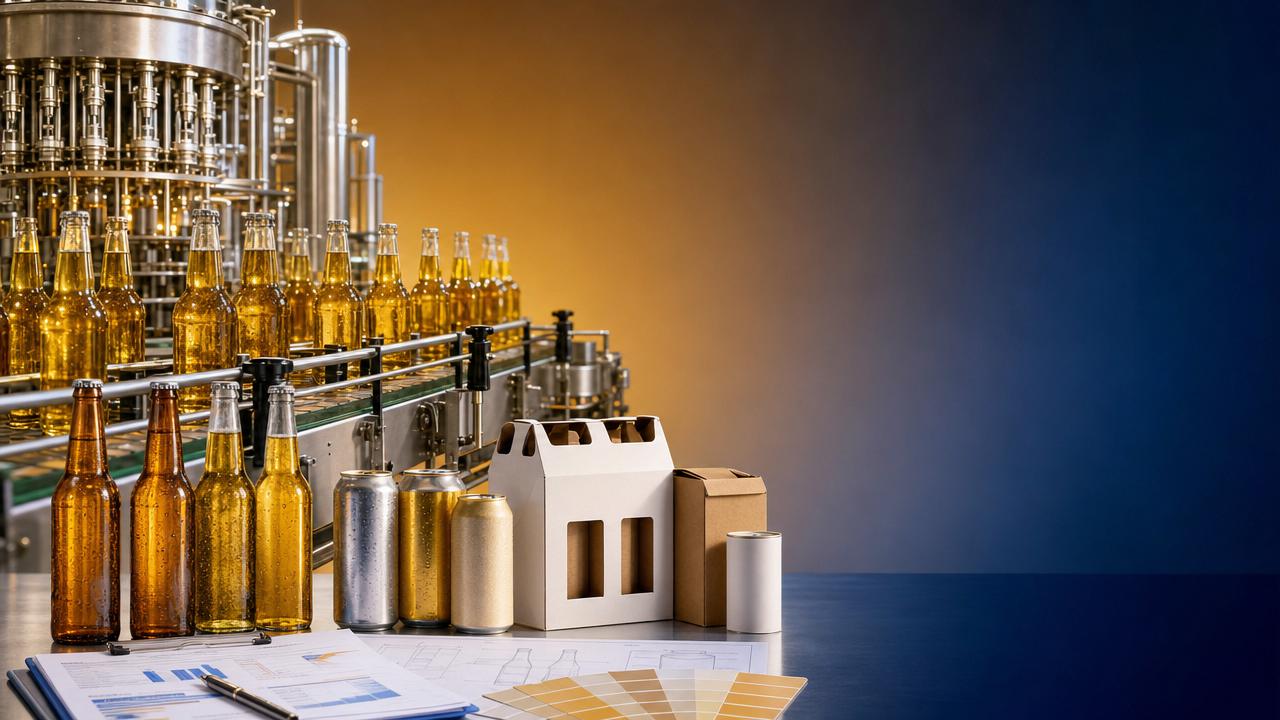
Choosing a trustworthy Chinese beer factory for private label is about more than price—it directly affects product quality, delivery stability, regulatory compliance and your brand reputation. For importers, the most reliable partner is usually not the supplier with the lowest quote, but the one that can prove consistent brewing capability, transparent quality control, customization competence and real export experience. This article explains how to judge a Chinese beer manufacturer in practical business terms before you commit to a long-term supply relationship.
What Are Importers Really Trying to Verify?
When buyers search for a Chinese beer factory for private label, they are usually not looking for beer styles alone. They want to know whether a supplier can protect margins, meet deadlines and support stable market growth.
In other words, reliability means more than having a brewery and a product catalog. It means the manufacturer can repeatedly deliver the same taste, packaging quality, documents and production schedules across multiple orders.
For a private label importer, one failed shipment can create retailer complaints, customs delays, wasted marketing budgets and damage to consumer trust. That is why supplier evaluation should focus on operational proof rather than sales promises.
Start with Brewing Capability, Not Just Product Variety
A large product list may look impressive, but reliability begins with technical brewing strength. A capable manufacturer should clearly explain its brewing process, raw material standards, recipe development logic and quality consistency measures.
Ask whether the factory produces classic lager, wheat beer, low-calorie options, fruit beer and specialty functional beer with separate formulation control. A supplier that manages multiple beer categories well usually has stronger process discipline and product development ability.
Importers should also ask how the brewery controls flavor stability between batches. This matters especially for private label business, because repeat customers expect the same drinking experience every time they buy your brand.
If the answers remain vague, or if samples from different batches show obvious taste differences, that is a warning sign. A reliable Chinese beer factory for private label should discuss brewing details confidently and consistently.
Which Quality Certifications and Systems Actually Matter?
Many importers make the mistake of only checking whether a factory has a business license. That is not enough. You need to understand whether the manufacturer follows documented quality systems that reduce production and compliance risks.
Relevant certifications may include food safety management systems, hygiene controls and export-related documentation standards. Depending on your market, you may also need support for ingredient declarations, label compliance and testing reports.
Ask how raw materials are inspected, how in-process checks are recorded and how finished products are released. A professional manufacturer should have a structured answer rather than a general statement that “quality is guaranteed.”
It is also useful to ask whether the factory can provide third-party test reports, shelf-life verification and alcohol content consistency records. These materials help importers evaluate whether the supplier can support serious retail or distribution channels.
Can the Manufacturer Handle Private Label Customization Smoothly?
Private label success depends on more than putting your logo on a can. The right brewery should support formula selection, packaging adaptation, positioning guidance and practical coordination between branding and production requirements.
For example, can the supplier help you choose between glass bottles, cans or other packaging based on your target market? Can they advise on minimum order quantities, artwork limitations and transit-friendly packaging configurations?
A dependable Chinese beer factory for private label should also explain its OEM or ODM workflow clearly. That includes sample confirmation, formula approval, packaging review, lead times and mass-production checkpoints.
If a factory says yes to every request immediately without discussing technical limits, that may indicate weak project management. Reliable partners usually balance flexibility with realistic production guidance, which protects both parties from costly mistakes.
How Important Is Export Experience?
Export experience is one of the strongest indicators of reliability because it reflects whether the manufacturer understands practical international trade requirements, not just domestic production. Brewing good beer is only part of the job.
An export-ready supplier should know how to prepare shipping documents, coordinate labels for different markets and manage timelines for production, inspection and loading. They should also understand the consequences of delays at customs or ports.
Ask which countries or regions they already serve, what types of customers they support and how they handle market-specific requirements. Experience with distributors, supermarkets, bars and retail chains often shows stronger operational maturity.
If the factory has never handled private label export orders at scale, the risk is not always visible at the quotation stage. Problems usually appear later in documentation, packaging details or delivery coordination.
How Can Samples Reveal More Than Sales Brochures?
Samples are one of the most practical tools for evaluation, but they should be assessed methodically. Importers should not only ask whether the beer tastes good, but whether the quality feels stable, market-appropriate and commercially consistent.
Taste the beer with your target consumers or channel partners in mind. A product that is personally enjoyable may still be unsuitable for your market if the flavor profile, alcohol level or sweetness does not fit local demand.
Also compare more than one sample if possible. Different styles, or samples from different production times, can reveal whether the brewery has disciplined control across its portfolio rather than a single showcase product.
Packaging samples matter as well. Look at print clarity, sealing quality, labeling precision and overall shelf appearance. Private label buyers need a supplier that understands that packaging quality directly influences perceived brand value.
What Should You Check During a Factory Audit or Video Review?
If you can visit the site, a factory audit gives valuable insight. If travel is not possible, a detailed live video review can still reveal a lot about actual production conditions and management transparency.
Focus on cleanliness, equipment condition, storage organization, filling lines and traceability practices. Observe whether staff follow structured procedures or appear to work in a loose, improvised way.
Ask to see brewing areas, filtration or fermentation zones, packaging lines, warehouses and quality inspection points. A reliable manufacturer usually has no problem walking buyers through these operational stages in a clear order.
Pay attention to how specific the team is when answering technical and scheduling questions. Factories that truly understand their operations tend to provide direct, measurable answers rather than switching quickly back to price discussion.
Why Delivery Stability Matters as Much as Product Quality
Even excellent beer becomes a business problem if delivery is unpredictable. Importers should ask detailed questions about lead times, production planning, peak-season capacity and contingency arrangements.
A reliable brewery should explain how many orders it handles at one time, how it schedules private label projects and what happens if raw material supply or packaging components are delayed. This is especially important for promotional launches or seasonal demand.
You should also ask about minimum order quantities and how they relate to production efficiency. Sometimes a very low MOQ sounds attractive, but it may lead to unstable unit costs or weaker scheduling priority.
For long-term import business, consistency is usually more valuable than aggressive promises. A supplier that sets realistic timelines and meets them reliably is often a better partner than one that overcommits to win the deal.
How Transparent Is the Manufacturer in Commercial Communication?
Reliability is visible in everyday communication. The way a manufacturer handles inquiries, revisions and problem-solving often predicts how they will perform after payment is made and production begins.
Strong suppliers usually provide structured quotations, clear specification sheets and timely answers to technical questions. They do not avoid difficult topics such as claim handling, production tolerance or packaging limitations.
Watch for warning signs such as inconsistent answers, unclear pricing logic, missing documentation or repeated pressure to move forward without confirming details. These issues often become larger after the first order is placed.
For a Chinese beer factory for private label, responsiveness should be paired with professionalism. Quick replies are helpful, but precise and accountable communication is what truly reduces importer risk.
Should Price Be a Major Factor?
Price always matters, but it should be interpreted in context. A low unit cost may hide weaker ingredients, unstable filling quality, limited export support or a higher chance of shipment delays and rework.
Instead of asking only who is cheapest, ask what the quotation includes. Does it cover packaging support, formula adjustment, document preparation, testing assistance or after-sales coordination? These factors affect total project cost.
Importers should also compare cost against expected retail positioning. If your goal is to build a quality-focused private label brand, an excessively cheap supplier may undermine the very market image you are trying to create.
In most cases, the better decision is the manufacturer that offers dependable value: stable quality, workable customization, reliable delivery and fewer hidden risks over time.
What Does a Good Long-Term Beer Manufacturing Partner Look Like?
The best supplier relationship is not purely transactional. A strong manufacturing partner supports product planning, adapts to channel needs and helps importers build a brand that can grow across multiple orders and markets.
For example, breweries with broad product capabilities can help importers expand from classic lager into wheat beer, sugar-free low-calorie beer, fruit-flavored beer or specialty functional lines as market demand evolves.
That flexibility is useful for distributors supplying restaurants, supermarkets, bars and retail chains with different consumer needs. It allows your private label portfolio to develop without changing factories every time you launch a new item.
When a brewery combines brewing expertise, OEM or ODM service, wholesale supply capacity and export awareness, it becomes more than a vendor. It becomes part of your growth strategy.
A Practical Checklist Before You Sign
Before committing to a supplier, importers should confirm several points clearly. Review product consistency, certifications, packaging capability, export experience, communication quality, lead times and sample performance.
Request supporting materials where possible, including test reports, specification sheets, packaging references and production workflow details. If available, ask for customer case experience in channels similar to your own business model.
It is also wise to start with a manageable initial order and defined specifications rather than a large first commitment. This helps both parties prove execution ability before scaling the partnership.
The goal is not simply to find a factory that can produce beer. The goal is to find a Chinese beer factory for private label that can protect quality, support your market needs and operate reliably over the long term.
Conclusion
Importers can judge the reliability of a Chinese beer manufacturer by focusing on evidence, not just claims. The most dependable partners show real brewing competence, disciplined quality systems, practical customization support and proven export execution.
For private label buyers, the right supplier helps reduce operational risk while improving brand consistency and commercial confidence. That matters far more than a low quotation on its own.
If you are evaluating a Chinese beer factory for private label, use a structured approach: test the product, review the systems, assess communication and verify export readiness. A careful selection process today creates a stronger, more profitable beer brand tomorrow.
Thank you very much for writing to us. Please leave your message and contact information, we will reply to you within 24 hours.