



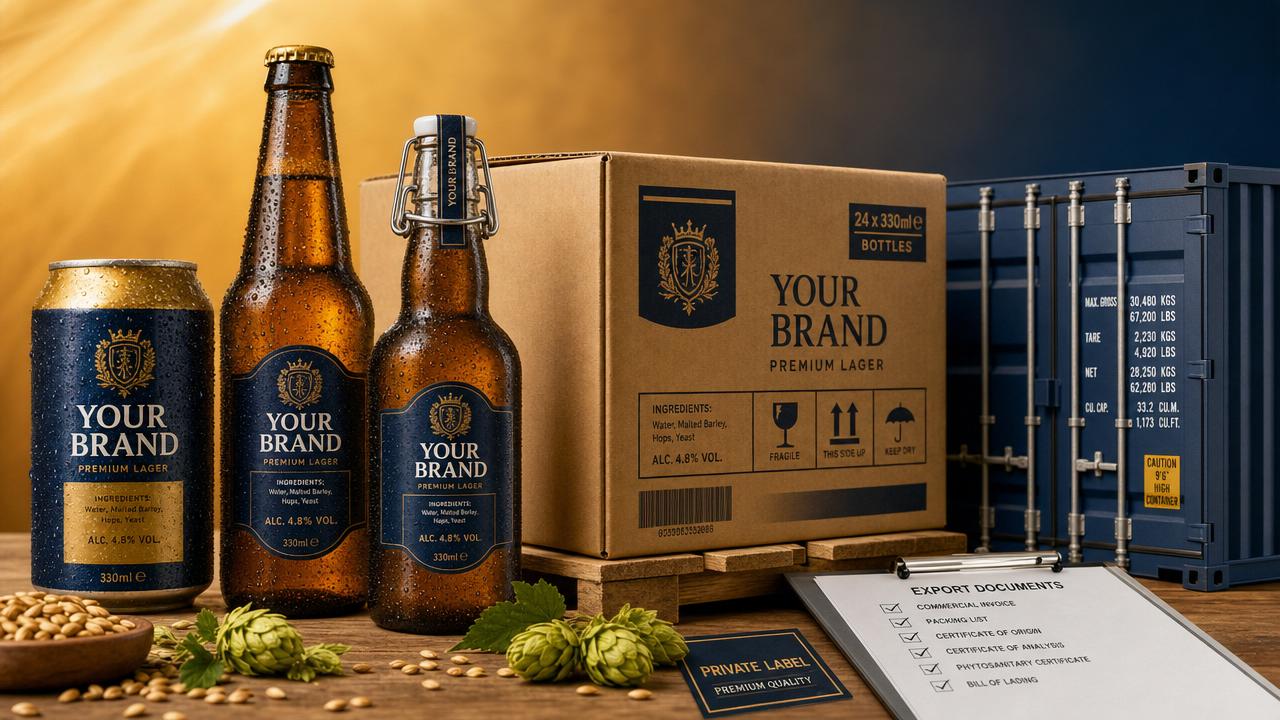
A first private label beer order can look simple on paper, yet many buyers miss critical details that affect cost, quality, compliance, and repeat sales. Working with a reliable Chinese beer factory for private label is not just about choosing flavors or packaging—it also means aligning on formulation, MOQ, labeling rules, shelf life, and market positioning. Understanding these overlooked factors early helps distributors and brand owners avoid delays and build a stronger product launch.
Why the First Order Often Becomes More Complex Than Expected
Many importers assume the first step is flavor selection. In practice, the first private label beer order usually succeeds or fails on planning details. A Chinese beer factory for private label must translate your brand idea into a manufacturable, compliant, and commercially viable product.
The risk is highest when buyers focus only on can design and unit price. Beer is a time-sensitive beverage with formulation, packaging, transport, and retail performance considerations. Missing one decision early can create relabeling costs, customs delays, or a product that does not fit the target channel.
Commonly overlooked areas in first-time sourcing
- Mismatch between expected taste profile and what remains stable after production, shipping, and shelf storage.
- MOQ assumptions that do not match packaging format, carton design, or ingredient sourcing realities.
- Label claims such as sugar-free, low-calorie, or functional positioning that require careful wording and market-specific review.
- Insufficient discussion about pasteurization, shelf life targets, and how the beer will be sold in bars, supermarkets, or online channels.
- Ignoring freight efficiency, container loading plans, and breakage or dent risk in export packaging.
For this reason, experienced buyers do not ask only “What styles do you make?” They also ask how the brewery manages recipe consistency, packaging compatibility, export documentation, and channel-specific customization.
What Should You Confirm With a Chinese Beer Factory for Private Label First?
Before discussing artwork approval, confirm the technical and commercial basics. This is where a Chinese beer factory for private label can help define what is realistic for your budget, launch timing, and market positioning.
The table below highlights the core decisions that should be fixed before mass production starts.
If these items remain vague, even a well-designed label may end up attached to the wrong product strategy. Clear early alignment protects both launch timing and margin.
A practical first-order checklist
- Define your sales channel first: supermarket, restaurant, bar, e-commerce, or mixed distribution.
- Choose one hero SKU before expanding into multiple flavors or formats.
- Confirm whether your market prefers easy-drinking lager, wheat beer, fruit-flavored beer, or better-for-you options such as sugar-free low-calorie beer.
- Ask the factory to review label content before final print approval.
- Discuss target shelf life, storage conditions, and shipping route before sample confirmation.
How Product Positioning Changes the Whole Order Plan
Not all private label beer projects should start with the same formula. A bar-focused craft line differs from a supermarket value product. The wrong positioning leads to price resistance or poor repeat purchase, even when the liquid quality is acceptable.
Different channels need different beer concepts
- Restaurants often need approachable beer styles with broad food-pairing appeal and steady supply.
- Bars may prefer stronger flavor identity, rotating specials, or differentiated wheat and fruit beer options.
- Supermarkets usually require clear shelf impact, stable pricing, and packaging optimized for display efficiency.
- Online retail benefits from visual packaging, manageable shipping units, and products with strong gifting or novelty appeal.
Jinpai Beer’s broad product range makes this planning easier. A buyer can compare classic lager for mass appeal, German wheat for a softer premium image, fruit-flavored beer for younger consumers, or sugar-free low-calorie beer for health-conscious positioning without changing suppliers mid-process.
Which Product Type Fits Your Market Best?
When evaluating a Chinese beer factory for private label, it helps to compare beer styles against real market needs rather than trends alone. The table below provides a practical selection view for first orders.
This comparison shows why first-time buyers should avoid building too many SKUs at once. One carefully selected product type often creates a stronger market test than four underdefined variants.
What Packaging Details Get Missed Most Often?
Packaging is not only a branding topic. It directly affects filling compatibility, minimum order size, shipping efficiency, retail acceptance, and shelf damage risk. Many first orders become expensive because the package looks right but performs poorly in logistics.
Packaging points to discuss before production
- Can versus bottle: cans are often lighter and more freight-efficient, while bottles may fit traditional or premium positioning in some markets.
- Volume size: 330 ml, 355 ml, 500 ml, and other formats should align with local buying habits and tax structures.
- Secondary packaging: trays, cartons, and mixed packs should match warehouse handling and retail display methods.
- Print method and finish: design choices can influence lead time, material availability, and reordering flexibility.
A capable Chinese beer factory for private label should explain these trade-offs instead of only quoting a single packaging option. That guidance is especially valuable for distributors entering a new market segment.
How MOQ, Cost, and Reorder Strategy Should Be Balanced
One of the biggest first-order mistakes is chasing the lowest unit price without understanding total landed cost. Lower factory pricing can be offset by slow inventory turnover, overproduction, packaging waste, or product mismatch.
The table below shows how procurement choices affect cost control beyond the headline quotation.
A strong launch plan usually combines manageable MOQ, one or two well-defined SKUs, and a reorder path that improves cost after market validation. That approach is often safer than a large first shipment with uncertain demand.
Why Compliance and Shelf Life Should Be Discussed Early
Compliance is often treated as a final artwork issue, but it should be part of the sourcing discussion from the beginning. Different markets may require specific statements on alcohol content, ingredients, producer information, warning text, barcode format, or nutritional presentation.
Main compliance checkpoints for private label beer
- Confirm the importing market’s label language and mandatory declaration rules before printing.
- Review all health-related, low-calorie, sugar-free, or functional claims with caution.
- Match shelf life expectations with the selected production process, storage plan, and transport time.
- Clarify whether your distributors or retailers need extra batch tracking or product documentation.
This is where supplier communication matters. A Chinese beer factory for private label should not act as a print vendor only. It should help you identify what still needs market-side verification before mass production begins.
How Jinpai Beer Supports More Reliable First Orders
For a first project, supplier flexibility is often as important as brewing capability. Jinpai Beer combines R&D, production, and distribution experience across craft beer categories, which is useful when a buyer needs both product development input and practical export execution.
Its portfolio covers classic lager, German wheat, sugar-free low-calorie beer, fruit-flavored beer, and functional specialty beer concepts. That range allows importers, wholesalers, supermarket suppliers, and bar distributors to evaluate multiple positioning routes within one manufacturing partner.
What buyers typically need from an OEM/ODM beer partner
- Support in narrowing product direction based on target channel and price band.
- Ability to customize formulation, packaging, and order structure for wholesale or branded retail plans.
- Clear communication on samples, lead time, export packing, and repeat order consistency.
- A practical path from initial concept to online and offline channel rollout.
Because Jinpai Beer serves restaurants, supermarkets, bars, and multiple retail channels, discussions can be tied to real sales contexts rather than generic product descriptions alone.
FAQ: What Buyers Usually Ask Before the First Private Label Beer Shipment
How do I choose the right first SKU?
Start with your main sales channel and target consumer, not with the broadest product catalog. If you need mass retail rotation, classic lager may be the safest first entry. If you need differentiation in bars or specialty stores, German wheat or fruit-flavored beer may create a stronger story.
What should I ask a Chinese beer factory for private label about samples?
Ask whether the sample reflects the final commercial formula, whether packaging materials will match production format, and whether any flavor changes may occur after scale-up. Also discuss sample review standards internally so feedback is specific and actionable.
Is low price the best starting point for a first order?
Usually not. The better approach is value control: acceptable unit cost, workable MOQ, realistic lead time, compliant labeling, and a product likely to reorder. A slightly higher initial price can be more profitable if the SKU turns faster and avoids correction costs.
What delivery issues should I prepare for?
Plan for artwork approval time, packaging material readiness, production scheduling, and shipping transit. Beer projects can also be delayed by last-minute label edits or changes to carton specifications, so freeze core decisions early.
Why Choose Us for Your First Private Label Beer Project
A successful first order needs more than brewing capacity. It needs a partner that can connect product concept, channel fit, packaging practicality, and export execution. Jinpai Beer supports private label buyers with OEM/ODM service, wholesale supply, and customized solutions across multiple beer categories.
If you are evaluating a Chinese beer factory for private label, you can discuss specific points such as product selection, flavor direction, packaging format, MOQ planning, label content, sample support, delivery schedule, and channel-based customization.
Whether you need a classic lager for supermarkets, a German wheat line for restaurants, a fruit-flavored launch for retail promotion, or a sugar-free low-calorie concept for modern consumers, the next step is to confirm your target market and build the right first SKU around it.
Contact us to review your product idea, packaging plan, expected order volume, certification or labeling questions, and sample requirements before production. Early alignment will help you reduce risk, control cost, and launch with greater confidence.
Thank you very much for writing to us. Please leave your message and contact information, we will reply to you within 24 hours.