



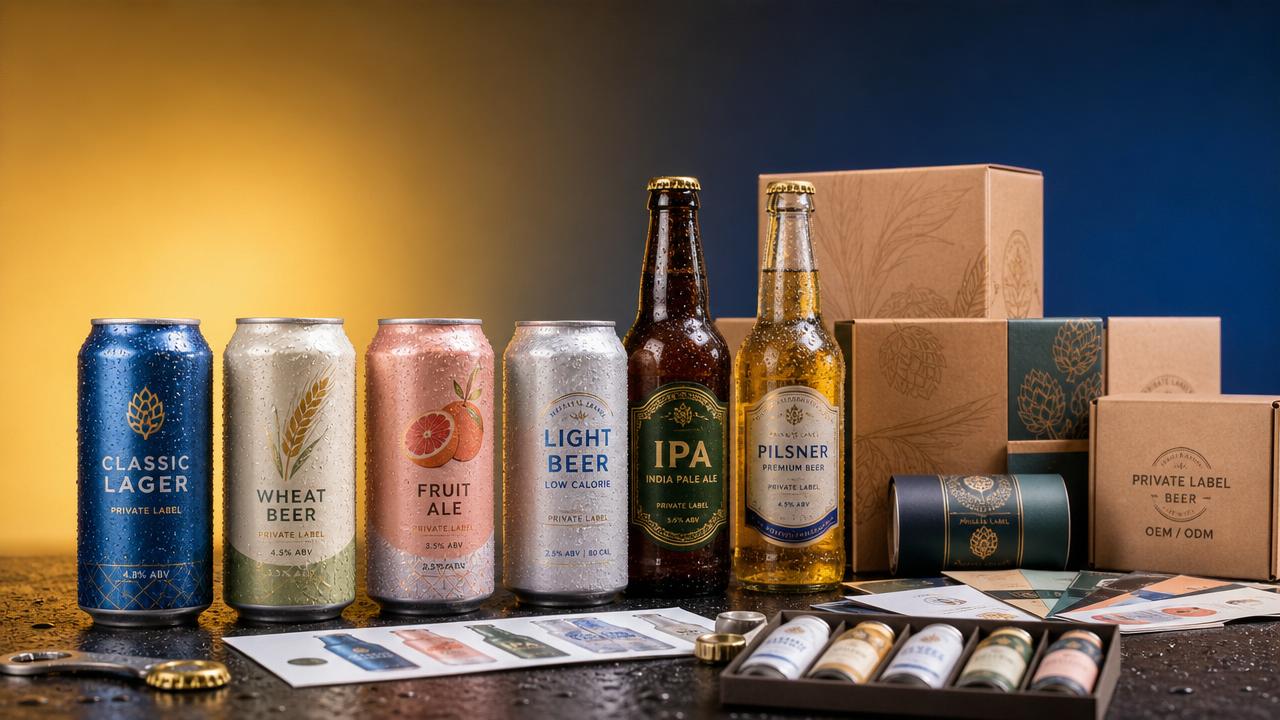
For new distributors exploring fresh growth opportunities, working with a Chinese beer factory for private label can be a practical way to test market demand with lower upfront risk. From classic lager to fruit and functional beers, China’s flexible manufacturing and OEM/ODM capabilities make it easier to build a differentiated product line while balancing cost, quality and speed to market.
For importers, regional wholesalers, bar suppliers, and retail channel builders, the real question is not simply whether China can produce beer. It is whether a Chinese beer factory for private label can help launch a brand that fits local taste, margin targets, and channel strategy without locking the distributor into oversized commitments.
The answer is often yes, but only when the project is evaluated with clear commercial criteria. Product positioning, MOQ, packaging flexibility, lead time, shelf stability, and formula adaptation all matter. New distributors usually succeed when they start with 2 to 5 SKUs, test 1 or 2 channels first, and work with a supplier that can support both OEM and market-specific customization.
Why Private Label Beer from China Is Gaining Attention
Private label beer is no longer limited to budget supermarket products. In many markets, it now includes craft-inspired lager, wheat beer, fruit beer, low-calorie options, and functional specialty styles. This shift creates room for new distributors to enter with a focused portfolio rather than a broad, expensive brand launch.
A Chinese beer factory for private label can be attractive because it combines manufacturing scale with product variety. Instead of developing every process from zero, distributors can often choose from proven base recipes, then adjust alcohol level, sweetness, fruit profile, bitterness, can design, or packaging format for local retail and on-trade demand.
Lower-entry testing compared with building an in-house brand
For a new distributor, the first 6 to 12 months are usually about validation. A private label program reduces the need for brewing investment, packaging equipment, and full product development staffing. It also shortens the path from concept to launch, often from several months to a more manageable 4 to 8 weeks after artwork and formula approval.
That matters when the goal is not nationwide rollout on day one, but controlled market learning. A smaller first order, for example 1 container with mixed SKUs or a limited can run, can reveal which flavor and format actually move in supermarkets, bars, restaurants, or online channels.
Broader style coverage for different channel strategies
Jinpai Beer operates across R&D, production, and distribution of craft beer, with products ranging from classic lager and German wheat to sugar-free low-calorie beer, fruit-flavored beer, and functional specialty beers. For distributors, this matters because channel demand is rarely uniform.
A supermarket chain may need approachable 330ml or 500ml cans in 3 flavor variants. A bar group may prefer stronger visual branding and a more distinctive taste profile. E-commerce often rewards novelty, where fruit beer or functional concepts can produce faster trial rates than standard mainstream lager.
Typical reasons new distributors test China supply
- Lower upfront product development cost
- Access to multiple beer styles from one manufacturing source
- Faster OEM/ODM execution than building from scratch
- Flexible packaging for retail, horeca, and online sales
- Ability to test 2 to 5 SKUs before scaling to 10 or more
The table below shows how private label testing from China compares with a fully self-developed launch model for new distributors.
The practical advantage is clear: private label sourcing lets a distributor validate positioning first, then scale purchasing later. That sequence is often safer than investing heavily before knowing whether the market prefers lager, wheat, fruit flavors, or better-for-you beer options.
What New Distributors Should Evaluate Before Testing
Not every private label opportunity is worth pursuing. The right decision depends on whether the factory can support your target market in terms of formulation, packaging, documentation, and commercial flexibility. A low unit price alone is not enough if the product does not match local shelf expectations or import requirements.
1. Product-market fit by channel
Distributors should begin by matching beer style to channel behavior. A restaurant or bar account may prioritize taste identity and repeat order potential. A supermarket may focus more on price band, packaging impact, and turnover. Online channels often perform better with eye-catching flavor concepts and limited-edition positioning.
As a starting framework, many new distributors test 3 core segments: easy-drinking lager for volume, wheat beer for premium familiarity, and 1 fruit or functional SKU for differentiation. This three-part portfolio often covers both mainstream demand and trial-driven purchasing.
2. MOQ and first-order structure
MOQ is one of the most important filters when choosing a Chinese beer factory for private label. If the minimum order is too high, the distributor may be forced into excess inventory before channel feedback is available. If MOQ is too fragmented, production efficiency may suffer and unit cost may rise sharply.
A sensible first order for a new market is often built around 1 pilot shipment, with 2 to 4 SKUs and a clear sell-through target over 60 to 120 days. This gives enough data to judge reordering speed, consumer acceptance, and pricing resilience without overexposure.
3. Shelf life, packaging, and logistics stability
Imported beer must travel well, store well, and still present well at retail. Distributors should confirm shelf life under normal shipping conditions, packaging resistance, label adhesion, and outer carton strength. Transit time can easily add several weeks, so freshness planning is a commercial issue, not just a technical one.
For canned beer, the distributor should check pack size, can volume, pallet configuration, and whether the brand needs standard retail formats such as 330ml, 355ml, or 500ml. For glass bottles, breakage protection and freight impact need closer review.
Core evaluation checklist
- Define target price band and retail position before selecting beer styles.
- Ask for sample comparison across at least 2 or 3 formulations.
- Confirm MOQ by SKU, packaging type, and artwork version.
- Review lead time for sampling, production, and export preparation.
- Check label compliance for your destination market.
- Set a 90-day sell-through review plan before placing a second order.
The next table outlines key buying factors and what a new distributor should watch closely before finalizing a supplier.
These factors determine whether testing remains low risk or becomes costly. The strongest supplier relationship is usually the one that balances customization with operational discipline, rather than promising everything without clear production boundaries.
Where China Adds Value in OEM and ODM Beer Projects
A reliable Chinese beer factory for private label brings value in three areas: speed, range, and adaptability. This is especially useful for distributors that need to launch quickly, test several concepts, or supply different customer groups under one umbrella brand strategy.
OEM for faster branded execution
OEM is often suitable when the distributor already knows the market category it wants to enter. The factory produces based on defined product and packaging requirements, while the distributor controls brand identity, pricing, and route to market. This can be efficient for classic lager, wheat beer, or proven fruit profiles.
For a launch window tied to summer promotion, holiday gifting, or a retail chain reset, execution speed matters. If packaging files, sample approval, and production planning move smoothly, a distributor can reduce time lost between concept and shelf placement.
ODM for differentiated positioning
ODM becomes more valuable when the goal is distinction. A distributor may want a sugar-free low-calorie beer aimed at wellness-conscious urban consumers, or a fruit-flavored line built for convenience stores and social drinking occasions. In that case, the supplier’s R&D support can shorten development cycles while still allowing meaningful brand differentiation.
Jinpai Beer’s product coverage is relevant here because it spans both classic and emerging styles. That gives a new distributor room to test safer volume products and higher-margin novelty products within one supply relationship instead of sourcing from multiple factories.
Examples of distributor testing strategies
- 2-SKU supermarket launch: classic lager + fruit beer
- 3-SKU bar portfolio: wheat beer + strong lager + seasonal fruit variant
- 4-SKU health-leaning concept: low-calorie beer + sugar-free beer + light fruit line + standard lager
In each case, the point is not to maximize SKU count immediately. It is to create enough variety to learn what customers reorder, what retailers display well, and what margins remain sustainable after import, tax, and promotional cost.
Common Risks and How to Control Them
Testing private label beer from China can be commercially smart, but only if the distributor treats it like a structured pilot rather than a simple buying transaction. Most early problems come from mismatch, not manufacturing alone: wrong flavor profile, wrong packaging, wrong price tier, or wrong stock planning.
Taste mismatch with local consumers
A beer that performs well in one region may not suit another. Sweetness, bitterness, carbonation feel, fruit intensity, and alcohol strength should be reviewed against local preferences. Sampling should involve more than internal staff. Ideally, 10 to 20 target buyers, retail partners, or horeca decision-makers should taste shortlisted options before first production.
Overbuying before validation
New distributors sometimes place a large opening order to reduce unit cost, but this can backfire if only 1 of 4 SKUs sells well. It is usually better to accept a slightly higher first landed cost and preserve flexibility for a second order based on real demand. Inventory aging is more expensive than moderate initial pricing pressure.
Packaging misalignment
A good liquid inside the wrong package often underperforms. If the target market favors sleek cans, but the launch uses generic bottle presentation, shelf appeal may suffer. Small packaging details such as bilingual labeling, carton count, or finish quality can influence distributor confidence and retail acceptance more than expected.
Risk-control actions for first-time buyers
- Run a sample review with channel-specific feedback before mass production.
- Limit the first order to a manageable quantity tied to a 2- to 4-month sales target.
- Use clear packaging approval checkpoints, including label text and carton details.
- Plan reorder timing before stock drops below a safe threshold.
- Track sales by SKU, channel, and reorder cycle from the first shipment onward.
When these controls are in place, importing from a Chinese beer factory for private label becomes much more measurable. Instead of betting on assumptions, the distributor makes decisions using actual movement data, customer feedback, and operational learning.
A Practical Test Model for New Beer Distributors
The most effective pilot model is usually simple. Start narrow, measure quickly, and expand only after evidence appears. This approach works well for regional importers, horeca-focused distributors, supermarket suppliers, and new beverage portfolio builders entering competitive beer categories.
Recommended 5-step launch path
- Select 2 to 4 SKUs based on channel and pricing logic.
- Approve samples and packaging with local market fit in mind.
- Place a pilot order sized for 60 to 120 days of realistic sales.
- Launch through 1 or 2 priority channels, not every channel at once.
- Review sell-through, margin, and repeat-order data before scaling.
Who benefits most from this model
This model fits distributors that want to enter beer without owning brewing assets, agents serving restaurants and bars, retailers developing house-label beverage lines, and import businesses looking for a flexible manufacturing partner. It is particularly useful where consumer interest is shifting toward variety, lower-calorie choices, and more distinctive drinking experiences.
Jinpai Beer’s OEM/ODM, wholesale supply, and customized solution model is aligned with these needs because it supports both standard category entry and more tailored product development. That gives new distributors room to start pragmatically and grow based on verified market response.
Final assessment
So, is private label beer from China worth testing for new distributors? In many cases, yes. It offers a workable route to launch with lower initial exposure, broader product choice, and faster execution than building production from the ground up. The opportunity becomes stronger when the supplier can support multiple beer styles, practical MOQ structures, and market-oriented customization.
The key is disciplined testing. Choose a Chinese beer factory for private label that understands channel requirements, can support OEM or ODM workflows, and is prepared to build around long-term cooperation rather than a one-off shipment. If you are evaluating classic lager, German wheat, sugar-free low-calorie beer, fruit-flavored beer, or functional specialty lines for your market, now is a good time to compare options, request samples, and map out a pilot order.
To explore a tailored product mix for supermarkets, bars, restaurants, or retail distribution, contact us now to discuss your private label beer plan, request product details, or get a customized solution for your target market.
Thank you very much for writing to us. Please leave your message and contact information, we will reply to you within 24 hours.