



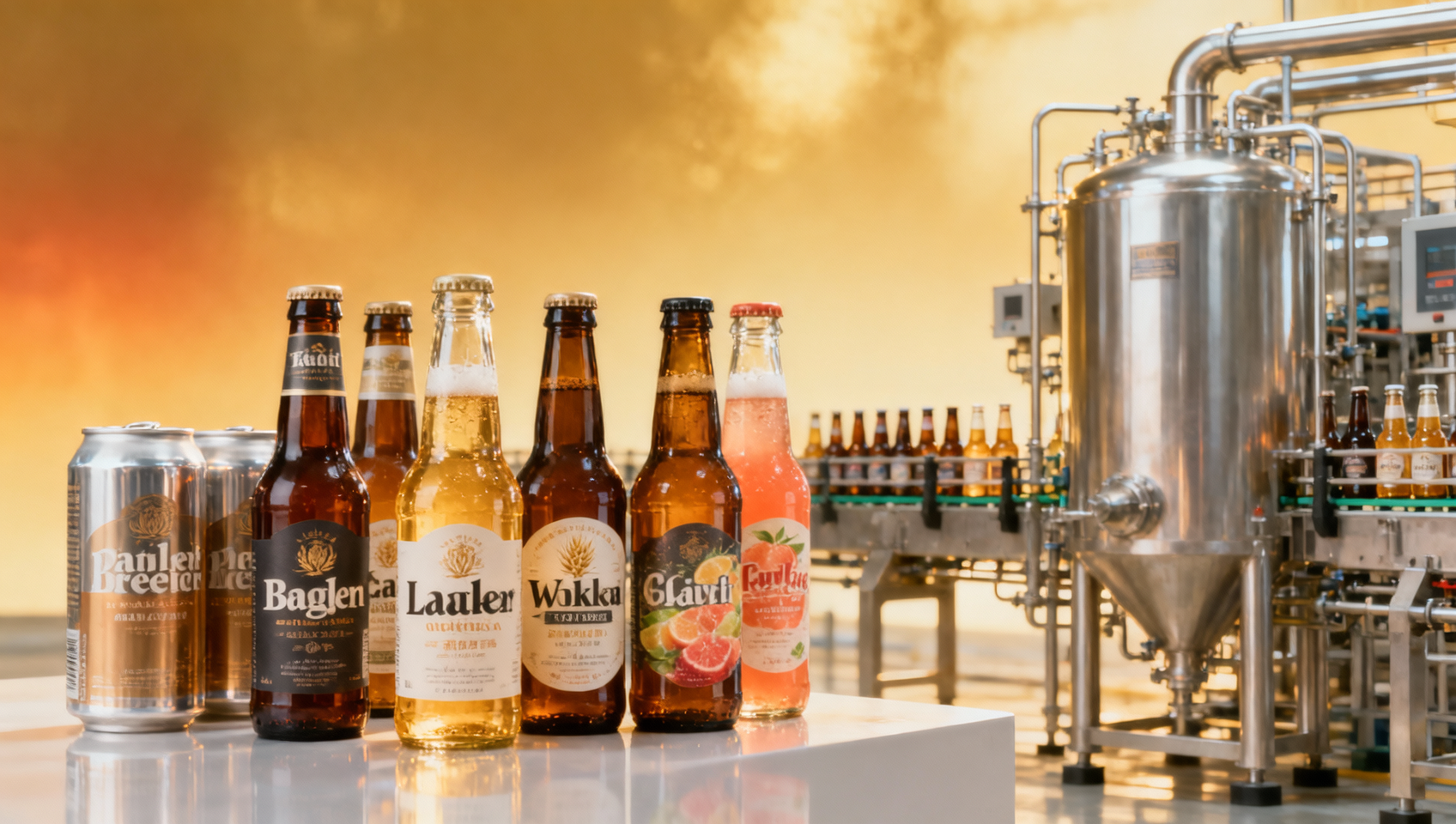
For brands seeking sharper regional positioning, a Chinese beer factory for private label can offer more than cost efficiency—it can help shape product identity, flavor profiles and packaging for local consumer demand. With flexible OEM/ODM capabilities and a broad craft beer portfolio, Jinpai Beer enables distributors and retailers to build market-relevant beer lines that stand out across supermarkets, bars and hospitality channels.
Why does regional market positioning matter in private label beer?
Private label beer is no longer just a low-price shelf option. In many markets, retailers, importers and hospitality groups use it to create local relevance, improve margin and strengthen channel identity.
That is where a Chinese beer factory for private label becomes strategically useful. The right manufacturing partner can support recipe adaptation, packaging localization and portfolio planning for different consumer groups.
Regional positioning often depends on details that generic supply cannot solve:
- Taste expectations vary. Some markets prefer crisp lager with moderate bitterness, while others favor wheat beer, fruit notes or lighter calorie profiles.
- Consumption occasions differ. Supermarket multipacks, bar draft replacement, restaurant pairing and online retail all need distinct product planning.
- Packaging signals market identity. Label design, can format, bottle style and language compliance influence whether the product looks regional, premium or mainstream.
- Price architecture must match channel reality. Entry-level, mid-tier and craft-oriented offerings require different formulation and positioning choices.
Jinpai Beer works across R&D, production and distribution of craft beer, which makes its OEM/ODM support useful for buyers who need both manufacturing execution and market-facing product logic.
How can a Chinese beer factory for private label support local demand more effectively?
A Chinese beer factory for private label can support regional positioning when it offers flexibility across formulation, packaging and order structure, not just production capacity.
Flavor portfolio adaptation
Different regions respond to different beer styles. Jinpai Beer covers classic lager, German wheat, sugar-free low-calorie beer, fruit-flavored beer and functional specialty beers. This range allows buyers to build a market-specific lineup instead of relying on a single universal SKU.
Private label packaging alignment
Regional positioning often starts on the shelf. A local-looking can design, suitable bottle format or category-specific visual language helps a new private label gain attention faster in supermarkets, convenience channels and bars.
Channel-based customization
Hospitality buyers may prioritize drinkability and repeat consumption. Retail chains may need margin discipline and broad appeal. Online sellers may prefer eye-catching flavors or seasonal limited concepts. OEM/ODM support should reflect these differences.
The table below shows how regional positioning goals can translate into product development decisions when working with a Chinese beer factory for private label.
This shows why product planning should begin with market role rather than factory output alone. A supplier that can align recipes and formats with channel objectives gives buyers stronger regional positioning.
What should distributors and retailers evaluate before choosing a factory?
Many buyers focus first on unit price. That is understandable, but it is rarely enough. For private label beer, procurement risk often comes from poor style matching, weak packaging execution, unstable lead times or unclear compliance support.
Key selection criteria
- Portfolio depth: Can the supplier support both mainstream and differentiated beer styles for multi-channel strategy?
- OEM/ODM capability: Can it adjust flavor direction, sweetness, mouthfeel, alcohol level or product concept based on target market needs?
- Packaging flexibility: Does it support formats suitable for retail, bar service, gift channels or online sales?
- Communication efficiency: Are specification confirmation, sample review and artwork coordination handled clearly and quickly?
- Supply continuity: Can the factory support repeat orders, seasonal launches and volume growth without large quality fluctuation?
Jinpai Beer’s broad craft beer range and customized solutions are especially relevant for importers and private label owners who need more than a standard stock product.
For buyers comparing several suppliers, the following table helps turn a general discussion into a practical evaluation checklist.
This checklist also prevents a common mistake: choosing a supplier that can produce beer, but cannot support a private label strategy with real regional differentiation.
Which beer styles are best for different regional positioning strategies?
Not every market should start with the same SKU. A Chinese beer factory for private label becomes more valuable when it can help buyers build a portfolio that matches local retail behavior and consumption habits.
Classic lager for broad market entry
Classic lager often works well for mass retail and general foodservice. It is easier to scale, easier to explain to consumers and suitable for markets where daily drinking and price sensitivity are strong.
German wheat for premium casual dining
German wheat can support a more imported, relaxed and premium image. It fits restaurants, bistros and beer bars that want a fuller mouthfeel and a distinct wheat profile without moving too far into niche territory.
Sugar-free low-calorie beer for health-conscious consumers
This segment is useful in urban retail, modern trade and online channels where calorie awareness and lighter drinking occasions are growing. It can also help a brand look contemporary rather than purely price-driven.
Fruit-flavored and functional specialty beers for differentiation
Fruit-flavored beer and functional specialty concepts can create trial, gifting value and social media visibility. These options are often effective for younger demographics, seasonal promotions and selective nightlife channels.
How does private label beer compare with buying standard imported brands?
Some distributors hesitate because established imported brands appear safer. However, a private label program can provide stronger pricing control, better market segmentation and higher exclusivity when managed correctly.
The comparison below helps buyers understand where a Chinese beer factory for private label may offer a better route than simply reselling standard labels.
For buyers building long-term regional presence, the customized route often creates more strategic value than simply adding another undifferentiated imported SKU.
What are the practical steps to launch a private label beer line?
A successful project needs a structured process. The goal is not just to place an order, but to reduce commercial and execution risk before market launch.
- Define market role. Decide whether the beer is for value retail, premium casual dining, bar channels, online promotion or multi-channel expansion.
- Select style direction. Choose from lager, wheat, sugar-free low-calorie, fruit-flavored or specialty beer based on consumer profile and channel expectations.
- Confirm packaging framework. Review can or bottle choices, pack size, label language and branding tone aligned with the destination market.
- Request samples and internal review. Test for taste fit, visual consistency and expected shelf positioning before production approval.
- Check documentation and compliance details. Make sure export paperwork and labeling elements match destination requirements.
- Plan launch timing. Coordinate production lead time, shipping schedule and sales rollout with promotion calendar or store onboarding.
Jinpai Beer’s OEM/ODM and wholesale supply model fits this process well because buyers can start with product direction, then move into sampling, packaging and order execution in a connected workflow.
What risks do buyers often overlook?
The biggest procurement risks in private label beer are usually not technical defects. They are planning mistakes made before production starts.
Common misconceptions
- Assuming low price equals good value. If the taste profile misses the target market, low cost cannot fix weak sell-through.
- Treating packaging as a late-stage decision. In reality, packaging influences positioning, logistics and retail acceptance from the start.
- Launching too many styles at once. A focused lineup often performs better than a broad but unclear assortment.
- Ignoring channel-specific strategy. A product that works in bars may not perform the same way in supermarkets or online marketplaces.
- Underestimating approval time. Artwork review, sample refinement and import documentation can extend lead time if not planned early.
Working with a Chinese beer factory for private label is most effective when buyers approach it as a market-building project rather than a simple bulk beverage purchase.
FAQ about choosing a Chinese beer factory for private label
How do I know which beer style fits my region?
Start with channel, target price and consumer habit. Mainstream retail often begins with lager. Restaurants may prefer wheat beer. Trend-sensitive urban buyers may respond better to sugar-free low-calorie or fruit-flavored options. Sample review should always involve local sales feedback.
Is a Chinese beer factory for private label only suitable for low-cost projects?
No. Cost efficiency is one advantage, but the bigger value is flexibility. With OEM/ODM support, buyers can develop region-specific products, differentiated packaging and channel-oriented portfolios that go beyond basic price competition.
What should I confirm before asking for a quotation?
Prepare your target market, preferred beer style, packaging format, estimated order volume, label language requirements and desired launch timeline. A more complete brief leads to a more accurate quote and smoother project discussion.
Can private label beer work for both supermarkets and bars?
Yes, but the same SKU may not be ideal for both. Many buyers use a core lager for retail and a differentiated wheat or flavored variant for bars and hospitality. The right factory should help structure this portfolio instead of pushing one product for every channel.
What makes Jinpai Beer relevant for long-term cooperation?
Jinpai Beer combines craft beer R&D, production and distribution with OEM/ODM service, wholesale supply and customized solutions. That combination supports both short-term product launch and long-term regional brand development across online and offline channels.
Why choose us for regional private label beer development?
If your goal is not just to source beer, but to build a market-relevant product line, Jinpai Beer offers practical advantages. Our portfolio covers classic lager, German wheat, sugar-free low-calorie beer, fruit-flavored beer and functional specialty beers, allowing buyers to match product style with channel strategy.
We support OEM/ODM development, wholesale supply and tailored solutions for restaurants, supermarkets, bars and diverse retail channels. This helps distributors, importers and private label owners move from concept to launch with clearer coordination.
You can contact us to discuss specific needs such as product selection, flavor direction, packaging format, sample support, order planning, delivery timeline, label confirmation and quotation details. If you are evaluating a Chinese beer factory for private label, a structured discussion around your regional positioning goals can save both time and launch cost.
Thank you very much for writing to us. Please leave your message and contact information, we will reply to you within 24 hours.