



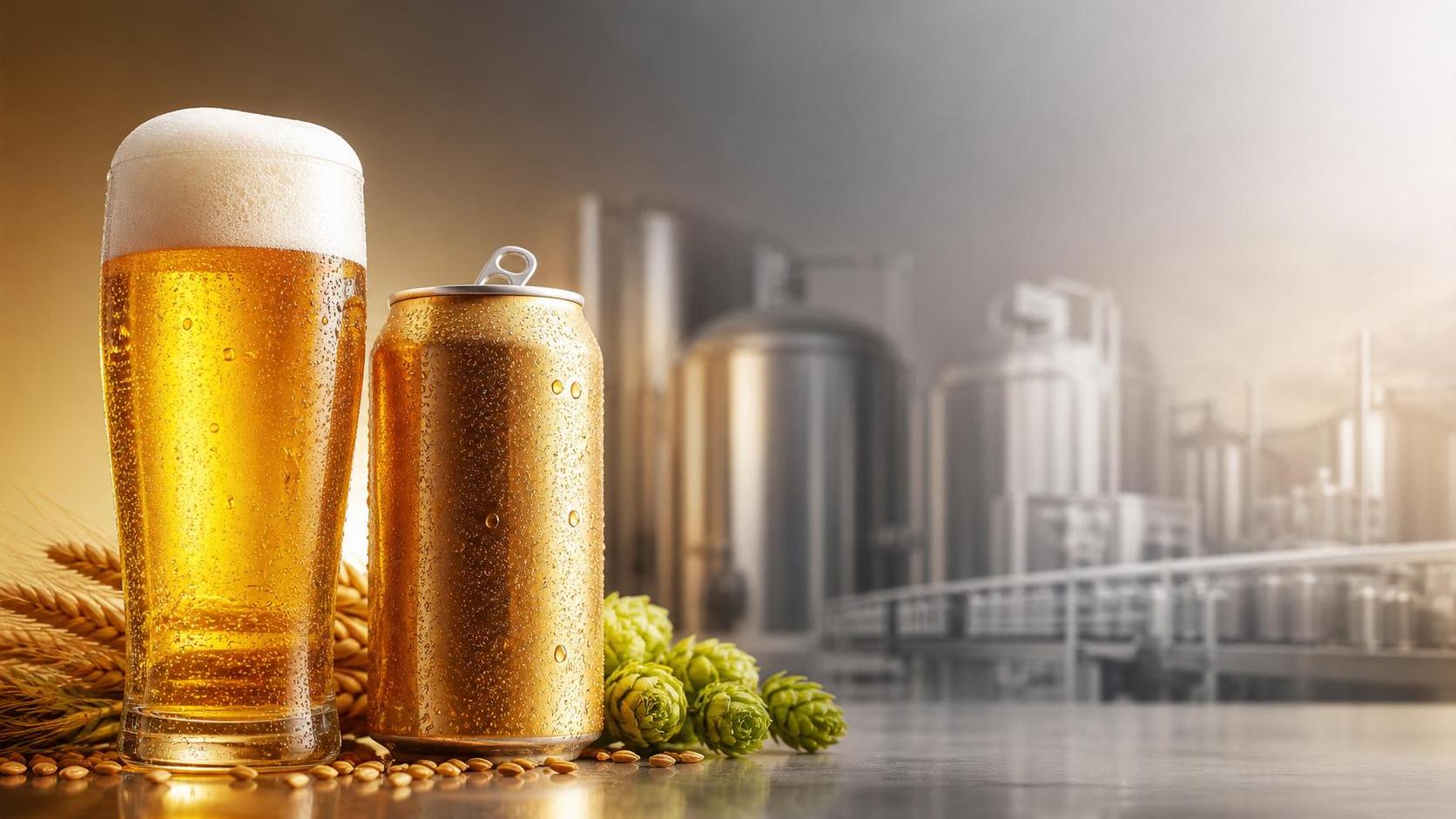
Why Is High-Concentration Lager Beer Getting So Much Attention?
High-concentration lager beer is drawing interest because it changes how lager can be brewed, positioned, and supplied across different channels.
In simple terms, it starts with a denser wort than standard lager. That means more dissolved malt extract before fermentation begins.
This one difference affects alcohol potential, body, dilution options, tank efficiency, and even export planning. So the topic is not only about strength.
For breweries and brand owners, High-concentration lager beer can support flexible production models. For buyers, it can influence flavor expectations, cost structure, and packaging strategy.
That is why it appears more often in discussions around craft beer development, OEM or ODM projects, and wholesale beer programs serving restaurants, supermarkets, bars, and retail chains.
The real question is not whether it is better. The better question is where it fits, and how it differs from standard lager in practical use.
So, what exactly is High-concentration lager beer?
High-concentration lager beer is lager brewed from a higher original gravity wort than standard lager. Original gravity refers to sugar and extract concentration before fermentation.
Because the wort is stronger, fermentation can produce a higher alcohol base. In some cases, the beer is later adjusted to a target drinking strength.
This is where confusion often begins. Some people assume high-concentration means simply “strong beer.” That is only partly true.
A high-concentration process may create a stronger finished beer. It may also create a concentrated lager base designed for controlled dilution and consistent scaling.
In actual production, the method can improve brewing efficiency and logistics. But it also demands tighter process control, especially around yeast performance, flavor balance, and stability.
For a brewery with a broad portfolio, such as classic lager, wheat beer, low-calorie beer, fruit beer, and functional styles, this approach can expand formulation flexibility without replacing standard brewing entirely.
How is it different from standard lager in brewing and taste?
The easiest way to compare High-concentration lager beer and standard lager is to look at process, flavor, and intended use together.
Taste is where expectations need careful management. A well-made High-concentration lager beer should still drink clean, crisp, and controlled.
However, if the formulation is rushed, it may show alcohol heat, heavier sweetness, thinner aroma after adjustment, or a less integrated finish.
Standard lager usually feels easier to understand. It is brewed for a defined final profile, so the route from mash to glass is more direct.
That does not mean standard lager is always superior in flavor. It means the margin for error is often smaller with High-concentration lager beer.
When does High-concentration lager beer make practical sense?
The answer depends on what the beer needs to achieve after brewing, not only what it tastes like at the pilot stage.
High-concentration lager beer often makes sense in these situations:
- Large-volume supply where tank utilization and batch consistency matter.
- Export or cross-border programs needing efficient logistics and stable repeat production.
- Private label, OEM, or ODM projects requiring flexible alcohol targets or channel-specific variants.
- Beer portfolios that need one base to support several packaging or positioning strategies.
More traditional standard lager still works well when the goal is a fixed house style, a highly familiar drinking profile, or a shorter decision chain.
In practical market terms, High-concentration lager beer is often more useful behind the scenes than on the front label.
That is especially relevant for suppliers handling multiple beer categories. A producer with experience across lager, wheat, low-calorie, fruit, and specialty beers can usually judge where concentration brings value and where it adds complexity.
How can you tell whether the quality is actually good?
This is one of the most useful questions, because High-concentration lager beer should be judged by performance, not by concept alone.
A quick evaluation checklist helps:
Needless to say, lab values matter too. Original gravity, final gravity, ABV, bitterness, pH, dissolved oxygen, and microbiological stability should match the intended style.
Still, sensory review remains essential. High-concentration lager beer should not taste engineered. It should still drink like complete lager.
Are there common misunderstandings or risks to watch for?
Yes, and most of them come from oversimplifying what concentration means.
One common misunderstanding is that High-concentration lager beer automatically lowers total cost. Sometimes it improves efficiency, but process control costs can rise.
Another mistake is assuming any strong lager base can be diluted later without flavor loss. In reality, recipe design must anticipate that step from the beginning.
There is also a branding risk. If the market expects an easy-drinking standard lager, a fuller or hotter profile may feel out of place.
- Do not judge only by ABV. Flavor integration matters more.
- Do not skip pilot tasting after final adjustment.
- Do not treat concentration as a shortcut for weak recipe design.
- Do not ignore channel differences between bar draft, retail can, and export packaging.
In actual sourcing discussions, the safer approach is to compare the production logic, final drinking profile, packaging plan, and shelf-life target together.
What should you confirm before choosing High-concentration lager beer?
A good decision usually starts with a few grounded questions rather than a broad preference for one lager model over another.
Confirm the target alcohol level, flavor direction, package format, and whether the beer will serve one channel or multiple channels.
Then look at technical consistency. Ask how the beer performs after storage, transport, and final adjustment if dilution is involved.
It also helps to understand the supplier’s broader brewing capability. A company experienced in craft beer R&D, classic lager, low-calorie styles, wheat beer, fruit beer, and specialty functional beer is often better equipped to tune a concentrated lager program accurately.
That matters for OEM, ODM, wholesale, and customized beer development, especially when product positioning must stay coherent across online and offline markets.
To sum it up, High-concentration lager beer differs from standard lager in more than strength. It changes brewing logic, flavor management, and supply flexibility.
The next practical step is to define the desired final profile, compare process options, and review samples against real channel requirements. That usually leads to a much clearer choice.
Thank you very much for writing to us. Please leave your message and contact information, we will reply to you within 24 hours.