



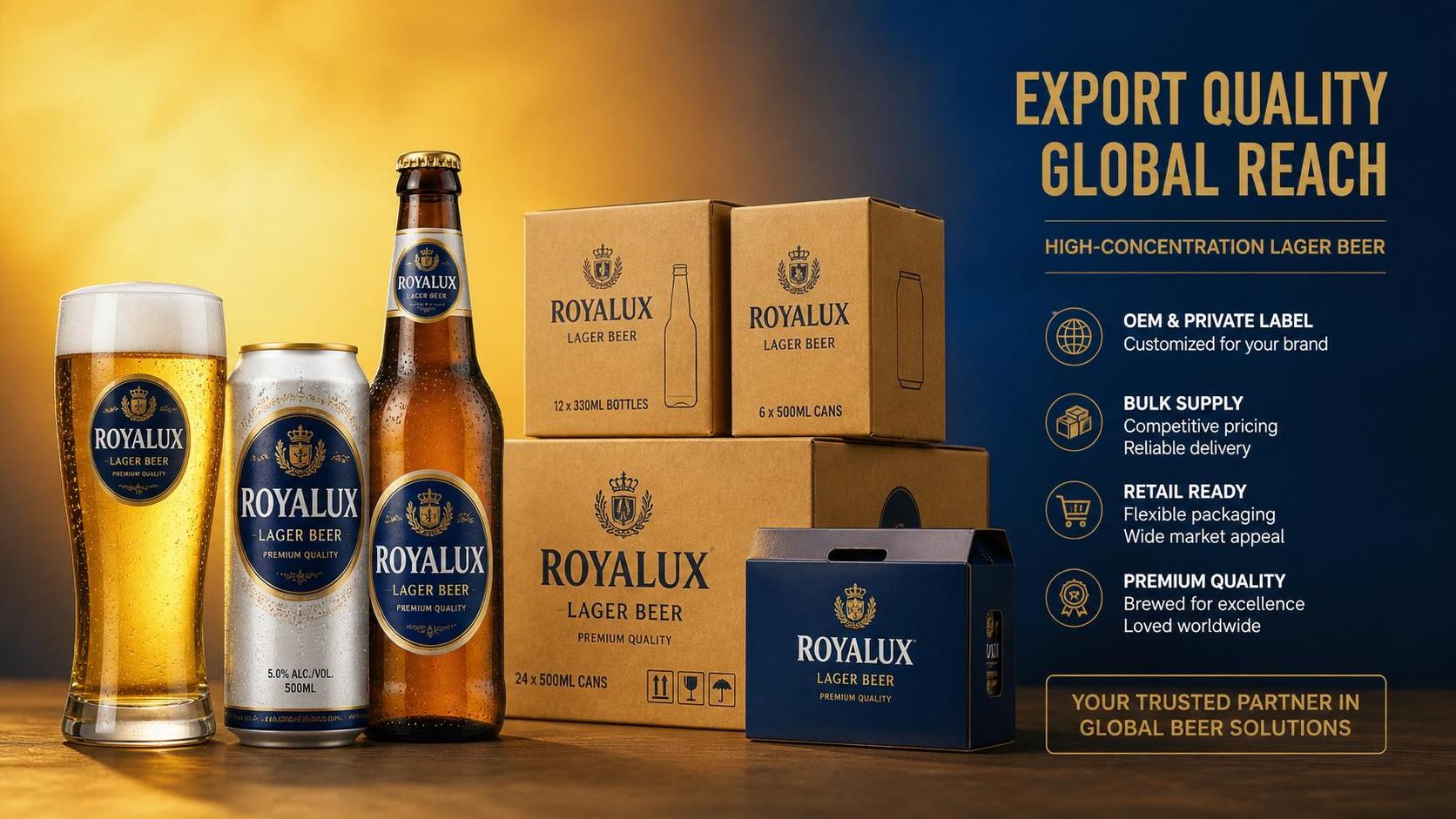
High-Concentration Lager Beer Applications: Which Products and Markets Is It Best For?
High-concentration lager beer is moving from a niche supply option to a practical growth tool in global beer trade.
For businesses managing multiple channels, it offers more than a different brewing format.
It creates flexibility in packaging, transport, pricing and market positioning.
That matters in markets where freight costs, shelf competition and private label demand keep changing.
High-concentration lager beer is especially relevant when buyers want stable flavor, scalable supply and room for brand customization.
In practical terms, it fits both established beer programs and new market entry strategies.
Jinpai Beer supports this demand through craft beer R&D, production and global supply.
Its portfolio includes classic lager, German wheat, sugar-free low-calorie beer, fruit-flavored beer and functional specialty beers.
With OEM, ODM, wholesale and custom solutions, the company helps partners build market-ready beer lines across online and offline channels.
What Makes High-Concentration Lager Beer Commercially Attractive
High-concentration lager beer is brewed with a higher original wort concentration than standard lager.
This gives producers and buyers more control over final product design after processing and packaging decisions.
From a business angle, the appeal is clear.
- It supports efficient bulk production for large channel demand.
- It can reduce transport and storage inefficiencies in some supply models.
- It helps maintain flavor consistency across repeated orders.
- It gives more room for OEM and ODM brand development.
- It works well for differentiated retail and on-trade product lines.
More importantly, high-concentration lager beer meets current market logic.
Many buyers are no longer looking only for low-cost beer.
They want products that balance margin, taste reliability and a story that sells.
A well-positioned high-concentration lager beer can do that without becoming overly complex for the market.
Best Product Applications for High-Concentration Lager Beer
Not every beer concept needs this format.
But several product categories benefit from high-concentration lager beer more than others.
1. Classic Mainstream Lager Lines
This is the most direct application.
Classic lager remains a volume driver in supermarkets, convenience stores and chain retail.
High-concentration lager beer works well here because demand is steady and quality repetition matters.
It is suitable for private label supermarket beer, regional house brands and entry-level imported lager programs.
2. Premium Yet Accessible Retail Beer
Some markets are shifting away from generic low-price beer.
Consumers still watch spending, but they are willing to trade up for better taste and cleaner branding.
High-concentration lager beer fits this middle zone.
It can be positioned as a premium everyday lager, especially with tailored packaging, stronger malt expression and polished label design.
3. OEM and ODM Customized Beer Projects
This is one of the strongest uses for high-concentration lager beer.
Businesses launching their own beer label need speed, consistency and production support.
They also need freedom to adjust alcohol content, taste profile, packaging size and target price.
High-concentration lager beer makes customized planning easier within an OEM or ODM framework.
That is particularly useful for chain stores, hospitality groups and local beverage brands entering beer.
4. Hybrid Portfolios With Health-Oriented Extensions
A broader beer portfolio often performs better than a single SKU strategy.
High-concentration lager beer can anchor the core range, while adjacent products expand reach.
For example, Jinpai Beer also offers sugar-free low-calorie beer and fruit-flavored beer.
This makes it easier to build a complete shelf or menu strategy around one central beer supply partner.
Which Markets Are Best Suited for High-Concentration Lager Beer
The best market for high-concentration lager beer is not defined by region alone.
It is defined by channel structure, price sensitivity, consumer habits and supply chain realities.
Emerging Beer Markets With Fast Retail Expansion
Markets with growing modern retail are strong candidates.
These areas often need reliable volume, stable shelf products and flexible branding.
High-concentration lager beer can support local brand building without requiring a fully local brewing setup.
Import-Driven Markets With Strong Private Label Demand
Some markets depend heavily on imported alcoholic beverages.
In those cases, buyers often seek products that can stand apart without overshooting target price bands.
High-concentration lager beer is a good fit for exclusive retail brands, club-store packs and regional distribution labels.
Bar and Restaurant Markets Needing Consistent House Beer
On-trade channels have different priorities.
They need dependable taste, recognizable style and strong repeat ordering.
High-concentration lager beer works well as a house lager for casual dining groups, bars and entertainment venues.
It can also sit beside wheat beer or fruit beer in a more varied beverage menu.
Cross-Border E-Commerce and Mixed Retail Models
A more recent signal comes from online sales and hybrid retail distribution.
Products now need both shelf appeal and digital product-page appeal.
High-concentration lager beer can be packaged for both, especially when paired with clear branding and channel-specific pack sizes.
How to Match the Product to the Right Channel
A strong product can still underperform if channel matching is weak.
In actual business, channel fit often matters more than broad market size.
Use this simple approach when evaluating high-concentration lager beer opportunities.
- Define the target price tier first, not last.
- Choose whether the product leads with volume, premium image or private label exclusivity.
- Set packaging based on retail shelf logic or on-trade serving logic.
- Confirm local taste preferences, especially bitterness, body and finish.
- Build a supporting portfolio if the channel needs more than one beer style.
This process reduces the common mistake of buying a good beer for the wrong channel.
It also makes supplier discussions faster and more accurate.
Key Risks to Assess Before Expanding With High-Concentration Lager Beer
The opportunity is strong, but decisions still need discipline.
Three risk areas deserve close attention.
Positioning Without Distinction
If high-concentration lager beer is sold like a generic commodity, price pressure rises quickly.
The product needs a clear role, whether mainstream, premium or exclusive private label.
Portfolio Imbalance
In some channels, one lager SKU is not enough.
A complementary range can improve account retention and average order value.
That is where wheat beer, low-calorie beer or fruit-flavored beer can support the core lager offer.
Weak Local Adaptation
Even strong beer formats need local adaptation.
Alcohol strength, packaging language, can size and flavor balance should reflect market habits.
This is where a capable OEM or ODM partner becomes commercially valuable, not just operationally convenient.
Why Supply Capability Matters as Much as Product Choice
A good beer concept means little without dependable execution.
For high-concentration lager beer, supply capability directly affects launch speed and long-term repeat business.
Partners should evaluate more than flavor samples.
- Can the supplier support OEM and ODM at scale?
- Can they offer multiple beer styles under one supply relationship?
- Can they adapt packaging for different retail and hospitality channels?
- Can they maintain quality across repeat shipments?
- Can they support global online and offline distribution needs?
Jinpai Beer is built around this broader supply logic.
Beyond high-concentration lager beer, it offers a full craft beer range and customized commercial solutions.
That makes it easier to enter new channels, test product combinations and scale with fewer supply-side gaps.
Final Take: Where High-Concentration Lager Beer Works Best
High-concentration lager beer works best where scale, consistency and positioning need to move together.
It is especially effective for mainstream retail lager, premium everyday beer and OEM or ODM customized projects.
The strongest markets are those with active retail expansion, private label demand, on-trade house beer needs and hybrid online-offline sales models.
The next step is to match the product format to the channel, then back it with a supplier that can adapt and scale.
When that alignment is right, high-concentration lager beer becomes more than a product choice.
It becomes a practical route to stronger market entry, better portfolio control and long-term beer business growth.
Thank you very much for writing to us. Please leave your message and contact information, we will reply to you within 24 hours.