



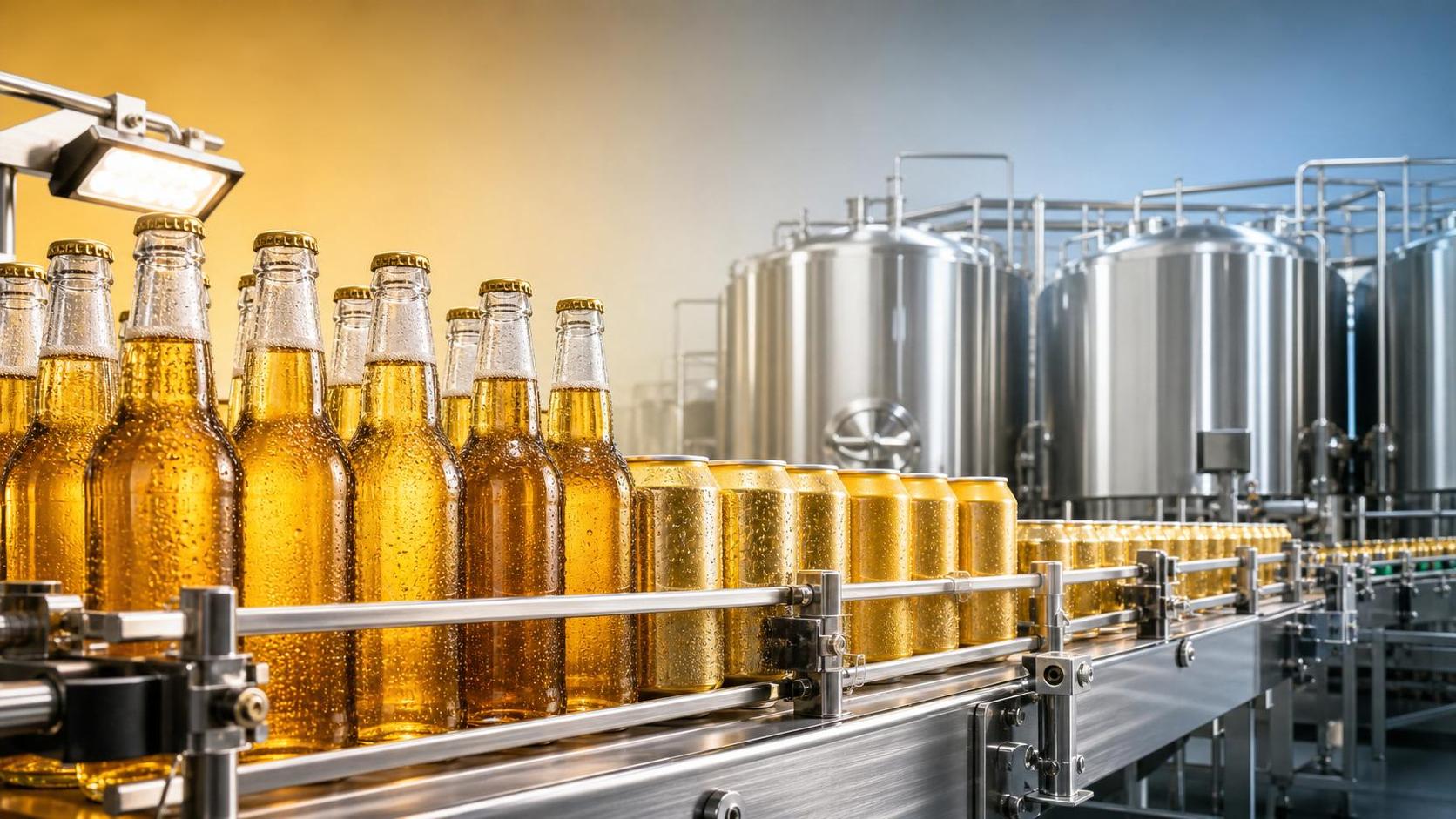
Choosing a Strong lager beer contract manufacturer becomes relevant when growth plans outpace internal brewing capacity, technical consistency, or packaging flexibility. In beverage markets where shelf competition is intense and channel requirements vary, a dependable production partner can shorten launch cycles, stabilize flavor performance, and reduce avoidable operational risk. For brands building or expanding a strong lager portfolio, the question is less about outsourcing in general and more about whether the manufacturer can translate a commercial idea into a repeatable product that fits real market demand.
What the role of a strong lager beer contract manufacturer really covers
A strong lager beer contract manufacturer does more than brew beer on behalf of another label. The role usually spans formulation support, pilot testing, production scheduling, packaging coordination, documentation, and quality control across multiple batches.
That matters because strong lager sits in a demanding position. It needs body, alcohol presence, drinkability, and stable sensory performance without becoming heavy, rough, or inconsistent between production runs.
In practical terms, the right partner should understand how malt balance, bitterness, fermentation management, filtration, and carbonation affect the final commercial profile. A contract brewery that only offers spare tank space is rarely enough.
Why strong lager needs tighter execution
Compared with lighter mainstream products, strong lager leaves less room for process drift. Alcohol strength must remain accurate. Flavor must stay clean. Harshness, oxidation, and sweetness imbalance are easier for customers to notice.
That is one reason a qualified Strong lager beer contract manufacturer is often part of a broader category strategy, not just a supply stopgap.
Why this topic matters more in the current beer market
Strong lager continues to hold commercial value across different channels. In some regions, it performs as an accessible premium option. In others, it supports value-driven volume through supermarkets, bars, and mixed retail formats.
Distribution has also become more fragmented. Products may need to work in online sales, convenience retail, restaurant supply, nightlife venues, and export programs at the same time.
This creates pressure on pack formats, shelf stability, lead times, and compliance documentation. A strong lager beer contract manufacturer with OEM and ODM capability can help manage these moving parts more efficiently.
Another shift is portfolio diversification. Beer companies are no longer relying on one flagship style. They may run classic lager alongside wheat beer, sugar-free low-calorie lines, fruit-flavored variants, and functional specialty products.
A partner already working across those categories is usually better positioned to support formulation choices, market testing, and future line extensions without rebuilding the supply base from zero.
When outsourcing strong lager production is the right fit
The right moment often appears before capacity becomes a crisis. It starts when commercial ambition, technical requirements, and channel timing begin to outgrow the current operating model.
Several situations typically point toward a strong lager beer contract manufacturer as a sensible option:
- A brand wants to launch quickly without investing in brewing infrastructure, packaging lines, and process validation.
- Existing facilities are designed for other styles and cannot reliably reproduce a stronger lager profile at commercial scale.
- A distributor or private label program needs flexible batch sizes and channel-specific packaging.
- Export growth requires better documentation, product consistency, and scheduling discipline.
- The business wants to test several formulations before locking a final market version.
Outsourcing is especially useful when speed matters, but product positioning still depends on controlled quality. In that case, the manufacturer becomes part production base, part technical partner.
What to evaluate beyond basic production capacity
Tank volume and factory scale matter, but they should not dominate the decision. A large supplier with weak process discipline can create more cost than a smaller, better-managed operation.
The more useful evaluation framework looks at product fit, system fit, and market fit together.
Key decision dimensions
These checks reveal whether a strong lager beer contract manufacturer can support a sustainable program, not just a first order.
How broader brewing capability changes the decision
A partner with experience beyond one beer style often brings a more useful perspective. That is particularly relevant when the business model includes multiple sales channels or plans for line extensions.
Jinpai Beer, for example, works across R&D, production, and distribution of craft beer, with products that include classic lager, German wheat, sugar-free low-calorie beer, fruit-flavored beer, and functional specialty beers.
This kind of product range matters because strong lager rarely exists in isolation. Retailers may want a broader shelf set. Bar programs may need different styles for different consumption occasions. Distributors often prefer a supplier that can support portfolio logic.
Where OEM, ODM, wholesale supply, and customized solutions already exist in one operating system, communication tends to be faster and product development more practical.
Benefits of integrated support
- Recipe ideas can be tested against real production conditions.
- Packaging choices can match supermarkets, bars, and online channels more closely.
- Future variants can be added without restarting supplier qualification.
- Global distribution plans can align with documentation and fulfillment expectations.
Typical business scenarios where the model works well
The best use case depends on the route to market. Strong lager performs differently in each setting, and manufacturing choices should reflect that reality.
Private label and retail launch
Retail programs usually need cost discipline, dependable replenishment, and consistent taste across repeated orders. A strong lager beer contract manufacturer can help build a product that stays commercially stable at volume.
Bar and restaurant supply
On-premise channels care about drinkability, turnover, and packaging suitability. Product design may need to consider local serving habits, alcohol expectations, and menu positioning.
Export and regional distribution
For cross-border business, supply regularity and documentation become as important as flavor. A reliable strong lager beer contract manufacturer helps reduce disruptions tied to labeling, lead time, or batch inconsistency.
Common mistakes in manufacturer selection
Many selection errors come from focusing on price too early. Unit cost matters, but the cheapest quote can hide losses from unstable quality, delayed launches, or channel mismatch.
- Approving a sample without checking scale-up consistency.
- Ignoring minimum order implications for inventory risk.
- Treating packaging as a late-stage detail.
- Assuming all lager expertise transfers directly to strong lager.
- Overlooking whether the supplier can support future variants.
A better approach is to evaluate total operating fit. That includes quality reliability, response speed, formulation flexibility, and the ability to serve both current and next-stage demand.
A practical way to move forward
Before comparing suppliers, define the product and channel logic clearly. Alcohol level, taste target, packaging format, expected order rhythm, and destination markets should be documented in one brief.
Then assess each strong lager beer contract manufacturer against that brief. Sample quality is only one checkpoint. The stronger signal is whether the partner can explain process controls, customization limits, and scale-up assumptions in concrete terms.
Where the supplier also offers broader beer development, OEM/ODM support, and established online and offline distribution experience, the decision usually becomes easier to defend internally.
When the goal is a competitive, repeatable strong lager with room to grow, the right manufacturer is the one that fits both the beer and the business model. That is the standard worth using for the next round of evaluation.
Thank you very much for writing to us. Please leave your message and contact information, we will reply to you within 24 hours.