



What is the standard process for handling 0.0% alcohol beer breakage during sea freight?
Time : Aug 30, 2026
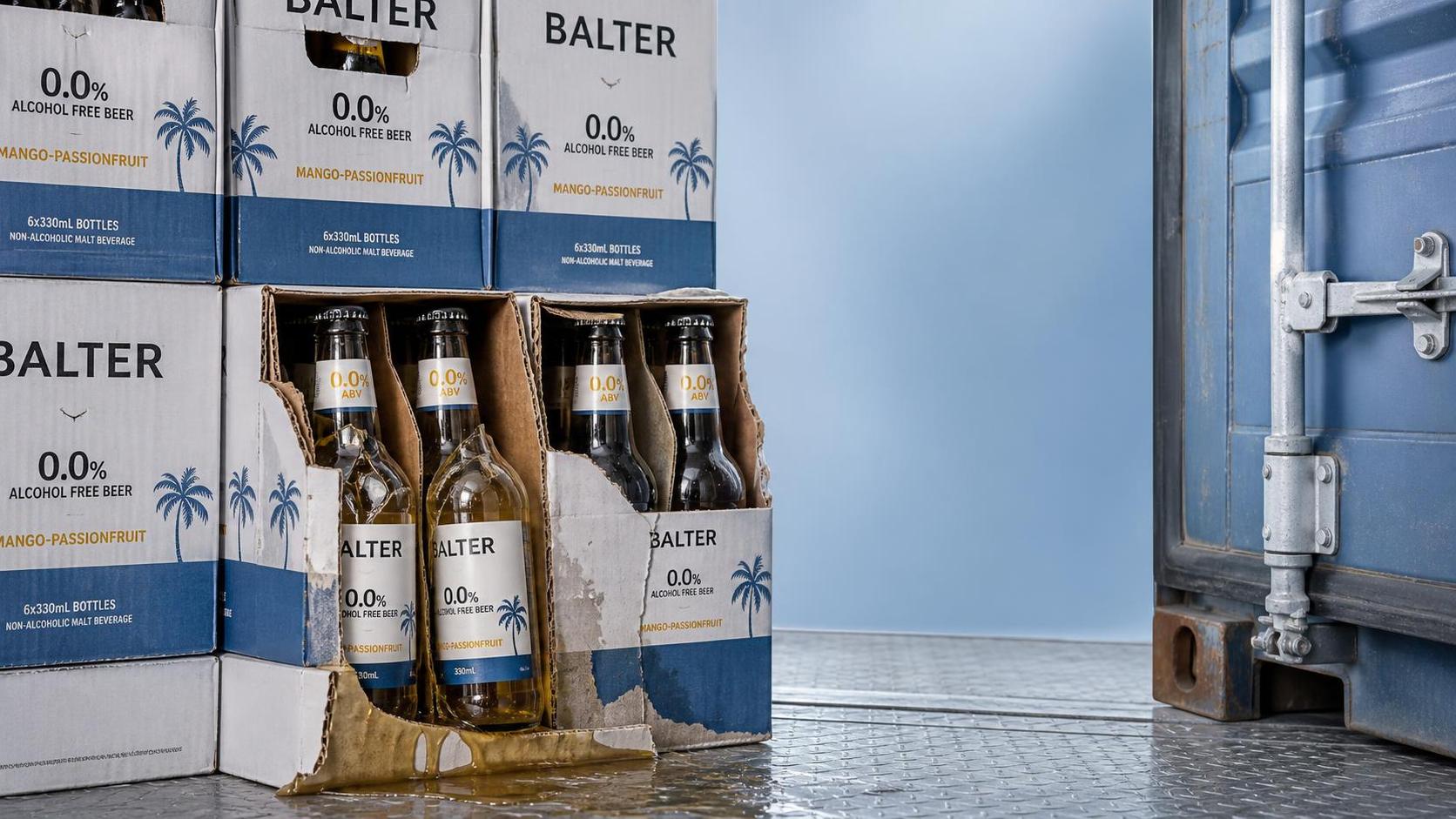
When a container of 0.0% alcohol beer arrives at port with broken bottles—especially after 30+ days at sea—you don’t need theory. You need action: clear ownership, fast documentation, and zero ambiguity on next steps. That’s what our售后 maintenance teams rely on daily. What is the standard process for handling 0.0% alcohol beer breakage? Not as a theoretical checklist—but as a field-tested sequence that starts the moment the container seal is broken and ends only when replacement stock is verified, logged, and ready for retail shelf placement.
Let’s be direct: non-alcoholic beer isn’t “just beer without alcohol.” Its formulation—lower carbonation stability, higher sensitivity to temperature swing, often lighter glass or thinner PET—makes it behave differently under maritime stress than traditional lager. Bottle shock, condensation-induced label delamination, pallet slippage in humid holds—these aren’t edge cases. They’re predictable friction points. And if your team treats them like generic beverage damage, you’ll misdiagnose root causes, delay claims, and repeat the same loss cycle shipment after shipment.
So here’s how we handle it—not as policy, but as practice.
**First, pause before unloading.**
No exceptions. Even if the container looks intact from the outside, humidity buildup inside can cause condensation to pool at the base—softening cardboard, shifting pallets, and stressing bottle necks during lift-off. Our field reps always do a thermal scan *before* opening, then check for visible water trails along seams, rust on door hinges (a sign of prolonged moisture exposure), and any musty odor—especially critical for fruit-flavored or functional 0.0% ABV beers where off-notes develop faster. If internal temp/humidity logs (from IoT sensors, if deployed) show sustained >90% RH or >35°C for >48 hours, we flag it *before* touching a single case.
**Then, triage—not by volume, but by pattern.**
Breakage isn’t random. It tells a story. A cluster of broken bottles at the bottom front corner? Likely impact damage during port handling—check for dents in container walls or pallet deformation. Shattered glass scattered across multiple layers, mostly near center? That points to vibration resonance—often tied to container positioning on deck (exposed vs. mid-stack) or insufficient void-fill between cases. If breakage is isolated to one SKU—say, only the sugar-free low-calorie variant—and others are untouched? That’s formulation-specific: lower viscosity liquid + narrower neck geometry = higher risk under vertical G-force during rough seas. We map this visually on a simple grid sketch—not just “X broken bottles,” but *where*, *how*, and *which SKUs*. That sketch becomes the anchor for every claim.
**Documentation isn’t paperwork—it’s evidence chain.**
Photos alone won’t cut it. We require three angles per damaged case: top-down (showing full pallet layout), side-on (revealing layer integrity and support structure), and close-up (label legibility, bottle type, batch code). No flash. Natural light only. And crucially—we never discard damaged stock until carrier rep signs off on the condition report. Why? Because carriers routinely dispute claims when packaging shows no external trauma. But internal evidence matters more: damp carton flaps, crushed inner dividers, or residue patterns on glass tell the real story. We also retain 2–3 representative broken bottles (sealed in labeled zip-lock with date/time stamp) for lab review—if microbiological stability is questioned post-breakage.
**Claims aren’t filed—they’re negotiated with data.**
We don’t submit a blanket “X% loss” figure. Instead, we cross-reference our damage map with the carrier’s voyage log (weather, speed changes, roll angles if available), our own packaging validation reports (e.g., ISTA 3A test results for that specific case design), and historical loss rates per route. If breakage exceeds our baseline for that lane by >2x—and matches known risk triggers (e.g., summer transit through Suez Canal with no refrigeration)—we present it as systemic, not incidental. That shifts the conversation from “pay up” to “let’s jointly optimize.”
**Replacement logistics follow quality control—not urgency.**
This is where many teams stumble. Rushing replacements without verifying root cause means repeating the same failure. At Jinpai Beer, replacement stock ships *only after* we’ve confirmed either: (1) packaging has been upgraded (e.g., switching from 24-bottle shrink-wrapped trays to interlocked molded pulp carriers for German wheat variants), or (2) routing has changed (e.g., avoiding transshipment hubs with known rough-handling records). And every replacement batch undergoes accelerated shelf-life testing—especially for functional specialty beers—because thermal stress during transit can accelerate oxidation even in undamaged bottles. We treat breakage not as an endpoint, but as diagnostic input.
One thing we *don’t* do: assume all 0.0% ABV products respond the same way. Our classic lager uses thicker glass and higher CO₂ retention—so it withstands vibration better but cracks more easily on impact. Our fruit-flavored line uses lighter PET and natural stabilizers—more vulnerable to heat but less prone to shattering. That’s why our internal damage database is segmented by formulation, not just SKU. It lets us spot trends: e.g., a spike in breakage for mango-passionfruit variants only on routes with >12-hour customs delays in tropical ports—pointing to ambient heat soak, not shipping itself.
Also worth saying plainly: if your breakage rate consistently exceeds 1.2% across multiple shipments—even with proper packaging—you’re likely overlooking loading methodology. Over-stacked pallets, mixed SKUs on one pallet, or insufficient stretch-wrap tension (we specify minimum 17 wraps at 70% pre-stretch) account for ~65% of preventable incidents we see in field audits. Fixing those rarely requires new suppliers—just disciplined execution.
What is the standard process for handling 0.0% alcohol beer breakage? It’s not a static protocol. It’s a feedback loop: observe → map → correlate → adjust → verify. And it starts—not with a claim form—but with someone standing in front of a container, eyes sharp, notebook open, knowing exactly what a single cracked bottle is really trying to say.
For teams managing global distribution of craft non-alcoholic beer—including classic lager, German wheat, sugar-free low-calorie, fruit-flavored, and functional specialty variants—this rhythm becomes second nature. Whether you’re coordinating OEM/ODM fulfillment, wholesale supply, or custom retail solutions, the discipline stays the same: treat breakage as data, not cost. Because in this category, how you handle the broken bottles determines how much trust you keep—and how many more orders you earn.
Next page:Already the last
Jin Pai Beer Co., Ltd
Thank you very much for writing to us. Please leave your message and contact information, we will reply to you within 24 hours.