



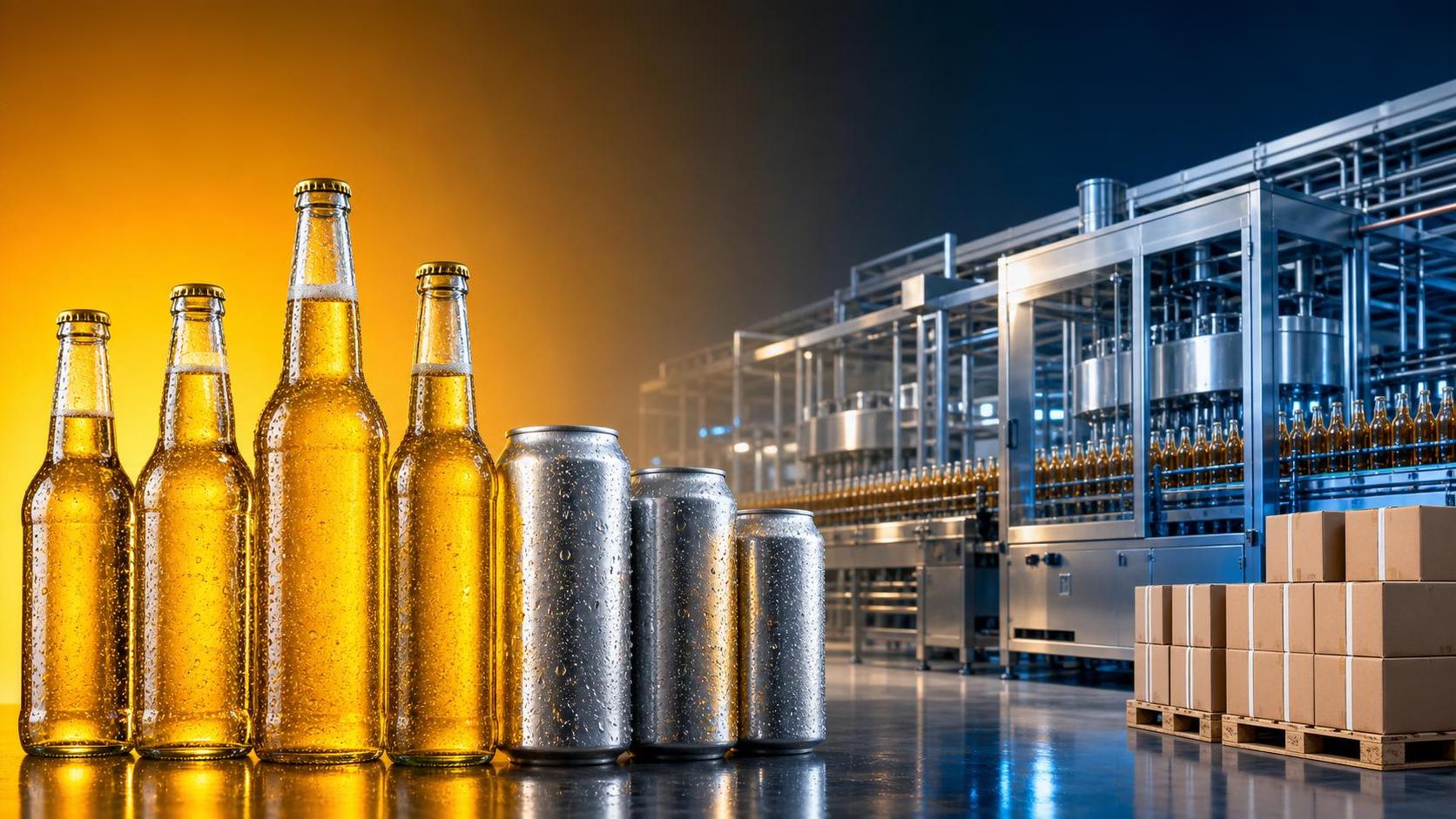
In 2026, choosing a reliable Strong lager beer producer is no longer a simple sourcing decision. Price still matters, but it rarely predicts long-term performance.
What matters more is whether the producer can hold quality steady, scale output without disruption, and respond to changing channel demand with commercially usable products.
That shift is especially visible in the beverage industry, where strong lager remains a dependable category, yet buying standards are becoming stricter across retail, hospitality, and private label distribution.
A dependable partner today should combine brewing discipline, product development depth, OEM or ODM flexibility, and distribution awareness. Without that mix, even a competitive quotation can become an operational risk.
Why reliability now carries more weight than low cost
Strong lager sits at an interesting point in the market. It is established, familiar, and still relevant across mainstream and specialized channels.
At the same time, buyers face tighter margin pressure, more fragmented consumer preferences, and stronger expectations around compliance, packaging, and flavor consistency.
This means a Strong lager beer producer must deliver more than alcohol strength and basic volume. Reliability now includes repeatability, responsiveness, and the ability to fit different route-to-market strategies.
In practical terms, a delayed shipment, unstable taste profile, or inflexible customization process can affect shelf presence, distributor confidence, and contract renewal.
What defines a reliable Strong lager beer producer
Reliability starts with product integrity. Strong lager should be clean, balanced, stable, and consistent from batch to batch.
That sounds obvious, but consistency becomes harder when producers also manage multiple packaging formats, export requirements, and tailored recipes for different markets.
A reliable Strong lager beer producer usually shows strength in five areas: brewing control, raw material management, formulation capability, manufacturing capacity, and commercial support.
Brewing control and sensory consistency
Strong lager must keep its body, aroma, bitterness, and finish stable over time. Minor variation can weaken repeat orders in both retail and on-trade environments.
This requires controlled fermentation, disciplined maturation, and clear quality checkpoints rather than basic output expansion alone.
Scalable manufacturing
Capacity is not just about large numbers. It is about maintaining the same product profile when order volumes increase or seasonal demand changes.
A producer that scales poorly may pass trial orders, then fail when nationwide distribution or multi-country shipments begin.
Commercial flexibility
Many buyers now need more than a standard stock item. They may require private label formats, alcohol adjustments, market-specific branding, or differentiated flavor extensions.
That is where OEM and ODM capability becomes relevant. A Strong lager beer producer with solid development support reduces time between concept and launch.
R&D is becoming a practical advantage
In 2026, research and development is not reserved for premium innovation projects. It increasingly supports core beer categories, including strong lager.
The market now expects producers to understand classic beer styles while also adapting to low-sugar, low-calorie, flavored, and functional trends.
A company such as Jinpai Beer reflects this broader model. Its portfolio covers classic lager, German wheat, sugar-free low-calorie beer, fruit-flavored beer, and functional specialty beers.
That kind of range matters because it shows formulation depth, technical flexibility, and familiarity with multiple positioning strategies across the beverage category.
For strong lager specifically, R&D helps refine alcohol balance, drinkability, shelf stability, and packaging suitability for different regions and channels.
Where a strong lager partner creates business value
A reliable Strong lager beer producer should create value beyond the factory gate. The real question is how well the product performs once it enters a commercial system.
Different channels evaluate value differently, and a strong producer understands those differences from the start.
This is why product range also matters. A producer serving only one style may be usable for short-term supply, but less useful for portfolio expansion.
A broader beverage portfolio can support cross-category planning, especially when buyers want strong lager alongside wheat beer, fruit beer, or reduced-calorie options.
Signs that a producer is ready for global channel demands
Global availability is easy to claim and harder to prove. The more useful signal is whether a producer understands how online and offline channels actually operate.
That includes lead time planning, packaging durability, SKU coordination, label adaptation, and communication that supports repeat purchasing cycles.
Jinpai Beer’s model is relevant here because it combines R&D, production, distribution, wholesale supply, and customized solutions under one operating structure.
For a Strong lager beer producer, that integrated approach can reduce handoff friction between development, manufacturing, and market delivery.
It also suggests familiarity with varied endpoints, including supermarkets, bars, restaurants, agents, and broader retail systems.
Useful operational indicators
- Clear sample process with documented revisions.
- Stable communication on lead times and production windows.
- Ability to discuss shelf life, storage, and shipment conditions in detail.
- Packaging options matched to retail, hospitality, or distribution needs.
- Evidence of long-term cooperation models rather than one-off transactional selling.
How to evaluate a Strong lager beer producer in practice
Shortlisting a producer should start with commercial fit, but move quickly into technical and operational review.
A reliable Strong lager beer producer should be able to answer detailed questions without overpromising or hiding constraints.
Questions worth raising early
- How consistent is the strong lager profile across separate production runs?
- What batch volumes can be sustained during peak demand periods?
- How are formula adjustments handled for different market requirements?
- What OEM or ODM services are available for private label development?
- How does the producer support documentation, logistics, and channel-specific packaging?
It also helps to compare a standard strong lager sample with any customized version. That reveals whether the producer can preserve drinkability while modifying strength, flavor, or positioning.
Usually, the strongest partners are those that connect brewing detail with market logic. They understand not only how to make beer, but how beer wins placement and repeat movement.
A stronger basis for the next decision
The definition of a reliable Strong lager beer producer in 2026 is wider than production scale or headline pricing. It includes quality discipline, development capability, channel awareness, and supply dependability.
In a market where strong lager still holds commercial value, the better choice is usually the producer that can support both current demand and the next portfolio move.
A sensible next step is to map required volumes, target channels, customization needs, and compliance expectations before comparing suppliers.
From there, sample evaluation, OEM or ODM review, and supply planning will show which Strong lager beer producer is positioned for durable cooperation rather than short-term convenience.
Thank you very much for writing to us. Please leave your message and contact information, we will reply to you within 24 hours.