



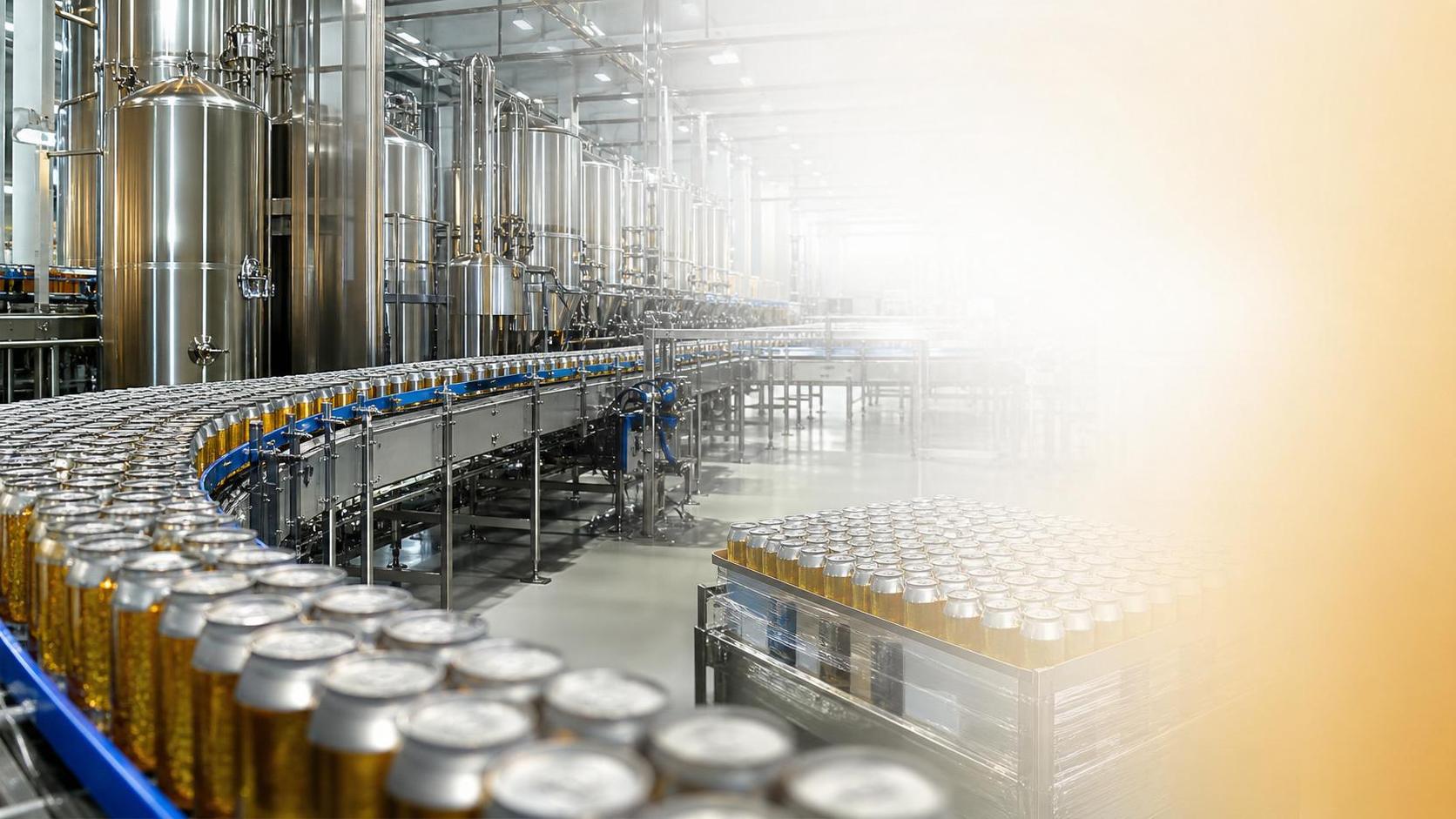
Why do Strong Lager Beer Factory standards matter so much for export readiness?
A strong lager may taste consistent in one market and still fail in another. That gap usually starts inside the factory, not on the shelf.
When people assess a Strong lager beer factory, flavor is only one layer. Export readiness depends on repeatable process control, clean production, reliable records and packaging stability.
In practice, the most trusted factories build quality into every stage. That includes raw material approval, brewing consistency, filtration control, filling hygiene and shipment verification.
This is especially relevant for breweries serving multiple channels. Restaurants, supermarkets, bars and private-label programs often require different pack formats and documentation standards.
A Strong lager beer factory with export discipline is usually prepared for that complexity. It can support OEM or ODM work without losing control of quality, labeling or traceability.
Brewers such as Jinpai Beer, with a broad portfolio across classic lager, wheat beer, low-calorie and specialty styles, reflect another useful sign. Diverse production often demands stronger systems, not looser ones.
What should be checked first when reviewing a Strong lager beer factory?
The first question is simple: can the factory prove control, or only claim it? Documents should match plant reality.
A capable Strong lager beer factory normally shows evidence in four areas. Each area affects export reliability in a different way.
- Raw materials: malt, hops, yeast, adjuncts and water treatment records should be traceable by batch.
- Process control: original gravity, fermentation temperature, alcohol content, bitterness and dissolved oxygen should be monitored consistently.
- Sanitation: CIP procedures, environmental hygiene and microbiological checks should be current, not historical showpieces.
- Release control: every lot should have test results, retention samples and approval records before dispatch.
Need a faster screen? The table below helps separate a merely functional site from a Strong lager beer factory ready for export scrutiny.
If these basics are weak, later claims about certifications or capacity matter less. Export problems usually begin in routine controls that seemed minor at first.
Which certifications and management systems actually make a difference?
Not every certificate carries the same weight. Some are useful for market entry, while others show the factory can sustain stable production over time.
For a Strong lager beer factory, common reference points include food safety management systems, HACCP-based control and documented GMP implementation.
ISO 22000 or FSSC 22000 often signals structured food safety governance. HACCP matters because brewing and packaging have clear critical control points.
A brewery exporting to different regions may also need product-specific compliance. That can include allergen declarations, alcohol labeling rules, shelf-life validation and container material conformity.
More importantly, certificates should connect to daily execution. A Strong lager beer factory should be able to explain how audits changed cleaning schedules, training records or preventive maintenance.
Where OEM or custom formulations are involved, version control becomes critical. Formula changes, packaging artwork edits and label claims should follow documented approval steps.
That is often where broad-service breweries stand out. Factories handling wholesale, private label and customized products need tighter document discipline to avoid cross-market errors.
How can you tell whether brewing consistency is real, not just promised?
Consistency in strong lager is measurable. Alcohol content, color, bitterness, carbonation and flavor stability should stay inside defined tolerances from lot to lot.
A dependable Strong lager beer factory usually controls the process through brewing, fermentation, maturation and packaging, instead of correcting problems only at the end.
Ask how the factory manages yeast health. Strong lager is sensitive to fermentation stress, and weak yeast control can create flavor drift, haze or incomplete attenuation.
Dissolved oxygen is another telling indicator. Poor oxygen control after filtration or filling shortens shelf life and weakens export performance during long transit cycles.
In actual plant reviews, these points usually separate mature breweries from unstable ones:
- Defined specifications for each SKU, including tolerance ranges.
- Calibrated lab equipment for alcohol, CO2, bitterness and microbiology.
- Trend analysis across batches, not only pass or fail release.
- Shelf-life checks under realistic storage and transport conditions.
This matters even more when the same brewery also produces fruit beer, low-calorie beer or functional variants. Mixed portfolios increase cleaning and cross-product control demands.
So the better question is not whether a Strong lager beer factory can brew one good batch. It is whether the system can repeat it under commercial pressure.
Where do export risks usually hide in sanitation, packaging and traceability?
The biggest risks are often quiet ones. A beer can leave the factory looking perfect and still develop complaints weeks later.
Sanitation comes first. In a Strong lager beer factory, CIP validation should cover tanks, pipes, fillers and bright beer systems with repeatable chemical and time parameters.
Packaging is the next pressure point. Cans, glass bottles and kegs each bring different risks, including oxygen pickup, seal defects and warehouse handling damage.
Traceability is what turns a defect into a manageable incident instead of a market-wide problem. Every raw material and finished lot should be traceable both backward and forward.
More common weak spots include:
- Incomplete coding on outer cartons or trays.
- No retained sample from each export lot.
- Label approvals handled by sales only.
- Poor separation between flavored and non-flavored production runs.
If the brewery supports multiple retail channels worldwide, these details matter even more. One labeling mismatch or coding gap can block customs clearance or complicate a recall.
How should a factory be compared when several options look qualified?
When several plants appear compliant, comparison should move beyond certificates and capacity figures. The better filter is operational reliability under your expected market conditions.
A Strong lager beer factory should be judged against the product route it will actually support. Shelf-stable cans for supermarket export need different attention than keg supply for bars.
A practical review matrix often includes the following points:
- Can the factory meet the required alcohol and flavor target consistently?
- How long is the full lead time, including artwork, compliance review and pilot confirmation?
- What is the change-control process for custom formulas or label revisions?
- Does the site have enough line flexibility without sacrificing hygiene discipline?
- How are complaints, deviations and corrective actions documented?
Factories with wider product development experience can be useful here. A brewery active in R&D, production and global distribution often understands how technical control connects with channel-specific expectations.
That does not replace verification. It simply means the Strong lager beer factory may already have systems shaped by export realities, including OEM, wholesale and customized production workflows.
What is the next sensible step before approving a Strong lager beer factory?
Approval should be staged, not rushed. Start with document review, then move to a targeted plant assessment tied to the actual SKU and destination market.
It helps to define a short checklist before any final decision. Keep it tied to risk, not to presentation quality.
- Confirm product specifications, packaging type and shelf-life expectations.
- Review recent batch records and microbiological data.
- Verify export labeling workflow and release documentation.
- Check deviation handling, recall readiness and retention sample practice.
- Request a pilot or retained lot comparison where needed.
A Strong lager beer factory is export-ready when quality systems remain stable across product variety, packaging formats and market requirements. That is the real standard worth testing.
Before moving forward, align the review criteria with your destination regulations, channel needs and acceptable quality risk. That creates a clearer basis for comparison and fewer surprises after shipment.
Thank you very much for writing to us. Please leave your message and contact information, we will reply to you within 24 hours.