



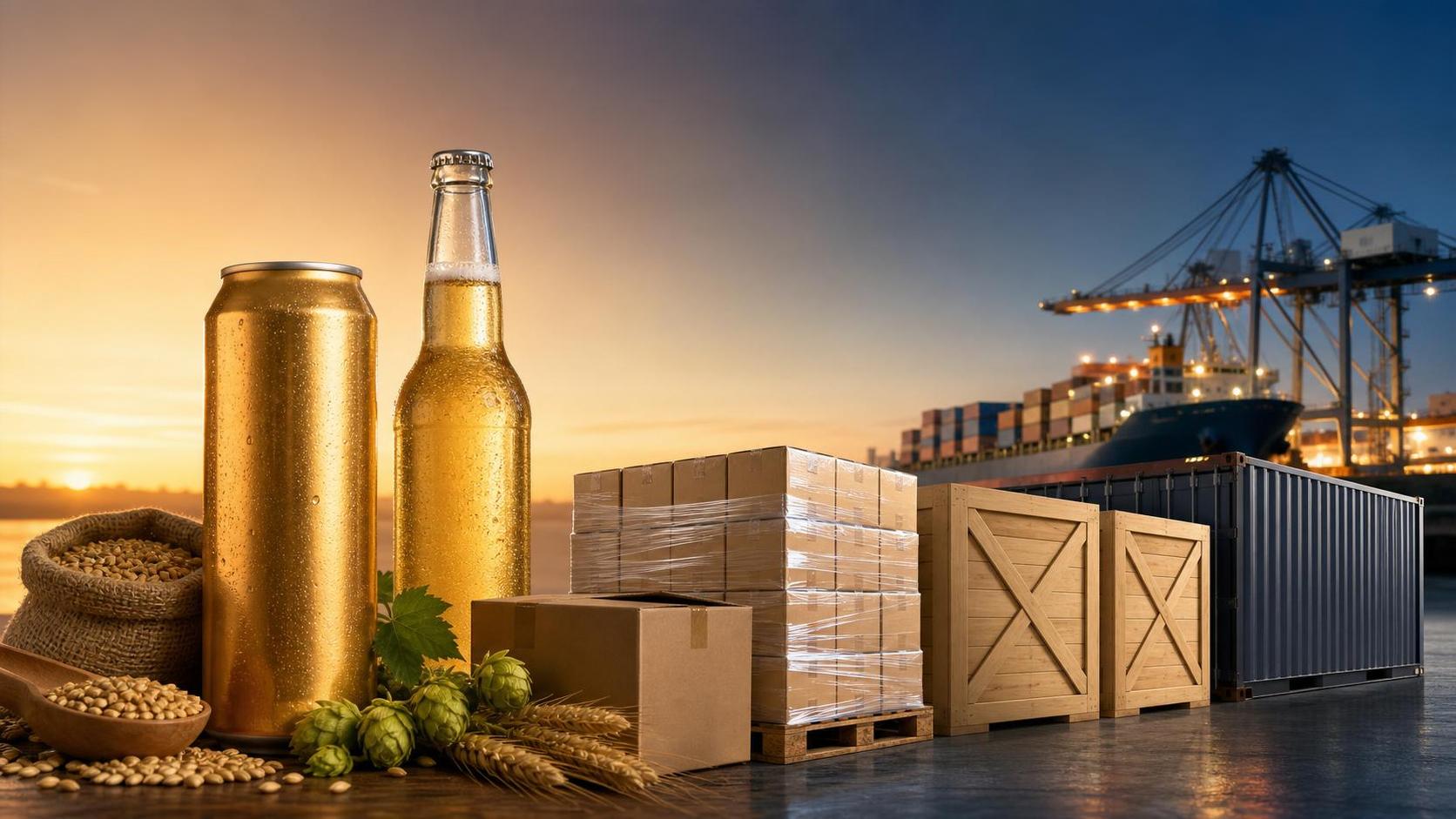
Customized Strong Lager Beer Cost Drivers You Should Compare First
When evaluating Customized strong lager beer, the quoted price rarely tells the full story.
For bulk buyers, cost gaps usually come from formulation, packaging, order structure, compliance, and freight.
That is why early comparison matters more than last-minute price bargaining.
A strong lager may look similar across suppliers, yet alcohol level, malt bill, can type, carton design, and filling standard can shift unit economics fast.
In practical purchasing, a lower ex-factory price can still create a higher landed cost.
This also means better cost control starts with the right comparison framework.
For Customized strong lager beer projects, comparing the main cost drivers first helps protect margin, support pricing strategy, and reduce approval risk.
1. Formula Strength Changes the Base Cost Fast
The first driver is product formulation.
For Customized strong lager beer, higher alcohol content usually requires more fermentable material and tighter brewing control.
That raises direct production cost before packaging even starts.
A 6.2% ABV formula and an 8.0% ABV formula are not equal from a cost perspective.
The same applies to original wort concentration, bitterness target, yeast handling, and maturation time.
Suppliers may also use different ingredient strategies.
One producer may rely on a richer malt profile.
Another may optimize with adjuncts to manage cost.
From a financial view, asking for the recipe logic is not over-detailing.
It is the simplest way to understand whether a quote is aligned with your target market.
- Confirm ABV and original gravity.
- Ask whether malt, adjuncts, or fruit inputs affect cost stability.
- Check if the formula needs longer brewing or aging cycles.
- Review shelf life requirements and pasteurization impact.
When comparing Customized strong lager beer, formula strength should be the first filter, not a side note.
2. Packaging Often Creates the Biggest Price Spread
Packaging is where many budgets move off track.
For Customized strong lager beer, bottle, can, cap, label, tray, carton, and pallet choices all change total cost.
A sleek retail presentation may improve shelf appeal, yet it can cut margin if volume is still uncertain.
This becomes more obvious in export projects.
Glass bottles usually add weight and freight.
Slim cans may improve logistics efficiency, but printed cans can require larger minimum runs.
Label-based packaging may be more flexible for early-stage private label launches.
In real business terms, packaging should match channel strategy.
A bar channel may accept simpler secondary packaging.
A supermarket channel usually needs stronger visual differentiation and better carton performance.
Before approving Customized strong lager beer, compare packaging cost as a full system, not as a single item.
3. MOQ and Order Volume Affect More Than Unit Price
Minimum order quantity is another major factor.
Many buyers focus only on the lower unit price tied to larger orders.
That view is incomplete.
For Customized strong lager beer, volume decisions also affect cash flow, warehousing, sell-through speed, and expiry risk.
A larger production run may unlock better raw material pricing.
Still, if turnover is slow, inventory carrying cost can erase that benefit.
This is especially relevant when launching a new label or entering a new region.
A phased order plan often works better than one aggressive first purchase.
- Request pricing at three volume levels.
- Estimate inventory days for each level.
- Add warehousing and financing costs.
- Compare gross margin after real sell-through assumptions.
A cheaper unit price does not automatically mean a better Customized strong lager beer purchasing decision.
4. OEM and ODM Scope Can Add Hidden Project Cost
Private label buyers often underestimate development-related cost.
Customized strong lager beer may include OEM filling only, or a wider ODM scope covering recipe design, taste adjustment, artwork support, and compliance adaptation.
Those are different service models.
The wider the customization scope, the more likely you will see setup fees, sampling charges, testing expenses, and longer lead times.
That does not mean the higher quote is wrong.
It may simply include services that reduce internal workload later.
For example, a supplier with strong OEM/ODM experience can help align formula, packaging, and export documentation from the start.
That can shorten the path to market and avoid rework.
- Clarify whether formula development is included.
- Ask how many sample rounds are covered.
- Confirm label review, translation, and compliance support.
- Check mold, plate, or printing setup charges.
When reviewing Customized strong lager beer offers, service scope should sit next to price in the same comparison sheet.
5. Logistics and Trade Terms Decide the Real Landed Cost
Freight can easily reshape the economics of beer procurement.
Because Customized strong lager beer is heavy and volume-sensitive, logistics cost often moves faster than buyers expect.
This is even more important in cross-border supply.
You need to compare trade terms carefully.
An EXW quote, an FOB quote, and a CIF quote can look confusingly close until inland transport, port fees, insurance, and destination handling are added.
More importantly, packaging format directly affects container loading efficiency.
That means freight and packaging cannot be reviewed separately.
In recent market conditions, freight volatility has made landed cost forecasting harder.
A stable supply partner with export experience can reduce that uncertainty.
What to compare in logistics
- Trade term used in the quote.
- Container loading quantity by SKU and packaging type.
- Lead time and shipment frequency.
- Insurance, customs documents, and destination charges.
For Customized strong lager beer, the right landed-cost view is usually more useful than the lowest factory quote.
6. Quality Stability Protects Margin Better Than a Short-Term Discount
A low price loses value when quality varies between batches.
For Customized strong lager beer, batch consistency affects returns, customer complaints, and channel confidence.
Those costs are harder to see upfront, but they are very real.
A dependable brewing partner should show stable production capability, clear specifications, and quality records.
That matters whether the range includes classic lager, German wheat, low-calorie beer, fruit beer, or functional specialty lines.
Suppliers with broad R&D and manufacturing experience are often better at balancing flavor targets with commercial feasibility.
In long-term programs, consistency protects margin more effectively than one discounted shipment.
A Practical Comparison Framework for Customized Strong Lager Beer
To make approvals faster, compare suppliers with the same structure.
- Lock the target formula for Customized strong lager beer.
- Standardize packaging assumptions across all quotes.
- Review pricing by MOQ tier and expected turnover.
- Separate OEM/ODM setup fees from repeat order cost.
- Calculate landed cost under the same trade term.
- Score quality stability and service response time.
This approach keeps the discussion focused on total value, not isolated numbers.
It also makes supplier comparison more defensible internally.
Final Takeaway
The cost of Customized strong lager beer is shaped by several linked decisions.
Formula strength, packaging, MOQ, OEM/ODM scope, logistics, and quality stability all deserve early comparison.
Once these drivers are clear, purchasing becomes more predictable and margin planning becomes stronger.
For buyers sourcing Customized strong lager beer at scale, the best result usually comes from balancing cost, brand fit, and supply reliability together.
A supplier with solid brewing capability, flexible OEM/ODM service, and global distribution support can help turn that balance into a workable long-term program.
Thank you very much for writing to us. Please leave your message and contact information, we will reply to you within 24 hours.