



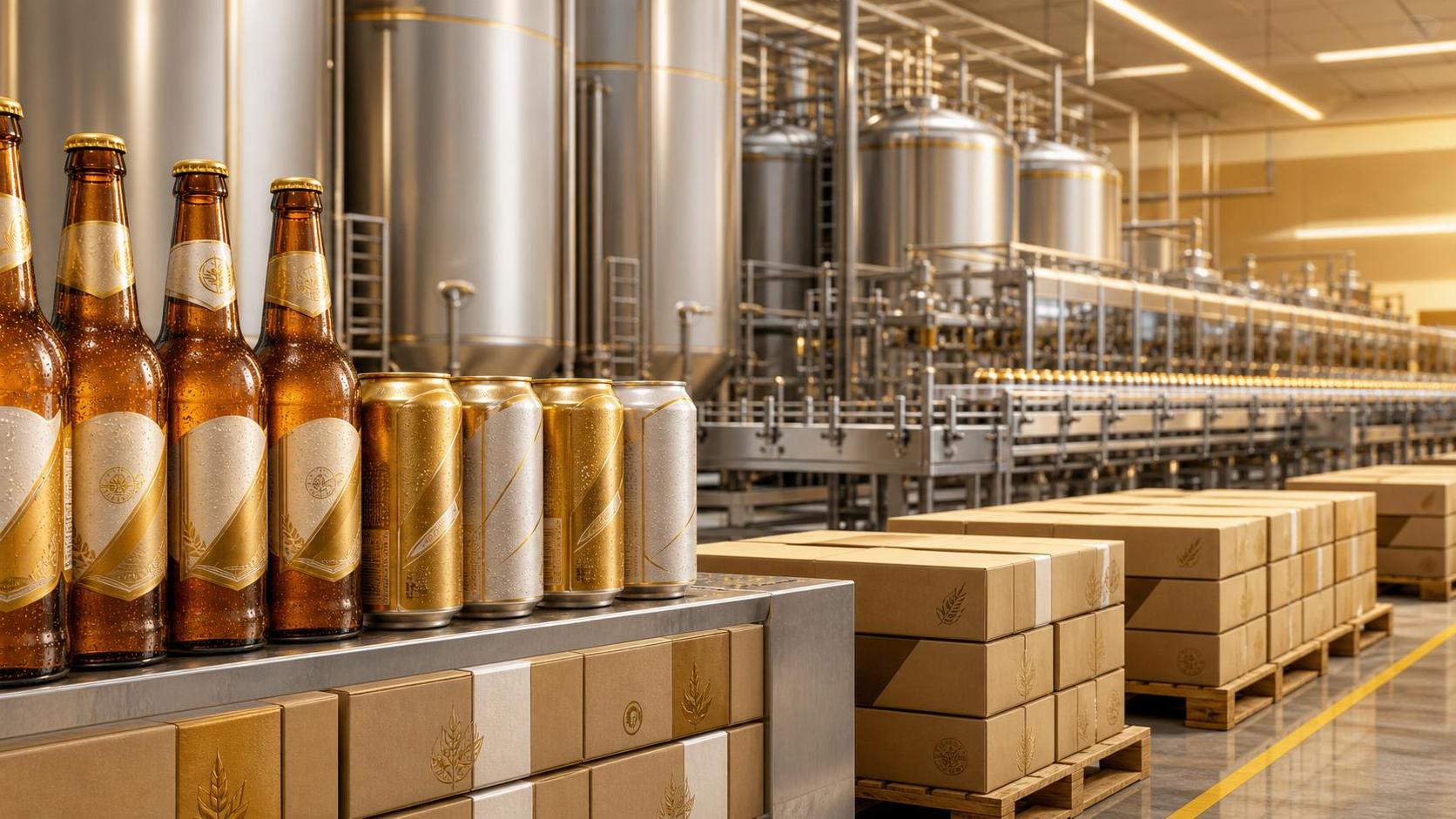
Choosing between a strong lager beer producer and a trader is rarely a simple price comparison. In the beer and beverage business, the sourcing model affects lead time, formula consistency, labeling compliance, and channel reliability. When product launches depend on tight schedules and repeatable quality, the lower-risk option is usually the one that gives clearer control over production, documentation, and replenishment.
That is why the debate matters now. Demand is becoming more segmented, with classic lager still strong, while wheat beer, low-calorie beer, fruit-flavored lines, and functional specialty products expand shelf competition. A supply partner must do more than move cartons. It must support stable execution across restaurants, supermarkets, bars, and mixed retail channels.
What separates a producer from a trader
A trader mainly connects supply and demand. It may aggregate products from several factories, manage export paperwork, and offer short-term flexibility when a buyer needs fast access to existing stock.
A strong lager beer producer works differently. It controls brewing, packaging, quality systems, and often product development. That changes the risk profile because the source of the beer and the source of the promise are the same.
In practice, the distinction becomes important when orders move beyond one-off transactions. Once repeat batches, private label programs, or multi-market distribution are involved, the value of direct manufacturing visibility becomes much easier to measure.
Why strong lager creates special sourcing pressure
Strong lager sits in a sensitive category. Alcohol strength, taste balance, carbonation, shelf stability, and packaging presentation must remain consistent across runs. A small shift in fermentation control can change the drinking profile noticeably.
This is where a strong lager beer producer often has an advantage. Direct control over brewing parameters reduces the number of handoffs. Fewer handoffs usually mean fewer surprises.
Where commercial risk actually appears
Risk in beer sourcing does not only come from quality failure. It also comes from delayed packaging approval, incomplete ingredient disclosure, unstable batch supply, and mismatch between forecast and factory capacity.
A trader can still be useful, especially for market testing or mixed sourcing. However, the model may add another layer between demand planning and production reality. When issues appear, root cause resolution can take longer.
The lower-risk answer is not automatic, but the table shows a pattern. When the business needs repeatability and growth, a strong lager beer producer usually provides a stronger operating base.
Why production capacity matters more than price sheets
A low quoted price can hide future costs. If the supplier cannot maintain output during a sales peak, the result may be out-of-stock penalties, emergency freight, or damaged distributor confidence.
Capacity should be viewed in layers. Brewing volume matters, but so do canning or bottling availability, carton supply, label change speed, and the ability to prioritize export orders without disrupting local commitments.
A capable strong lager beer producer can show whether capacity is structural or temporary. That distinction helps avoid overcommitting to promotional programs that the supply base cannot support.
The value of broader product capability
Many buyers no longer build a portfolio around one SKU. They need classic lager for volume, but also wheat beer, sugar-free low-calorie beer, fruit-flavored beer, or functional lines for margin and differentiation.
A producer with R&D, production, and distribution capability can support that wider plan more smoothly. Jinpai Beer is one example of this broader model, combining craft beer development with manufacturing and channel supply.
That matters because portfolio expansion should not create sourcing fragmentation. Working with one strong lager beer producer that can also support adjacent categories often reduces coordination risk.
OEM and ODM support as a risk control tool
OEM and ODM are often discussed as growth tools, but they also lower risk when handled well. They align recipe development, packaging design, compliance review, and production planning inside one operating framework.
This is especially relevant for private label strong lager. Label language, alcohol declaration, packaging format, and shelf-life requirements vary across markets. Fragmented coordination increases the chance of rework.
- Use OEM when the product profile is already defined and speed matters.
- Use ODM when the market needs a more tailored taste, packaging, or positioning.
- Confirm who owns formula records, artwork files, and regulatory documents.
- Check whether trial batches can scale without changing the sensory profile.
A trader may arrange these services through factories, but the process tends to be less direct. For complex launches, a strong lager beer producer often gives a clearer path from idea to shipment.
Channel reliability is part of product reliability
Beer is not sold in one uniform environment. A bar may prioritize fast-moving draft or bottle formats. A supermarket may demand strict packaging compliance and stable replenishment. Online channels add listing accuracy and fulfillment pressure.
The sourcing model should match the channel mix. If the business serves multiple channels at once, the supply partner must understand different pack sizes, product rotations, and reorder rhythms.
This is another point in favor of a strong lager beer producer with established online and offline distribution experience. It shows the supplier can operate beyond brewing and support real market movement.
When a trader still makes sense
There are cases where a trader remains practical. Early market entry, small-volume testing, mixed origin sourcing, or temporary stock bridging can justify the model.
The key is to know what the trader is solving. If the need is speed and flexibility, the tradeoff may be acceptable. If the need is long-term supply assurance, direct production backing becomes more valuable.
How to evaluate the lower-risk model in practice
Useful evaluation starts with evidence, not claims. A strong lager beer producer should be able to explain capacity, testing standards, packaging options, export experience, and corrective action flow in practical terms.
- Request recent batch data for core strong lager SKUs.
- Review packaging formats and minimum order thresholds.
- Check whether the supplier supports OEM, ODM, and wholesale under one system.
- Ask how delays in cans, labels, or cartons are handled.
- Verify the supplier’s experience across bars, retail, and supermarket channels.
- Confirm how product extensions can be added later without restarting the full process.
These checks reveal whether the supplier can support not only the first shipment, but also the second, sixth, and twentieth. That is where true risk reduction becomes visible.
A practical way to move forward
For repeat supply, private label growth, or multi-channel rollout, the lower-risk route is often a strong lager beer producer with real R&D, manufacturing, and distribution capability. It gives better control over quality, timelines, and expansion planning.
That does not eliminate the role of traders, but it places them in a narrower lane. They are often useful for access and speed, while producers are stronger for stability and structured growth.
The next step is to compare sourcing options against actual business needs: volume profile, channel mix, customization level, and compliance burden. Once those variables are clear, the right model becomes much easier to judge on evidence rather than assumption.
Thank you very much for writing to us. Please leave your message and contact information, we will reply to you within 24 hours.