



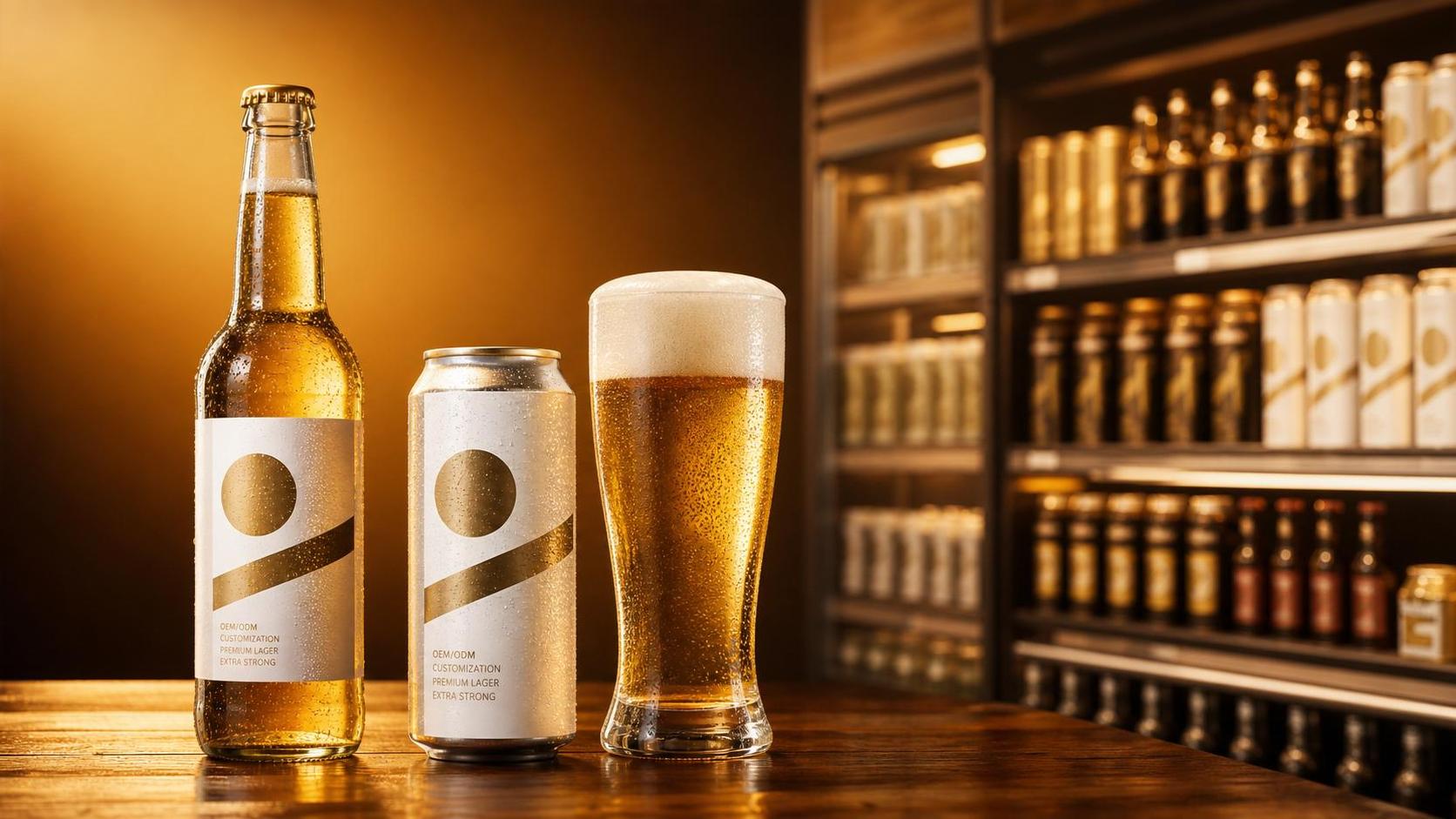
Customized Strong Lager Beer: Key Options for Private Label Projects
Customized strong lager beer is becoming a practical growth option in competitive beer markets.
Buyers want products with clear positioning, stable quality, and room for brand differentiation.
That is why customized strong lager beer now matters across supermarkets, bars, restaurants, and mixed retail channels.
A stronger profile can attract consumers looking for fuller taste, stronger body, and better value perception in one bottle or can.
With OEM and ODM support, private label projects can move faster without building production from scratch.
Jinpai Beer supports this process through craft beer R&D, flexible packaging, and dependable supply for global channel development.
Why Customized Strong Lager Beer Fits Current Market Demand
From recent market shifts, stronger lager styles are no longer limited to niche shelves.
They are moving into broader retail programs because they balance drinkability with a more assertive character.
For private label portfolios, customized strong lager beer offers a useful middle ground.
It feels more distinctive than standard lager, yet remains easier to scale than highly experimental craft styles.
This also helps brands serve both mainstream and premium-leaning drinkers without creating a confusing lineup.
In practical business terms, the category works well when a buyer needs stronger margin potential and wider market acceptance.
- Higher perceived value than entry-level lager
- Clear flavor identity for private label positioning
- Broad compatibility with on-trade and off-trade channels
- Flexible alcohol range for local demand patterns
- Good fit for seasonal launches and permanent product lines
More importantly, customized strong lager beer gives buyers a product story that is easy to communicate at the shelf.
Core Customization Options That Shape a Strong Lager Project
A successful customized strong lager beer project usually starts with product architecture, not packaging alone.
The strongest results come from aligning formula, taste, appearance, and pack format with channel expectations.
1. Alcohol Strength and Body
Alcohol content is the first decision point in customized strong lager beer development.
Different regions prefer different intensity levels, often shaped by pricing, regulation, and drinking habits.
A higher ABV can support a bold positioning, but it must remain balanced by clean fermentation and controlled bitterness.
If the body feels heavy or the finish feels rough, repeat purchase can drop quickly.
2. Flavor Profile and Drinkability
Customized strong lager beer should taste strong without feeling difficult to drink.
That often means a careful balance of malt sweetness, crispness, hop restraint, and a smooth aftertaste.
Some markets prefer a classic grain-forward profile.
Others respond better to slightly modern notes, including cleaner finish or lighter sweetness.
3. Packaging Format and Shelf Strategy
Packaging does more than present the product.
It changes perceived price, retail suitability, transport efficiency, and channel performance.
For customized strong lager beer, common options include cans, glass bottles, and multi-pack retail formats.
A restaurant-focused line may need different packaging than a supermarket-led launch.
4. Label Design and Brand Positioning
Strong lager buyers often make fast decisions based on visual signals.
A private label needs label language that matches its target price band and retail environment.
When product identity, pack size, and taste message work together, customized strong lager beer becomes easier to sell consistently.
How Jinpai Beer Supports Private Label Development
Jinpai Beer combines craft beer R&D with scalable production for customized strong lager beer programs.
This matters when a project needs both product flexibility and dependable execution.
The company covers classic lager, German wheat, sugar-free low-calorie beer, fruit beer, and functional specialty beer.
That broader capability helps when a buyer plans to extend beyond one SKU later.
In a customized strong lager beer project, support usually includes formula discussion, sampling, packaging selection, and production planning.
OEM and ODM options also make it easier to match different branding strategies.
Some projects already have clear label direction and target flavor.
Others need more development support before finalizing a market-ready product.
That combination gives customized strong lager beer buyers more control without losing production reliability.
Where Customized Strong Lager Beer Performs Best
Application planning matters as much as recipe design.
Customized strong lager beer can work across several channels, but each channel needs a different commercial logic.
Supermarkets and Hypermarkets
Retail shelves reward products with fast recognition and consistent value messaging.
Customized strong lager beer works well here when pack design is direct and price architecture is clear.
Bars and Nightlife Venues
In bars, a stronger lager can fill the gap between mainstream beer and heavier specialty styles.
The product should feel bold, but still clean enough for repeat orders during social occasions.
Restaurants and Food Service
For restaurants, customized strong lager beer performs better when its flavor profile matches local food preferences.
A crisp finish often helps with pairing versatility and broader table appeal.
Mixed Retail and Regional Distribution
In regional programs, customized strong lager beer often succeeds as a flagship product.
It can anchor a beer line, then open the door to line extensions with wheat, fruit, or low-calorie variants later.
Common Risks in Customized Strong Lager Beer Projects
A promising concept can still fail if early decisions are rushed.
Customized strong lager beer projects usually face a few predictable risks.
- Overemphasizing alcohol strength while ignoring smoothness and repeat-drinking experience.
- Using packaging that looks premium but does not fit the target channel price point.
- Launching without enough tasting feedback from the intended sales market.
- Treating customized strong lager beer as a generic SKU instead of a defined brand asset.
- Failing to align production timing with promotion windows and market entry plans.
These issues are manageable when the project moves through a structured sampling and approval process.
The key is to evaluate customized strong lager beer as a commercial solution, not only as a beverage style.
A Practical Path to Launch
A strong launch usually follows a simple but disciplined sequence.
- Define the target market, price band, and main sales channel.
- Confirm the customized strong lager beer style, ABV range, and taste direction.
- Select bottle or can format based on logistics and shelf strategy.
- Review samples with commercial feedback, not only internal preference.
- Finalize labeling, compliance details, and production schedule.
- Prepare follow-up line extensions after the first SKU gains traction.
This step-by-step approach reduces guesswork and improves launch efficiency.
It also gives customized strong lager beer a better chance to become a stable long-term product.
Jinpai Beer is positioned to support projects that require both customization depth and supply consistency.
For buyers building a differentiated beer portfolio, customized strong lager beer is often a smart first move.
It offers stronger shelf presence, flexible brand storytelling, and practical channel coverage.
When formula, packaging, and positioning are aligned, the result is easier to scale across markets.
The next useful step is to evaluate target market needs, then match them with the right customized strong lager beer solution.
Thank you very much for writing to us. Please leave your message and contact information, we will reply to you within 24 hours.