



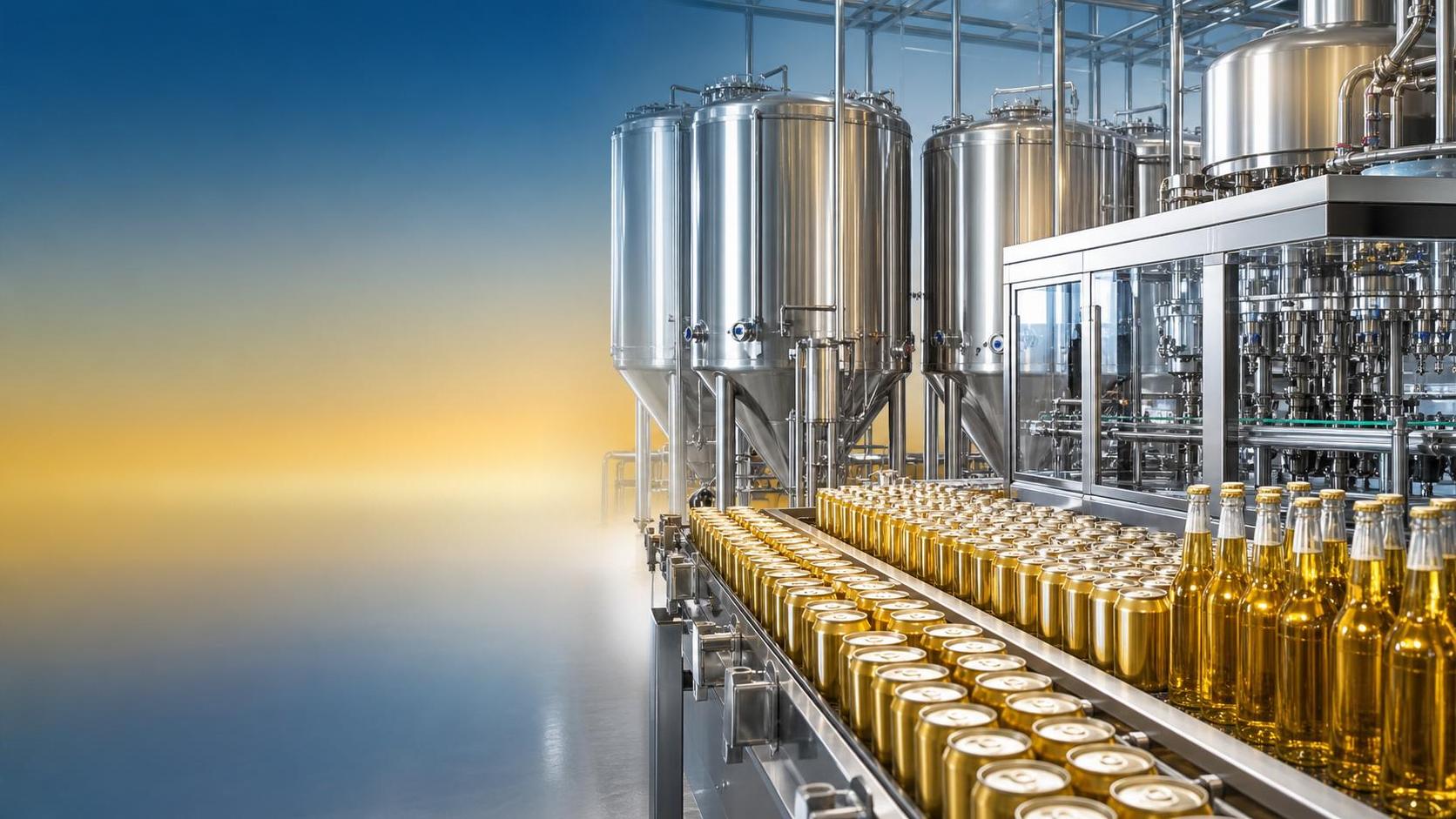
What should you really check in a strong lager beer factory?
Choosing a strong lager beer factory is rarely about unit price alone. A lower quote can hide unstable batches, delayed shipping, or weak documentation.
For imported beer programs, those gaps quickly become margin problems. They also affect shelf planning, repeat orders, and brand reputation in local channels.
A practical review starts with three questions. Can the factory produce at your target volume, hold flavor consistency, and ship on the promised schedule?
That is why the best strong lager beer factory checklist combines production capacity, quality systems, compliance records, and lead time control.
In real sourcing work, strong lager is often paired with broader portfolio needs. Some buyers later expand into wheat beer, low-calorie lines, fruit beer, or functional specialty products.
A supplier with R&D and OEM/ODM experience is usually easier to scale with. That matters when one project grows into a multi-SKU program.
How do you tell whether capacity is real, not just promised?
Published output figures are only a starting point. What matters more is usable capacity during peak season and during mixed-order production.
A strong lager beer factory may claim large annual output, yet still struggle with scheduling when cans, bottles, and private label runs overlap.
Ask for details that show production reality:
- Monthly brewing capacity versus packaging capacity
- Number and size of fermentation tanks
- Available canning and bottling lines
- Peak season utilization rate
- Minimum order quantity for OEM or ODM projects
- Average reorder lead time for repeat SKUs
A reliable answer usually includes ranges, not vague confidence. If a supplier cannot explain how many orders run in parallel, capacity may be overstated.
It also helps to ask how the factory handles line changeovers. Strong lager with different alcohol levels, packaging formats, or label designs can slow output more than expected.
More established producers often perform better here because they already manage classic lager, wheat beer, flavored products, and customized export batches on the same system.
What quality signals matter most for strong lager beer?
Strong lager is less forgiving than many people assume. Higher alcohol can amplify imbalance, and poor fermentation control becomes obvious in the glass.
When reviewing a strong lager beer factory, focus on process discipline rather than marketing language. Quality should be measurable from raw material intake to finished shipment.
Key checkpoints usually include malt and hop sourcing, yeast management, brewing water control, fermentation temperature records, filtration standards, and dissolved oxygen limits.
Packaging stability is equally important. A good batch can still fail in distribution if seam quality, crown sealing, or pasteurization control is weak.
Before approving a supplier, compare both lab data and sensory samples. Numbers show control, while tasting confirms whether the profile stays clean, crisp, and commercially repeatable.
More often than not, dependable factories can provide COA samples, retained sample rules, and clear complaint-handling procedures without hesitation.
Can a strong lager beer factory support OEM or ODM without slowing delivery?
This is where many sourcing plans become inefficient. Product development and delivery often get reviewed separately, even though they affect each other directly.
If your project needs private label packaging, formula adjustment, or market-specific compliance, ask how development fits into the production calendar.
A strong lager beer factory with active OEM/ODM service should explain its workflow clearly. Sample confirmation, formula locking, artwork approval, packaging procurement, and mass production should follow a defined timeline.
The stronger factories also reduce friction by supporting multiple retail routes. That includes supermarket packaging standards, bar channel formats, and e-commerce ready cases.
This kind of flexibility is useful when a beer supplier already serves online and offline markets globally. It suggests experience with varied market requirements, not just local bulk sales.
Still, customization should not be confused with unlimited freedom. The right question is whether the factory can customize efficiently while protecting quality and schedule.
Where do lead times usually break down?
Lead time issues rarely come from brewing alone. Delays are more likely to appear in packaging material sourcing, label revision, document approval, or export booking.
That is why a strong lager beer factory should be reviewed as a supply system, not only as a brewhouse.
A useful discussion covers four timing layers:
- Sample lead time for initial tasting and adjustment
- Packaging lead time for cans, bottles, trays, and cartons
- Production lead time after deposit and artwork approval
- Shipping readiness, including documents and pallet configuration
Need to move quickly? Ask which parts are fixed and which parts can be compressed. Some suppliers can reserve stock cans or standard cartons to shorten launch cycles.
It is also wise to request recent examples. A factory that can show actual lead times for export orders is easier to trust than one relying on best-case estimates.
What are the most common cost mistakes when comparing factories?
The biggest mistake is comparing only ex-factory price. For strong lager, total cost often changes after packaging choice, order volume, documentation, and freight conditions are added.
Another common problem is ignoring hidden quality cost. If a lower-priced strong lager beer factory causes unstable flavor or high breakage, the savings disappear quickly.
A more useful cost review includes:
- Price by packaging format and fill volume
- MOQ impact on cash flow and inventory pressure
- OEM setup cost, plate charges, and design revisions
- Testing, certification, and export document fees
- Damage risk, shelf life loss, and reorder flexibility
In practice, the best-value partner is often the one with predictable replenishment and fewer corrective actions, not simply the lowest initial quote.
What should be on your final supplier checklist before moving forward?
By the final stage, the decision should feel evidence-based. You should know how the strong lager beer factory performs in production, quality control, customization, and delivery.
A concise final checklist usually includes:
- Verified production and packaging capacity
- Stable sample approval with matching batch standards
- Clear compliance and export documentation process
- Realistic lead time by SKU and packaging type
- Defined OEM/ODM workflow and revision limits
- Complaint response, replacement, or corrective action terms
If a factory also has broader brewing capability, that can be a strategic advantage. It creates room for future line extensions beyond strong lager without restarting supplier qualification.
That is especially relevant when working with beer producers active in craft beer R&D, wholesale supply, and customized global distribution.
The strongest next step is simple. Put your expected volume, target ABV, packaging format, compliance needs, and launch date into one comparison sheet.
Then evaluate each strong lager beer factory against the same checklist. Clear inputs lead to clearer pricing, fewer surprises, and a better long-term supply decision.
Thank you very much for writing to us. Please leave your message and contact information, we will reply to you within 24 hours.