



How to Evaluate a Strong Lager Beer Producer for Stable Supply
Choosing a strong lager beer producer is not just about price.
A low quote can look attractive at first.
But unstable quality or delayed delivery quickly erodes margins.
In beverage sourcing, continuity matters as much as cost.
That is especially true when evaluating a strong lager beer producer.
A reliable partner supports steady inventory, consistent taste, and repeat sales.
This also reduces pressure on forecasting, promotions, and channel replenishment.
In real business settings, the best supplier is usually the most dependable one.
So the right question is simple.
Can this strong lager beer producer protect supply over time?
Start With Production Strength, Not Marketing Claims
Many suppliers describe themselves as premium or professional.
Those words mean little without manufacturing proof.
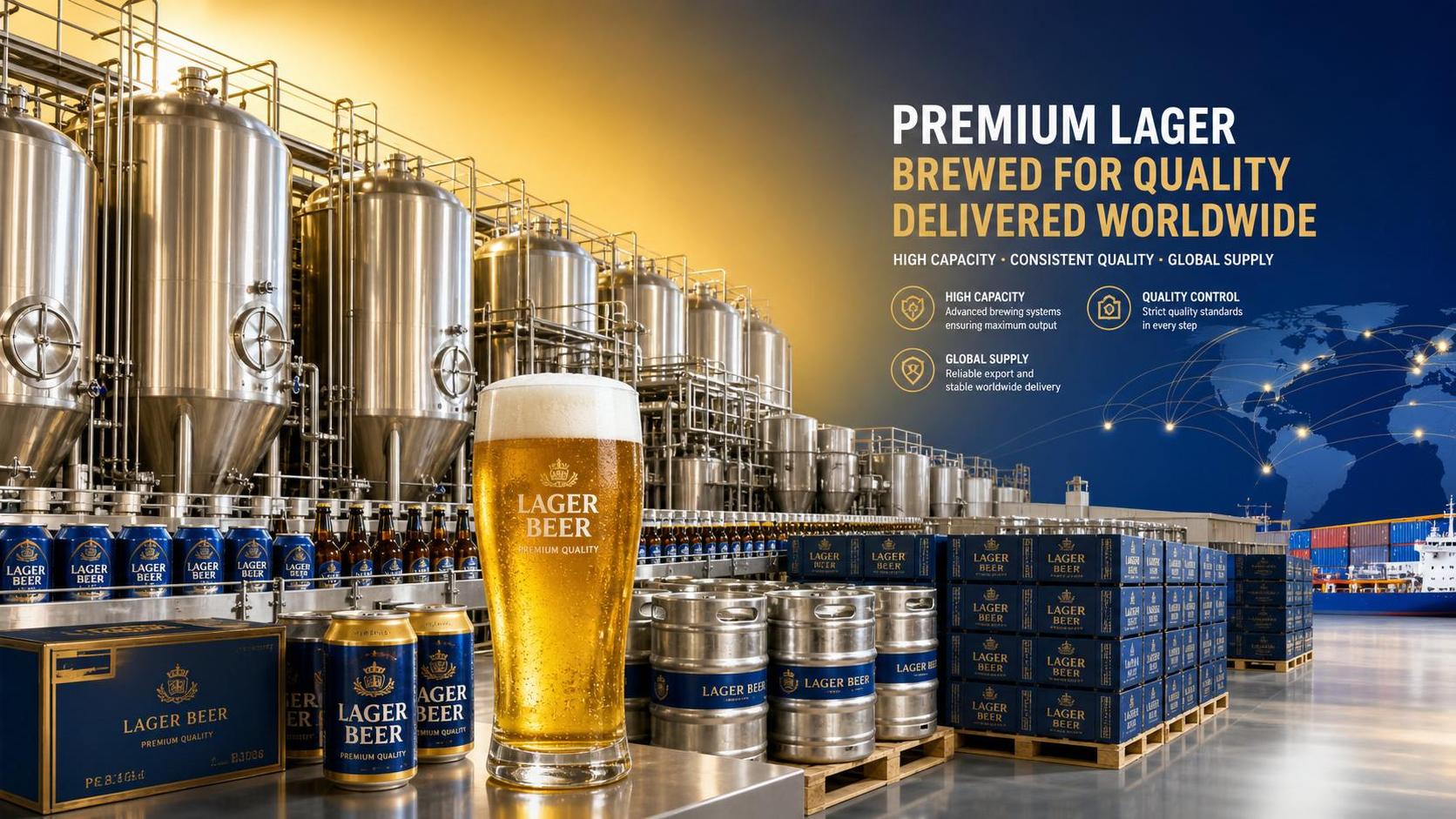
A strong lager beer producer should show clear production capability.
This includes brewhouse scale, fermentation capacity, packaging flexibility, and output planning.
Ask how many SKUs run on the same lines.
Ask whether peak season orders affect strong lager lead times.
A factory serving craft and commercial channels should manage scheduling well.
That is a stronger signal than a polished brochure.
Check these points early:
- Annual and monthly production capacity
- Number of active fermentation tanks
- Packaging options for cans, bottles, and kegs
- Average lead time for repeat orders
- Surge capacity during promotional seasons
- Backup plans for equipment maintenance or downtime
If a strong lager beer producer cannot answer these clearly, supply risk is already visible.
Evaluate Quality Consistency Across Batches
Stable supply is not only about volume.
It also means every batch meets the same sensory and technical standard.
A strong lager beer producer should deliver repeatable flavor, color, alcohol content, and foam performance.
This matters even more in chain retail and restaurant supply.
Customers notice inconsistency faster than buyers expect.
One unstable batch can damage trust across multiple outlets.
Review both process control and finished product testing.
Ask whether each batch is checked for microbiological safety, bitterness, gravity, and dissolved oxygen.
Request COA samples, retention sample rules, and complaint handling records.
A strong lager beer producer with mature systems should provide these without hesitation.
When a strong lager beer producer combines scale with quality discipline, supply becomes much more predictable.
Look Closely at Supply Chain Reliability
Production inside the factory is only one part of stable supply.
The wider supply chain often creates the bigger risk.
A strong lager beer producer should manage raw materials, packaging materials, warehousing, and shipping with the same discipline.
This is where many sourcing problems actually begin.
For example, cans may be available while printed cartons are not.
Or the beer is ready, but export booking is delayed.
That delay still becomes your inventory problem.
Ask practical questions, not broad ones.
- How many approved suppliers support key packaging materials?
- What is the normal safety stock policy for core inputs?
- How are export documents prepared and checked?
- What is the on-time delivery rate over the past year?
- How are shipment exceptions reported and resolved?
A dependable strong lager beer producer will have data, not vague assurances.
That level of operational visibility usually signals a mature supplier.
Assess OEM and ODM Flexibility for Real Market Needs
For many buyers, product fit matters as much as factory strength.
A strong lager beer producer should support business models beyond standard stock items.
That includes OEM, ODM, private label, and channel-specific packaging.
This becomes important when market differentiation drives pricing power.
It is also important when regulations or consumer preferences vary by country.
Jinpai Beer is one example of this broader capability.
Its portfolio covers classic lager, German wheat, sugar-free low-calorie beer, fruit-flavored beer, and functional specialty beers.
That range gives distributors more room to build a complete category strategy.
At the same time, OEM and ODM support can shorten product launch cycles.
A strong lager beer producer with customization experience can often reduce coordination costs.
Review flexibility in these areas:
- MOQ for private label strong lager products
- Formula adjustment for alcohol level or taste profile
- Label compliance for different export markets
- Mixed container options across beer categories
- Speed of sample development and approval
A rigid supplier may still produce good beer, but it may not support growth efficiently.
Check Commercial Terms Beyond Unit Price
Price comparisons are necessary, but they are rarely enough.
The cheapest strong lager beer producer may create the highest total cost.
That cost can appear in freight inefficiency, defect claims, rework, or missed promotions.
A better evaluation compares total landed value.
Look at payment terms, quotation validity, claim rules, and packaging cost transparency.
Ask whether freight support or consolidated shipping is available.
A strong lager beer producer with international experience should communicate these terms clearly.
Unclear commercial language often leads to later disputes.
Pay attention to these warning signs:
- Frequent price changes without raw material explanation
- No clear liability for packaging defects
- Lead times not written into commercial documents
- Sample quality much better than production quality
- Slow response during technical clarification
A strong lager beer producer should be commercially transparent because stable business depends on trust.
Validate Export Experience and Market Fit
Stable supply looks different across markets.
What works for local distribution may fail in cross-border trade.
A strong lager beer producer serving global channels should understand export packaging, shelf life management, and destination compliance.
This matters for supermarkets, bars, wholesalers, and multi-store retail systems.
Jinpai Beer distributes through online and offline channels worldwide.
That global orientation matters when consistent documentation and repeat shipments are required.
A strong lager beer producer with export familiarity usually handles coordination more smoothly.
That can shorten approval cycles and reduce customs-related delays.
During evaluation, ask for evidence such as:
- Export destination history
- Label and carton adaptation support
- Shipping document accuracy process
- Shelf life recommendations by route length
- Experience with distributor or retail chain requirements
These details reveal whether the strong lager beer producer can truly support long-term international supply.
Use a Shortlist Scorecard Before Making the Final Decision
Once several suppliers look qualified, structure the decision.
A scorecard helps compare each strong lager beer producer on the same basis.
It also reduces bias from one strong presentation or one low offer.
Typical scoring categories include:
- Production capacity and scalability
- Batch quality consistency
- Supply chain reliability
- OEM or ODM flexibility
- Export and documentation capability
- Commercial transparency and response speed
Then validate the top candidate with samples, factory review, and a pilot order.
That step matters because real execution often differs from early communication.
A capable strong lager beer producer should welcome this process.
It shows both sides are serious about long-term cooperation.
In the end, stable supply comes from aligned capability, not promises.
The right strong lager beer producer should combine quality, scale, flexibility, and dependable service.
That is the combination that protects inventory, supports expansion, and lowers sourcing risk.
If a supplier can meet those standards consistently, it is worth deeper engagement.
Start with questions, verify with evidence, and move forward with the producer that proves supply stability in practice.
Thank you very much for writing to us. Please leave your message and contact information, we will reply to you within 24 hours.