



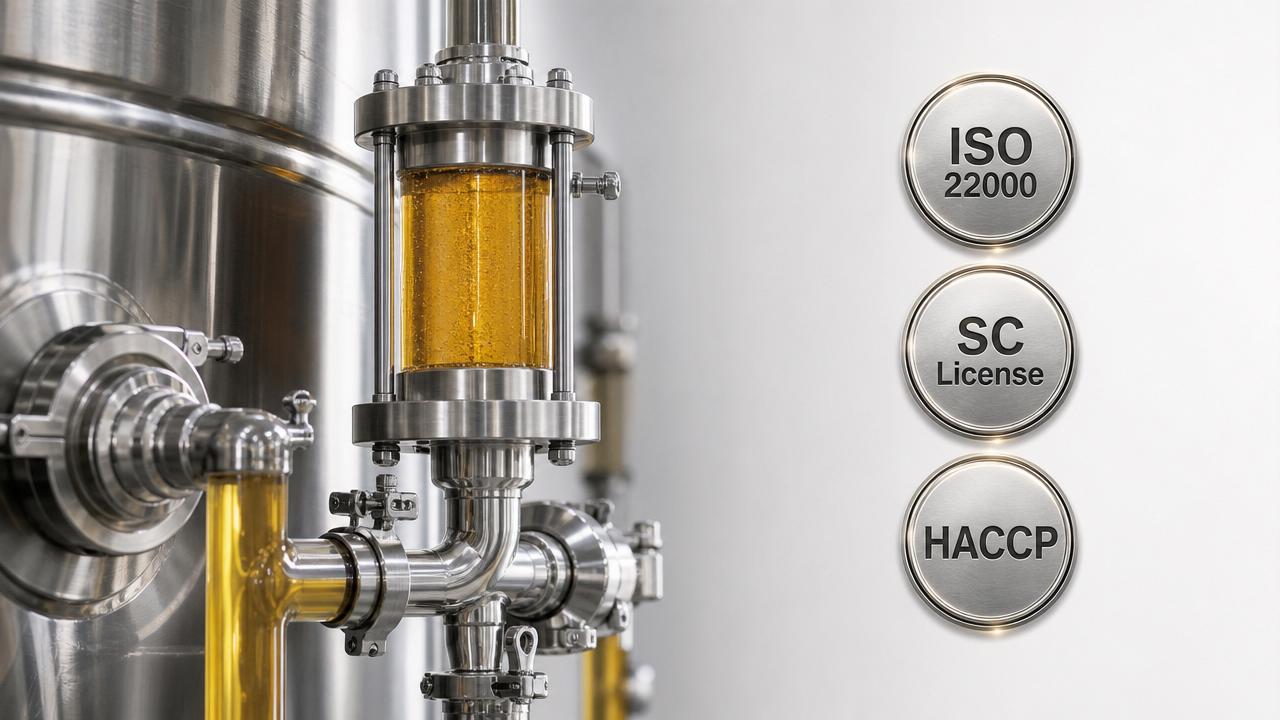
As global demand for healthier beverage options surges, sourcing a reliable sugar-free beer supplier China is critical—especially for quality control and safety professionals overseeing compliance across international markets. In 2026, verifying key certifications (e.g., ISO 22000, HACCP, FDA registration, and China’s SC license) isn’t optional—it’s foundational to risk mitigation and brand integrity. Jinpai Beer, a certified craft brewer specializing in sugar-free, low-calorie, and functional beers, supports buyers with full traceability, OEM/ODM flexibility, and audit-ready documentation. Let’s explore the non-negotiable credentials you must validate before partnering.
Why Certification Verification Matters More Than Ever in 2026
Regulatory expectations have tightened globally. The EU’s updated Food Information Regulation now mandates explicit labeling of added sugars—even in fermented beverages where residual sugars are naturally low. Meanwhile, the U.S. FDA continues prioritizing inspections of imported alcoholic beverages lacking verifiable food safety systems.
For any sugar-free beer supplier China, certification gaps directly impact market access. A missing or expired SC license invalidates domestic production legitimacy. An unverified HACCP plan raises red flags during customs clearance in Canada or Australia.
Buyers who skip third-party validation often face delayed shipments, rejected consignments, or post-import recalls—costing up to 23% more than upfront due diligence.
The 5 Non-Negotiable Certifications for Any Sugar-Free Beer Supplier China
These five credentials form the baseline for trust, traceability, and trade readiness:
- SC License (Food Production License): Issued by China’s State Administration for Market Regulation (SAMR). Mandatory for all domestic beer producers. Verify the license number on the official SAMR portal—and confirm it explicitly covers “alcoholic beverages (beer)” and “sugar-free formulations”.
- ISO 22000:2018 Certification: Demonstrates a fully documented, process-based food safety management system. Look for scope statements that include “low-sugar fermentation control” and “post-fermentation sugar testing protocols”.
- HACCP Plan with Valid Third-Party Audit Report: Not just a certificate—request the latest audit report (within 12 months). It must detail CCPs for residual sugar measurement, yeast strain verification, and filtration validation.
- FDA Facility Registration (U.S. Importers): Required under FDA FCE & SID rules. Confirm registration status via FDA’s public database—and ensure the facility lists “alcoholic malt beverages” and “no-added-sugar beer” in its product description.
- Halal or Kosher Certification (if targeting Middle East or Jewish retail channels): These are not interchangeable. Halal requires alcohol content below 0.5% ABV *and* ethanol sourced from natural fermentation—not synthetic. Kosher demands rabbinical supervision of yeast, hops, and filtration aids.
How Certification Needs Shift Across Key Import Markets
A single certification set rarely satisfies all destinations. Requirements vary by regulatory philosophy, enforcement rigor, and consumer expectation.
Common Certification Oversights That Derail Sourcing
Even experienced importers miss these subtle but consequential gaps:
- Assuming ISO 9001 replaces ISO 22000: Quality management ≠ food safety management. Sugar metabolism during fermentation requires hazard-specific controls.
- Accepting self-declared “sugar-free” without lab reports: Residual fructose or maltose may remain post-fermentation. Demand HPLC-tested certificates showing ≤0.3g/100ml total fermentable sugars.
- Overlooking OEM-specific documentation: If branding or formulation is customized, the SC license and HACCP plan must reflect the exact recipe—not just the base beer.
- Confusing “alcohol-free” with “sugar-free”: One addresses ethanol removal; the other governs carbohydrate profile. They require separate validation pathways.
Action Steps: How to Validate a Sugar-Free Beer Supplier China in Under 72 Hours
Move beyond PDF scans. Take these concrete steps:
- Visit SAMR’s National Enterprise Credit Information Publicity System and enter the supplier’s business license number. Cross-check SC license validity and scope.
- Email the supplier requesting their latest HACCP audit report, ISO 22000 certificate, and three most recent third-party lab reports for residual sugar (HPLC method) and ethanol content.
- For U.S. imports, search the FDA’s FURLS database using the facility’s registration number. Confirm active status and product classification.
- Request a virtual factory tour focusing on fermentation tanks, inline sugar analyzers, and cold-filtering lines—critical for consistent sugar-free output.
Jinpai Beer provides all verified documentation upon qualified inquiry—including bilingual SC license copies, real-time batch traceability dashboards, and customizable certification bundles aligned with your target market.
Partnering with a compliant sugar-free beer supplier China starts with verification—not assumption. In 2026, the difference between seamless distribution and regulatory disruption lies in one checklist. Start validating today.
Thank you very much for writing to us. Please leave your message and contact information, we will reply to you within 24 hours.