



Sourcing strong lager beer from a contract manufacturer often starts with a simple request: “Can you brew a 7.5% ABV Munich-style lager, stable for 6 months at ambient storage?” But what happens when the first shipment arrives with inconsistent bitterness, faint buttery notes in the finish, or lower-than-expected alcohol content? Many procurement professionals have faced this—especially those managing private-label portfolios for bars, regional supermarkets, or online craft platforms. The issue isn’t always poor intent; it’s often a gap between stated capability and actual process control. Without verifying how a strong lager beer factory executes three technical levers—mash efficiency, attenuation control, and diacetyl rest protocols—you’re relying on brochures, not brewing discipline.
The consequences compound quickly. Low mash efficiency means higher grain costs per hectoliter—and if unflagged during audit, that variance gets baked into your landed cost model. Inconsistent attenuation leads to batch-to-batch variation in alcohol yield and residual sweetness, triggering customer complaints or shelf-life failures. Skipping or shortening the diacetyl rest creates off-flavors that only emerge after 4–6 weeks in warm warehouse conditions, damaging brand trust before the product even reaches end users. These aren’t theoretical risks. They’re operational realities that surface when audits focus only on certifications, capacity, or packaging lines—and skip the brewhouse floor.
Mash Efficiency: More Than Just a Number on the Lab Sheet
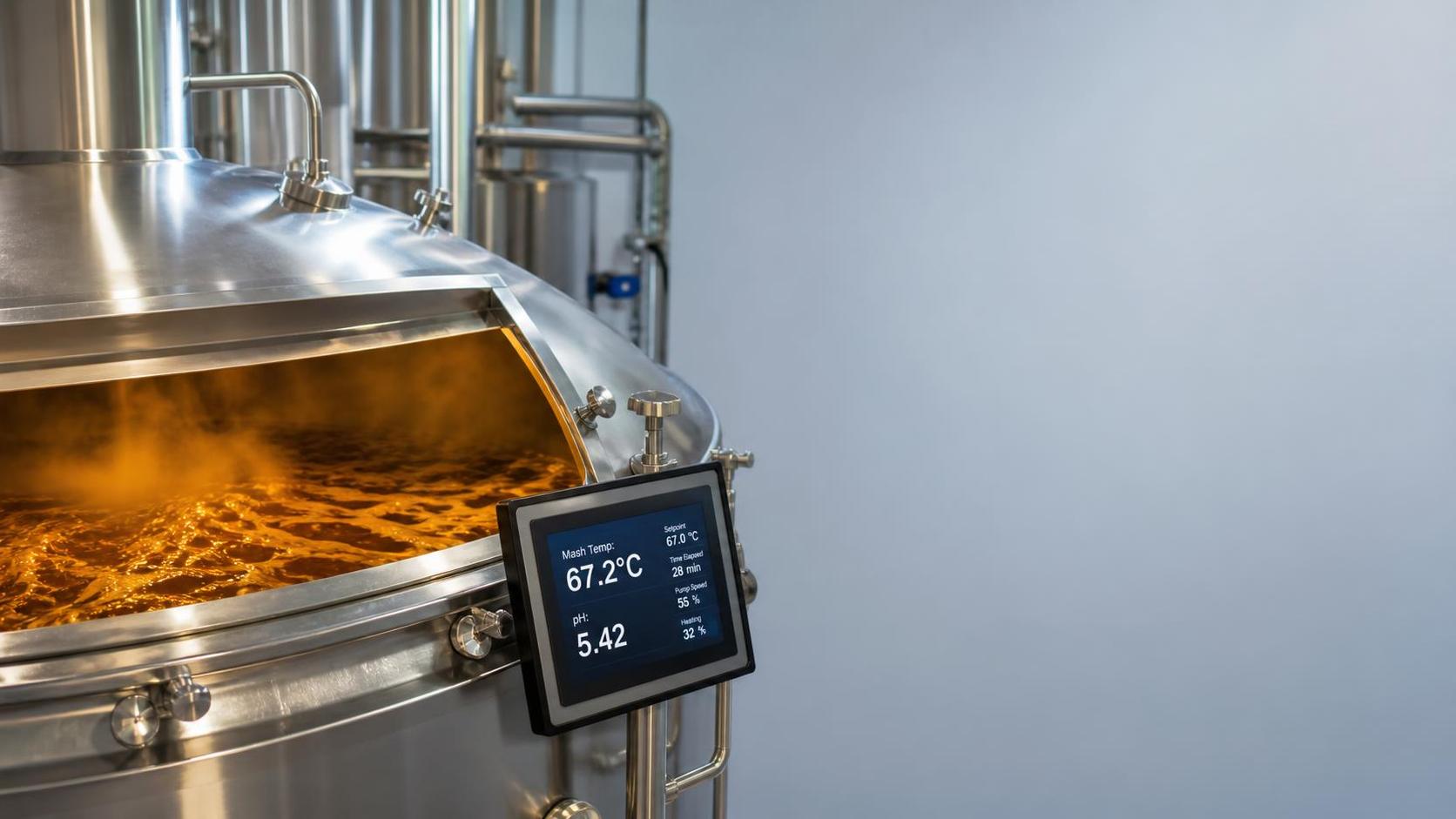
Mash efficiency is routinely reported as a percentage—say, 92%. But that figure alone tells you nothing about repeatability or root cause. During an audit, don’t accept the number. Ask to see the last 10 batches’ raw data: grist composition, water chemistry logs, mash-in temperature ramp times, pH readings at saccharification rest, and iodine test results at multiple time points. A reliable strong lager beer factory will track these—not just final extract yield. If their iodine tests show incomplete starch conversion in 3 out of 10 batches, or if mash pH drifts above 5.6 without correction, that signals instability in milling consistency or calcium dosing. Also check how they handle high-gravity mashes: strong lagers often exceed 18°P original gravity, which stresses enzyme activity. Do they adjust beta-amylase addition rates? Do they verify thermomycolytic stability at 72°C rests? These details matter more than the headline efficiency number.
Attenuation Control: Where Theory Meets Fermentation Reality
Attenuation—the percentage of fermentable sugars converted to alcohol and CO₂—is often treated as a yeast-driven outcome. But in practice, it’s a function of four interlocking variables: wort fermentability (set during mashing), yeast health and pitching rate, fermentation temperature profile, and oxygenation level at transfer. A factory claiming “98% apparent attenuation” on paper may deliver 92–96% in reality if their oxygenation system lacks inline monitoring or if they pitch yeast at 12°C without verifying viability post-storage. During audit, request logs showing dissolved oxygen (DO) measurements pre-fermentation, cell count and viability reports for each pitch, and real-time temperature curves—not just setpoints—for primary and secondary phases. Pay attention to how they define “final gravity”: some use forced cooling to stop fermentation early, masking under-attenuation. True control shows in tight standard deviation across 10+ batches—not a single ideal result.
Diacetyl Rest Protocols: Not a Step—It’s a Timing Discipline
Diacetyl is naturally produced during active fermentation but must be reabsorbed by yeast before packaging. That reabsorption happens most efficiently during a controlled temperature rise—typically 1–2°C above peak fermentation temp—held for 48–72 hours before cooling. Many factories call this a “diacetyl rest,” but few document its execution rigorously. Ask to review the last five diacetyl rest logs: exact start/end times, temperature ramp rate, hold duration, and post-rest diacetyl assay results (not just sensory notes). If assays are missing or performed only on every third batch, that’s a red flag. Also ask how they manage rest timing when fermentation finishes faster or slower than scheduled—do they rely on gravity alone, or do they cross-check with FAN (free amino nitrogen) depletion and yeast flocculation behavior? Strong lagers, with their extended cold conditioning, are especially vulnerable to diacetyl carryover if this step is rushed or skipped.
These three checkpoints—mash efficiency, attenuation control, diacetyl rest—are not isolated quality gates. They’re interconnected process signatures. A factory that consistently hits target mash efficiency likely maintains tighter water chemistry control, which supports consistent wort fermentability, which in turn makes attenuation more predictable—and predictable attenuation gives the yeast the metabolic headroom needed to fully clean up diacetyl. When one slips, others often follow.
Jinpai Beer operates with this interdependence in mind. As a craft brewery focused on strong lagers and specialty beers, we maintain full traceability across all three parameters—not as compliance checkboxes, but as daily operational metrics. For procurement partners, this means access to raw batch records (not summaries), defined deviation thresholds, and ODM flexibility that respects technical boundaries: e.g., adjusting yeast strain requires recalibrating rest timing, not just swapping a name on a spec sheet. We don’t offer “one-size-fits-all” lager production. Instead, we align process design with your commercial requirements—whether that’s optimizing for shelf stability in tropical climates or maximizing alcohol yield within a fixed grain budget.
If you’re evaluating suppliers now, treat the audit like a brewhouse walkthrough—not a boardroom presentation. Stand next to the lauter tun while they run a test mash. Watch how they log DO readings during yeast propagation. Ask to see the actual graph of a recent diacetyl rest—not just the report stating “completed.” You’ll learn more in 20 minutes on-site than in three rounds of email Q&As. And if on-site isn’t possible, request unedited video clips of those moments, timestamped and cross-referenced with batch numbers. Because in strong lager production, consistency isn’t declared. It’s demonstrated—one batch, one rest, one gravity reading at a time.
Thank you very much for writing to us. Please leave your message and contact information, we will reply to you within 24 hours.