



How Much Does It Cost to Build a Strong Lager Beer Factory?
If you’re evaluating capital investment in craft brewing—especially for a facility targeting premium, high-ABV lagers—the question isn’t just “how much?” It’s “what does that number actually cover, and where do the real trade-offs sit?”
A 10,000 HL/year strong lager beer factory isn’t a scaled-down version of a macro-brewery, nor is it a glorified pilot system. It sits in a precise operational niche: enough volume to serve regional distributors and retail chains, tight enough process control to handle extended cold conditioning and ABV stability up to 8.5%+, and flexible enough to pivot across styles—German wheat, low-calorie lagers, fruit-infused variants, or functional brews with added botanicals or vitamins.
Based on 15+ years of OEM/ODM project execution—from small-batch specialty runs to turnkey production lines for international partners—we’ve seen how CAPEX estimates go off-track. Not because of miscalculation, but because of misalignment: between what’s quoted and what’s actually needed to run consistently, not just commission.
The Core Cost Drivers (Not Just Line Items)
CAPEX for this scale rarely falls below USD 3.2 million—and often lands between USD 4.1–5.7 million. That range isn’t arbitrary. It reflects three non-negotiable anchors:
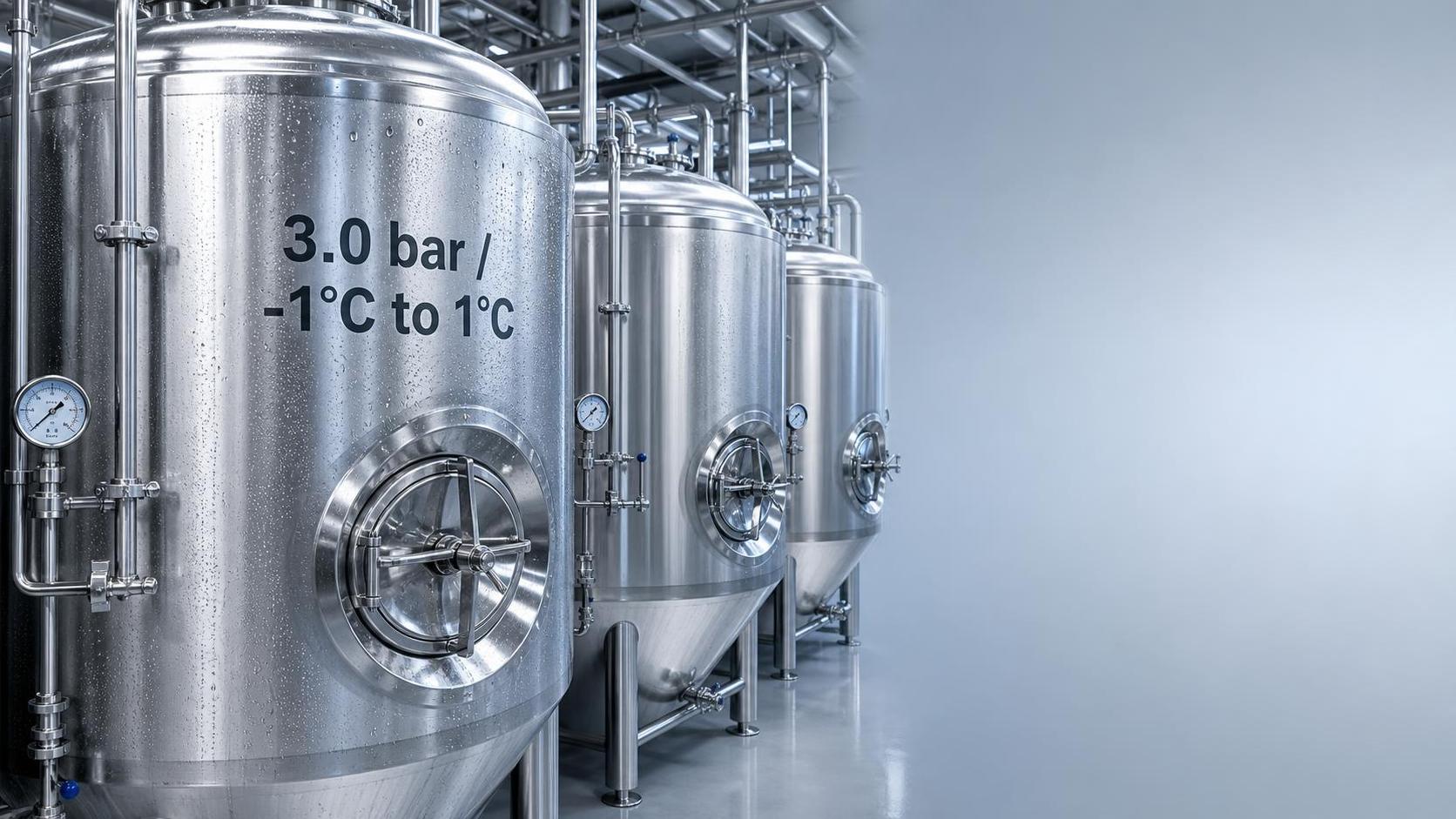
- Thermal & pressure resilience: Strong lagers demand longer fermentation (12–21 days), colder lagering (–1°C to 1°C), and higher CO₂ saturation. Vessels must hold 2.5–3.0 bar working pressure—not just for safety, but for consistent carbonation transfer and yeast management at high ABV.
- Yeast handling infrastructure: Unlike standard lagers, high-ABV strains are more sensitive to oxygen ingress, temperature spikes, and nutrient depletion. A dedicated propagation tank (300–500 L), glycerol storage, and inline cell counting aren’t luxuries—they’re failure-prevention tools.
- Post-fermentation flexibility: If you plan to produce sugar-free, low-calorie, or fruit-infused versions alongside core lager, your filtration, dosing, and blending systems must support both sterile cold fill and gentle post-fermentation infusion without cross-contamination risk.
Brewhouse: Where Efficiency Meets Consistency
A 10,000 HL/year brewhouse typically uses a 15–20 HL batch size. That means ~550–650 batches/year. At this throughput, automation isn’t optional—it’s what keeps labor costs from eroding margins. But “automation” here means specific things:
A PLC-controlled mash tun with programmable step infusion (not just timers), automated wort cooling with heat recovery integration, and CIP monitoring with conductivity/temperature validation. Skip the latter, and cleaning validation becomes manual, time-consuming, and inconsistent—especially critical when switching between high-gravity worts and low-sugar mashes.
Brewhouse CAPEX typically accounts for 28–34% of total. That includes stainless steel vessels, steam generation (or electric heating backup), and full CIP skid—but excludes grain handling, which many overlook until commissioning reveals bottlenecks in milling consistency or grist delivery timing.
Fermentation & Lagering: The Hidden Cost of Cold
Fermenters dominate the second-largest CAPEX slice: 30–36%. For strong lager, that means conical tanks rated for ≥3.0 bar, double-jacketed with glycol circulation, and equipped with bottom discharge valves rated for yeast slurry viscosity at low temperatures.
Here’s what changes the math: using standard 2.0-bar vessels cuts upfront cost by ~18%, but forces lower max ABV (≤6.2%), longer lagering cycles (to compensate for less stable yeast flocculation), and higher refrigeration load—raising OPEX faster than the CAPEX saved. We’ve seen partners recalculate ROI within 14 months when they realized their “cost-optimized” tanks couldn’t reliably hold 7.8% ABV lager through 18-day cold storage without pressure relief events.
Don’t forget glycol plant sizing. Standard specs assume 5°C return temp. For strong lager lagering at –1°C, you need 30–40% more chiller capacity—and insulation on all glycol lines, not just vessels.
Packaging: Speed vs. Stability
Packaging CAPEX ranges from 15–22%, depending heavily on format mix. A facility targeting bars and supermarkets will likely need both kegging (for draft) and canning (for retail). But “dual-format” doesn’t mean two separate lines—it means one modular filler with quick-change tooling, integrated CO₂ blanketing, and inline fill-level verification.
Why does this matter for strong lager? Because dissolved CO₂ drops faster in high-ABV beer during warm filling. Without inline pressure control and pre-chill staging, you’ll see inconsistent carbonation across cans—or worse, gushing due to nucleation instability. That’s not a QA issue. It’s a line design gap.
Utilities & Automation: The Silent Multipliers
Utilities (steam, compressed air, glycol, water treatment) make up 12–16%—but only if sized correctly for peak lager demand. Many quotes use average load calculations. Strong lager peaks hit during simultaneous wort boiling, fermenter cooling, and canning line purging. Undersized compressors or glycol pumps cause cascading delays.
Automation (SCADA, MES-lite, batch reporting) adds another 5–8%. It’s rarely itemized separately in early quotes—but skipping it means no traceability across ABV batches, no automated yeast viability logging, and no deviation alerts during cold crash. That’s fine for a single-style brewery. It’s risky when you’re producing five distinct product families under one roof.
What’s Not in the Number (But Should Be in Your Plan)
The above covers hard assets. But real-world readiness includes items often deferred or underestimated:
- Validation documentation (IQ/OQ for critical systems—required for EU, UK, and increasingly ASEAN food safety audits)
- Yeast bank setup and strain preservation protocols (especially for proprietary high-ABV cultures)
- Calibration standards for inline ABV meters (near-infrared or density-based)—not just installation, but annual traceable calibration
- Training for technical staff on high-gravity fermentation troubleshooting, not just SOP walkthroughs
None of these appear on a bill of materials. All affect time-to-revenue and first-year yield.
Scalability Isn’t Just About Size—It’s About Switching
A true strong lager beer factory shouldn’t lock you into one style. Jinpai Beer’s OEM work shows that the most resilient facilities share one trait: modularity at the interface points—between brewhouse and fermenters, fermenters and filtration, filtration and packaging. That’s where you gain the ability to run a 7.2% ABV lager Monday, a sugar-free pilsner Tuesday, and a blood-orange wheat Wednesday—without revalidation delays or cross-flavor carryover.
That capability doesn’t come from bigger tanks. It comes from smarter piping, isolation valve placement, and material compatibility planning—details that influence CAPEX by 3–5%, but define operational agility for years.
Next Steps: From Estimate to Execution
If you’re mapping out a 10,000 HL/year strong lager beer factory, start with your product roadmap—not just volume targets. Which ABV bands matter most? Which formats drive your channel strategy? What level of process autonomy do your local teams have?
Those answers determine where to invest—and where to simplify. And if you’re evaluating OEM/ODM support, look beyond capacity sheets. Ask how they validate yeast performance across ABV gradients. Ask how they handle thermal stress testing on glycol loops. Ask how they document cleaning efficacy for mixed-style production.
Because building a strong lager beer factory isn’t about hitting a tonnage target. It’s about building confidence—in every batch, every ABV, every market.
Thank you very much for writing to us. Please leave your message and contact information, we will reply to you within 24 hours.