



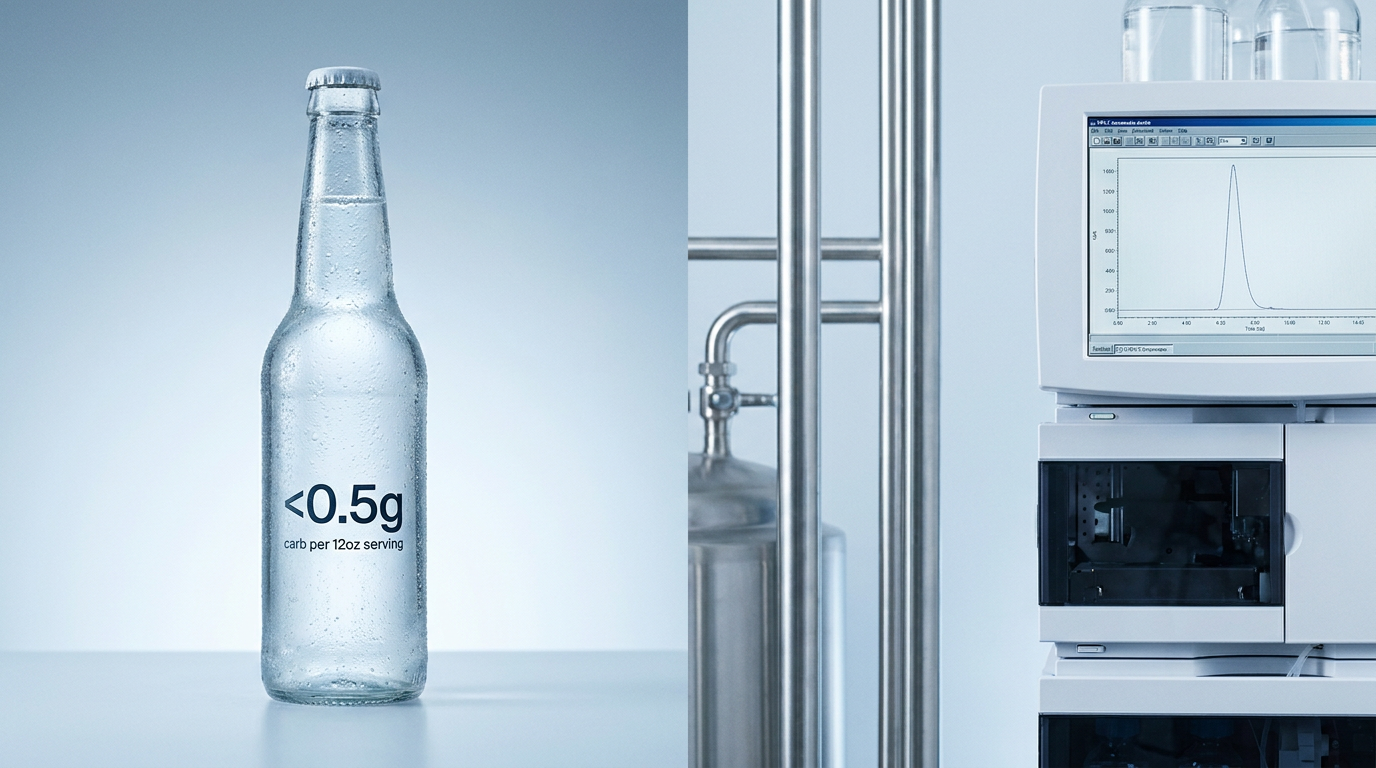
As the FDA releases its highly anticipated draft guidance on zero-carb beer labeling—set to take effect in Q1 2026—direct-to-consumer (DTC) shipping logistics for craft brewers face urgent recalibration. For decision-makers evaluating compliance risk, margin impact, and channel scalability, this regulatory shift demands immediate cross-functional assessment. Jinpai Beer, a global craft beer innovator with dedicated zero-carb beer formulations and end-to-end DTC capabilities, is already aligning its labeling, fulfillment workflows, and international partner protocols. This analysis unpacks operational implications—from label substantiation and state-level DTC permit adjustments to warehouse staging and consumer-facing claims—equipping business evaluators with actionable intelligence ahead of enforcement.
Why Labeling Precision Now Drives DTC Viability
The FDA’s draft guidance does not define “zero-carb beer” as a standalone category—but establishes strict evidentiary thresholds for any claim implying carbohydrate absence. Under Section 101.60(c)(2), “zero carb” or “carb-free” statements require analytical verification that total digestible carbohydrates measure ≤0.5 g per serving—and must reflect post-fermentation, pre-packaging testing across three consecutive production batches.
Unlike legacy lager labeling, zero-carb beer claims trigger heightened scrutiny during FDA inspections and third-party audit cycles. More critically, they directly affect DTC eligibility: 18 U.S. states explicitly prohibit shipment of products bearing unverified nutritional claims—even if the beer itself meets ABV and tax requirements. Mislabeling risks not only shipment rejection at state borders but also retroactive permit suspension and civil penalties under 21 CFR Part 109.
Zero-Carb Beer Compliance Checklist: 7 Non-Negotiable Actions
- Verify lab methodology against AOAC 2012.03 for enzymatic hydrolysis + HPLC quantification—not rapid test strips or NIR calibrations.
- Update all digital product listings (e-commerce platforms, marketplaces, brand sites) to replace “zero carb” with “<0.5g carb per 12oz serving” unless full batch validation data is uploaded to FDA’s Voluntary Qualified Importer Program (VQIP) portal.
- Reconfigure warehouse staging zones to separate zero-carb SKUs from standard low-carb variants—preventing cross-labeling errors during pick-and-pack automation.
- Require state-specific DTC permit renewals to include signed attestation from your QA director confirming adherence to FDA draft Annex B sampling protocol (n=3 batches × 5 units/batch).
- Integrate real-time carb assay logs into your ERP system (e.g., SAP S/4HANA or Oracle NetSuite), triggering automatic label versioning upon batch release.
- Train customer service teams to respond to “Is this truly zero carb?” queries using only FDA-approved language—no colloquial terms like “carb-less” or “no-sugar carb.”
- Validate foreign-language labels (EU, CA, AU, JP) against local equivalents: EFSA permits “0 g carbohydrate” only when tested per EN 13697; Health Canada requires CFIA Form F-121B submission prior to border clearance.
Scenario-Specific Adjustments
OEM/ODM Partners: If producing zero-carb beer under private label, you must retain original assay reports and provide them to clients within 24 hours of batch release—not upon request. Contracts signed after November 2025 must include indemnity clauses covering FDA enforcement actions arising from label misrepresentation.
International DTC Expansion: The EU’s new Nutrition & Health Claims Regulation (EU 2023/2282) prohibits “zero carb” descriptors unless paired with an authorized health claim (e.g., “contributes to maintenance of normal blood glucose levels”). Jinpai Beer’s functional zero-carb variants—fortified with chromium picolinate—qualify for such pairing; classic zero-carb lagers do not.
Commonly Overlooked Risks
Many brewers assume “low-carb” labeling satisfies zero-carb requirements. It does not. FDA explicitly distinguishes “low-carb” (≤3g/serving) from “zero-carb” (≤0.5g/serving)—and treats misapplication as misbranding under Section 403(a)(1). This distinction invalidates shelf-life extensions based on carb-reduction preservative systems.
Another frequent gap: failure to update nutrition panels when switching yeast strains. Even minor fermentation profile changes—such as substituting Saccharomyces cerevisiae var. diastaticus for enhanced attenuation—can reduce residual dextrins by 0.3g/serving, pushing a previously compliant batch above the 0.5g threshold.
Immediate Execution Steps
Begin internal validation by March 31, 2025: run AOAC-compliant assays on your next three zero-carb production runs. Archive raw chromatograms, calibration curves, and technician certifications in a secure, audit-ready folder.
By June 2025, submit revised label templates—including updated Nutrition Facts panels and claim disclaimers—to all state alcohol control boards where you hold active DTC permits. Jinpai Beer’s regulatory team offers complimentary label pre-submission review for partners through Q3 2025.
Summary & Action Pathway
The FDA’s zero-carb beer guidance is not merely a labeling footnote—it redefines DTC eligibility, supply chain segmentation, and international market access. Compliance hinges on verifiable analytics, not marketing intent. Jinpai Beer’s zero-carb portfolio—including its award-winning German-style zero-carb wheat and sugar-free fruit-infused variants—is engineered from formulation through packaging to meet these exacting standards.
Act now: Audit your current zero-carb SKUs against the 7-point checklist. Initiate lab retesting before Q2 2025. Align your DTC logistics provider on revised staging, documentation, and customs declaration protocols. And leverage Jinpai Beer’s OEM compliance toolkit—including bilingual label templates, batch traceability dashboards, and FDA liaison support—to accelerate readiness without compromising speed-to-market.
Thank you very much for writing to us. Please leave your message and contact information, we will reply to you within 24 hours.