



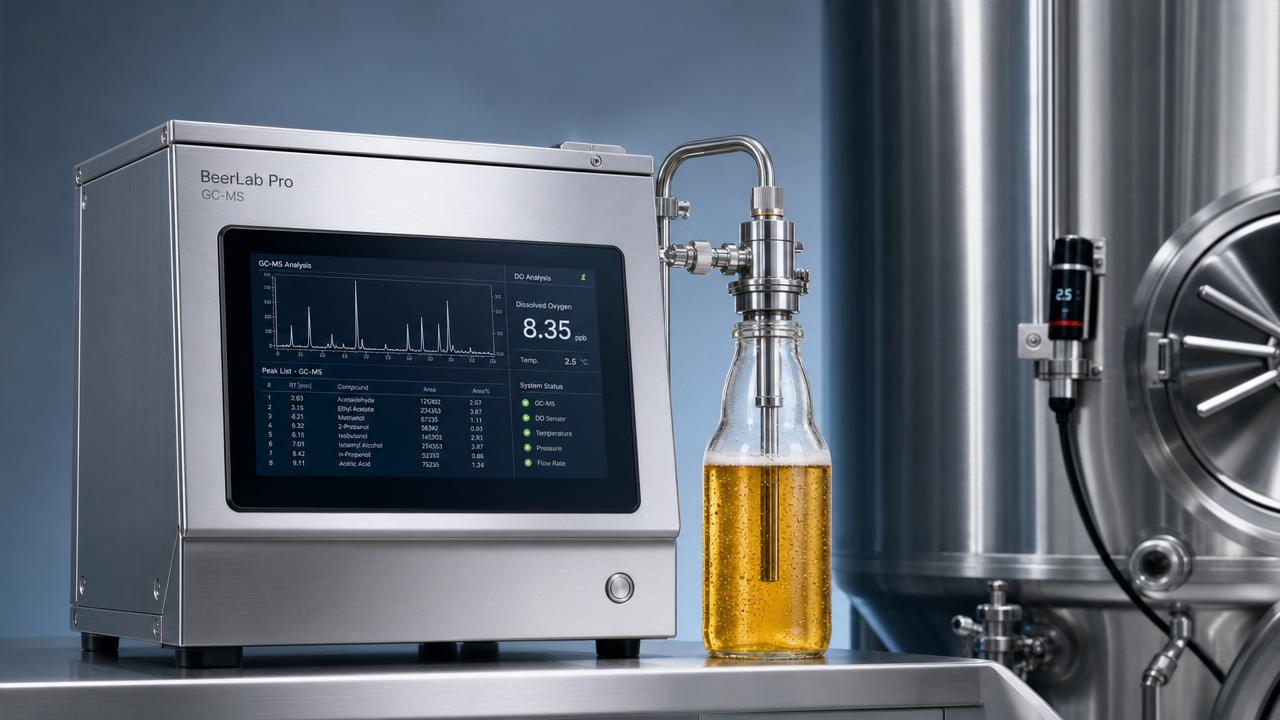
Selecting the right OEM/ODM Beer Supplier is far more than a taste test—it’s a rigorous evaluation of process control, raw material traceability, and batch-to-batch consistency. For technical evaluators overseeing production partnerships, relying solely on sensory sampling risks overlooking critical gaps in fermentation stability, packaging integrity, or QC documentation. At Jinpai Beer, our OEM/ODM Beer Supplier vetting framework integrates lab analytics, pilot-batch audits, and real-time production monitoring—ensuring scalability without compromise. Discover why technical due diligence must go beyond the glass.
Why does sensory evaluation alone fail to detect consistency risks in OEM/ODM Beer Supplier selection?
Taste is subjective, transient, and context-dependent. A single sample poured at optimal temperature, served in clean glassware, and evaluated by a rested palate may reflect peak performance—but not operational reality. Fermentation drift, yeast viability fluctuations, dissolved oxygen ingress during transfer, or minor variations in hop addition timing rarely alter immediate flavor perception yet compound across 500-liter batches. Sensory panels lack resolution for detecting ±0.3% ABV deviation, 2–3 IBU hop utilization variance, or subtle ester profile shifts that signal early yeast stress. Without chromatographic validation (e.g., GC-MS for volatile compounds) or microbiological logs tracking Saccharomyces cerevisiae viability across generations, “consistent taste” becomes an illusion masking systemic instability.
What hidden consistency gaps do OEM/ODM Beer Suppliers commonly overlook—and how do they impact brand equity?
Three under-monitored failure points erode long-term trust: First, raw material lot variability. Even identical malt specs yield different fermentability when kilning profiles shift between barley harvests. Second, fermentation thermal inertia: Small-scale pilot tanks cool faster than 30-hectoliter vessels, masking lag-phase temperature spikes that suppress ester formation—or worse, trigger diacetyl rest failures. Third, packaging line oxygen pickup. A 40 ppb O₂ increase post-filling accelerates staling aldehydes (trans-2-nonenal), degrading shelf life by 3–6 months without altering initial aroma. These aren’t “flavor flaws”—they’re consistency failures invisible to tasting but fatal to repeat purchase rates.
How does Jinpai Beer’s OEM/ODM Beer Supplier vetting protocol address these gaps?
We replace one-off sampling with three-tiered verification:
- Lab-Anchored Benchmarking: Every candidate submits three consecutive production batches for full-spectrum analysis—HPLC for alcohol/starch residuals, GC for esters/alcohols, and DO/pH logging from whirlpool to packaging.
- Pilot-Batch Co-Audit: Jointly brewed 1,000-L batches under live supervision, with real-time data capture on glycol jacket temps, CO₂ scrubbing efficiency, and centrifuge RPM consistency.
- QC Documentation Forensics: Audit of SOP version histories, calibration logs for inline turbidity sensors, and root-cause records for any deviation >0.5% from target IBU or FG.
This ensures OEM/ODM Beer Supplier capability aligns with your brand’s tolerance thresholds—not just current compliance.
What should you verify in an OEM/ODM Beer Supplier’s quality infrastructure before signing?
Look beyond certificates. Ask for evidence of:
- Microbial testing frequency per batch (not per week)—and whether Lactobacillus and Pediococcus are routinely cultured, not just PCR-screened.
- Calibration traceability for all critical sensors (e.g., dissolved oxygen probes certified to ISO 17025).
- Raw material acceptance criteria—specifically, maximum allowable protein content in malt (affects haze stability) and alpha-acid variation limits in hop pellets.
Common OEM/ODM Beer Supplier Vetting Pitfalls: A Risk Comparison Table
Next Steps: Building Consistency into Your OEM/ODM Partnership
Start with a consistency benchmarking package: Submit your top 3 target SKUs (e.g., German wheat, sugar-free low-calorie beer, fruit-flavored variant) for Jinpai Beer’s integrated vetting workflow. You’ll receive: (1) Full analytical reports across three production lots, (2) Pilot-batch co-audit scheduling, and (3) A gap-mitigation roadmap aligned with your brand’s shelf-life, flavor stability, and regulatory requirements. As a craft-focused OEM/ODM Beer Supplier, we support classic lager, German wheat, sugar-free low-calorie beer, fruit-flavored beer, and functional specialty beers—with full R&D, production, and global distribution capabilities.
Ready to move beyond tasting notes? Contact Jinpai Beer today to initiate technical due diligence tailored to your product portfolio and market channels—including restaurants, supermarkets, bars, and e-commerce platforms worldwide.
Thank you very much for writing to us. Please leave your message and contact information, we will reply to you within 24 hours.