



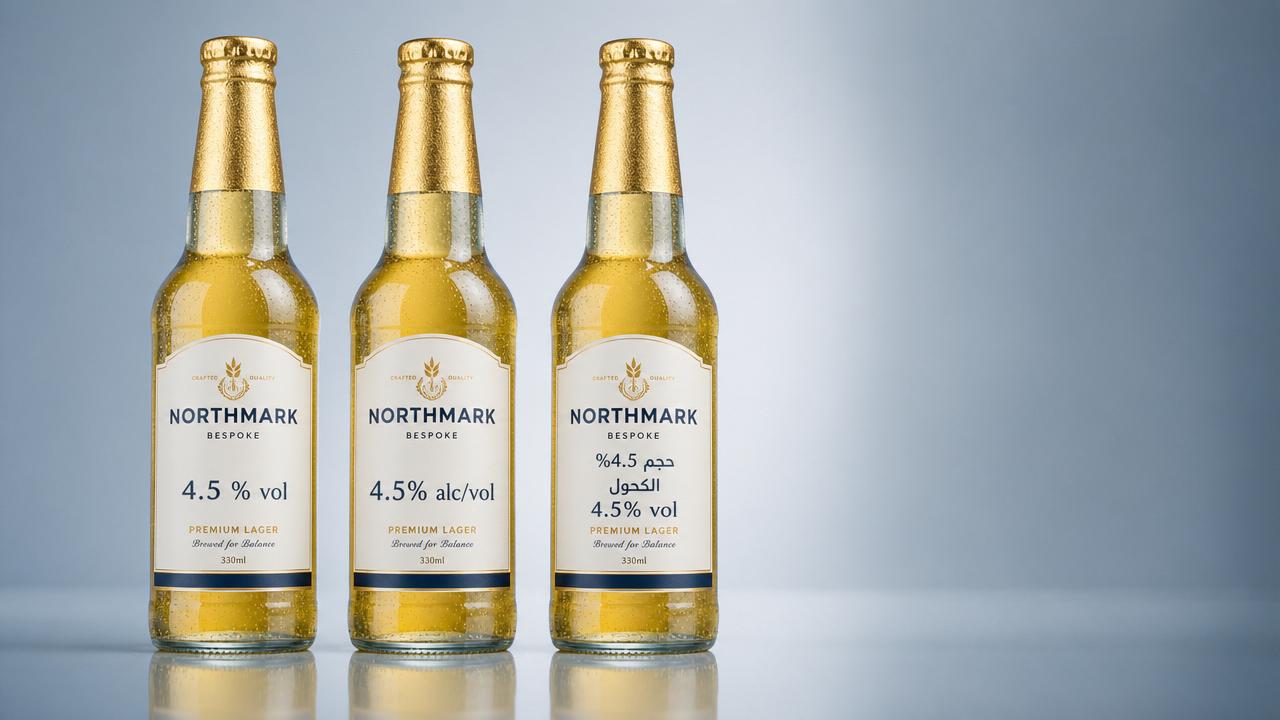
Navigating Custom Beer Manufacturing for export? Even seasoned brands stumble at alcohol-by-volume (ABV) labeling—where regional regulations, unit conversions, and compliance nuances turn simple labels into costly delays. At Jinpai Beer, we combine craft R&D expertise with global regulatory insight to ensure your custom beer meets EU, US, ASEAN, and GCC ABV labeling standards—right out of the brewery. Whether you’re launching a sugar-free lager or a functional fruit-infused IPA, our OEM/ODM solutions embed compliance into every batch. Discover how precision in labeling starts long before bottling.
What Is Custom Beer Manufacturing—and Why ABV Labeling Is Its First Gatekeeper
Custom Beer Manufacturing refers to the end-to-end production of beer formulated, brewed, and packaged to a client’s exact specifications—including recipe, ingredients, fermentation profile, packaging format, and regulatory labeling. Unlike off-the-shelf private-label offerings, true custom manufacturing integrates technical co-development, sensory validation, and jurisdiction-specific compliance from day one.
Alcohol-by-volume (ABV) is not merely a nutritional footnote—it is a legally mandated, precisely defined metric governed by national food and beverage authorities. In over 90% of major import markets, ABV must be declared on the primary label, within a defined font size, placement, tolerance range, and unit format. A deviation as minor as rounding 4.98% to “5.0%” may pass in Canada but violate EU Regulation (EU) No 1169/2011, which requires declaration to the nearest 0.1% *without rounding up* if the measured value falls below the next tenth. Such subtleties are where Custom Beer Manufacturing partnerships separate scalable growth from shipment rejections.
Global ABV Labeling Requirements: A Snapshot of Critical Divergences
Regulatory alignment remains fragmented—even among technically advanced regions. Below are five high-impact differences affecting Custom Beer Manufacturing for export:
These variations compound when layered with language requirements, font sizing laws (e.g., ASEAN mandates ≥1.5 mm height for ABV in English and local script), or digital verification mandates like Brazil’s Siscomex pre-clearance. Without integrated labeling governance, Custom Beer Manufacturing risks batch-level nonconformance—not just repackaging delays, but full-container quarantine.
How Jinpai Beer Embeds ABV Compliance Into Custom Beer Manufacturing
Jinpai Beer operationalizes ABV accuracy across three interlocking tiers:
- Pre-brew specification lock-in: Clients receive an ABV target window (e.g., 4.4–4.6%) validated via pilot fermentation and HPLC analysis—not theoretical calculation. This eliminates post-production surprises.
- Real-time lab integration: Every production run undergoes dual ABV measurement (distillation + densitometry) per ISO 15552:2017, with raw data archived for audit trails required by EU Importers and US TTB.
- Smart label generation engine: Our system auto-generates compliant label artwork based on destination market—applying correct units, bilingual text, font metrics, and MDP positioning rules before print approval.
This framework supports Jinpai’s full Custom Beer Manufacturing portfolio: classic lagers, German wheat, sugar-free low-calorie variants, fruit-infused releases, and functional specialty beers (e.g., magnesium-enhanced recovery ales or adaptogen-blended session IPAs). Each category carries distinct ABV stability profiles—wheat beers ferment more variably; low-calorie formulations often require enzymatic attenuation that affects final alcohol yield. Our process accounts for these variables—not as exceptions, but as built-in parameters.
Practical Steps to Avoid ABV-Related Export Delays
Brands scaling internationally can mitigate ABV risk with these field-tested actions:
- Confirm ABV tolerance thresholds *before* finalizing recipe—do not rely on generic brewing software estimates.
- Require third-party lab reports (with accreditation codes) for each export batch—not just annual certifications.
- Validate label mockups with local regulatory consultants *in the target market*, not just translation agencies.
- Build ABV buffer into contract terms: e.g., “final ABV confirmed 72 hours prior to pallet sealing, with adjustment rights if outside ±0.15% of agreed target.”
These steps reflect how Custom Beer Manufacturing evolves from transactional production to strategic partnership—where compliance isn’t outsourced, but co-owned.
Next Steps: Launch Your Compliant Custom Beer Line
If your brand seeks reliable Custom Beer Manufacturing for export—with guaranteed ABV accuracy, rapid iteration cycles, and seamless OEM/ODM integration—Jinpai Beer offers a proven pathway. We support global distribution through online and offline channels, serving restaurants, supermarkets, bars, and retail partners across six continents.
Begin with a no-commitment formulation consultation. Share your target markets, desired ABV range, and product vision—we’ll deliver a technical feasibility report, labeling compliance map, and timeline for first compliant sample shipment within 10 business days.
Custom Beer Manufacturing shouldn’t begin at the bottling line. It begins with shared precision—from yeast strain to label font. Let’s build it right, from the first liter.
Thank you very much for writing to us. Please leave your message and contact information, we will reply to you within 24 hours.