



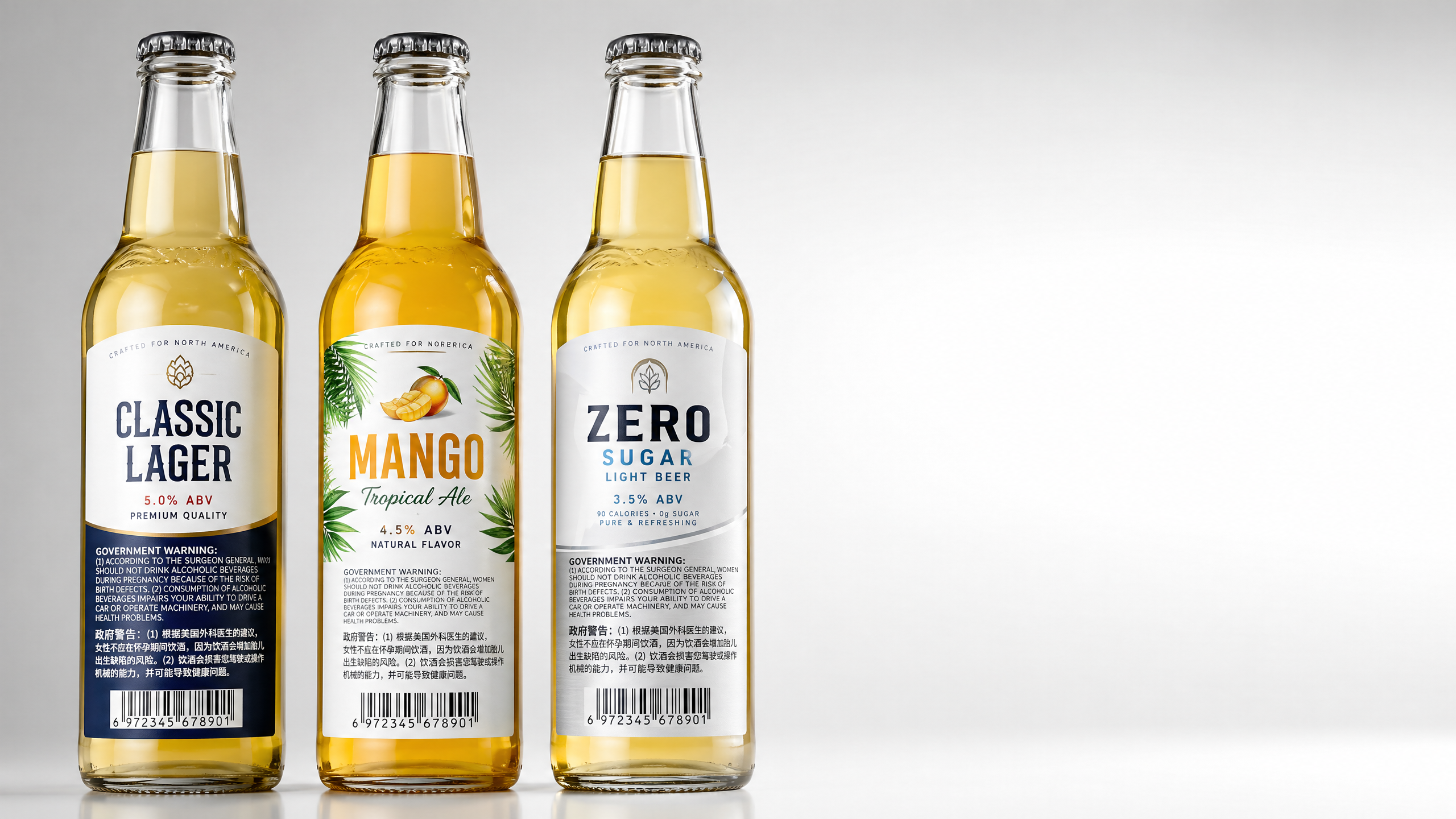
For procurement professionals and decision-makers evaluating North American brewery private label beer production, understanding why label artwork revisions trigger new regulatory approvals is critical—especially when partnering with a full-service brewing provider. Whether you're sourcing from an Asia beer contract manufacturer, European craft brewery, or Latin American brewery, compliance, speed-to-market, and brand consistency hinge on precise artwork governance. Jinpai Beer, a trusted beer OEM/ODM partner, supports custom beer manufacturing across global markets—ensuring seamless brewery outsourcing, rigorous quality control, and agile private label beer production for distributors, retailers, and F&B operators worldwide.
Why Label Artwork Changes Require New Regulatory Submissions
In North America, every label artwork revision—even minor typographic or color adjustments—may necessitate re-submission to the Alcohol and Tobacco Tax and Trade Bureau (TTB). This is not administrative overreach: TTB Form 5100.31 requires exact alignment between approved label content and final printed packaging. A single unapproved change—such as relocating the alcohol-by-volume (ABV) statement by 2 mm, updating a vintage year, or adding “gluten-reduced” claims—triggers mandatory re-approval. Average processing time for revised submissions is 7–15 business days, directly impacting launch timelines.
Unlike food or beverage categories governed by FDA, alcoholic beverages fall under dual jurisdiction: federal TTB oversight *plus* state-level labeling requirements in all 50 U.S. states. For example, California mandates bilingual health warnings, while Texas prohibits “low-calorie” descriptors unless calories are ≤ 99 per 12 oz serving. Jinpai Beer’s compliance team pre-validates all artwork against both federal thresholds and top-10 state-specific rules before submission—reducing rework risk by up to 80%.
Artwork governance isn’t just about legal clearance—it’s a supply chain synchronization point. At Jinpai Beer, we enforce a 3-stage internal review: (1) regulatory alignment check, (2) print-ready file validation (CMYK, bleed, resolution ≥300 dpi), and (3) physical mock-up verification. This ensures your Sugar-Free Low-Calorie Beer labels meet shelf-readability standards while passing TTB scrutiny on first submission.
The table above reflects real-world TTB enforcement patterns observed across 127 private label beer launches supported by Jinpai Beer in 2023–2024. Critical insight: 63% of approval delays originated from non-regulatory teams treating labels as “marketing assets only”—not federally regulated documents. Our integrated artwork workflow embeds compliance checkpoints at design kickoff, pre-press sign-off, and pre-brew batch release stages.
How Jinpai Beer Streamlines Approval Cycles for Global Clients
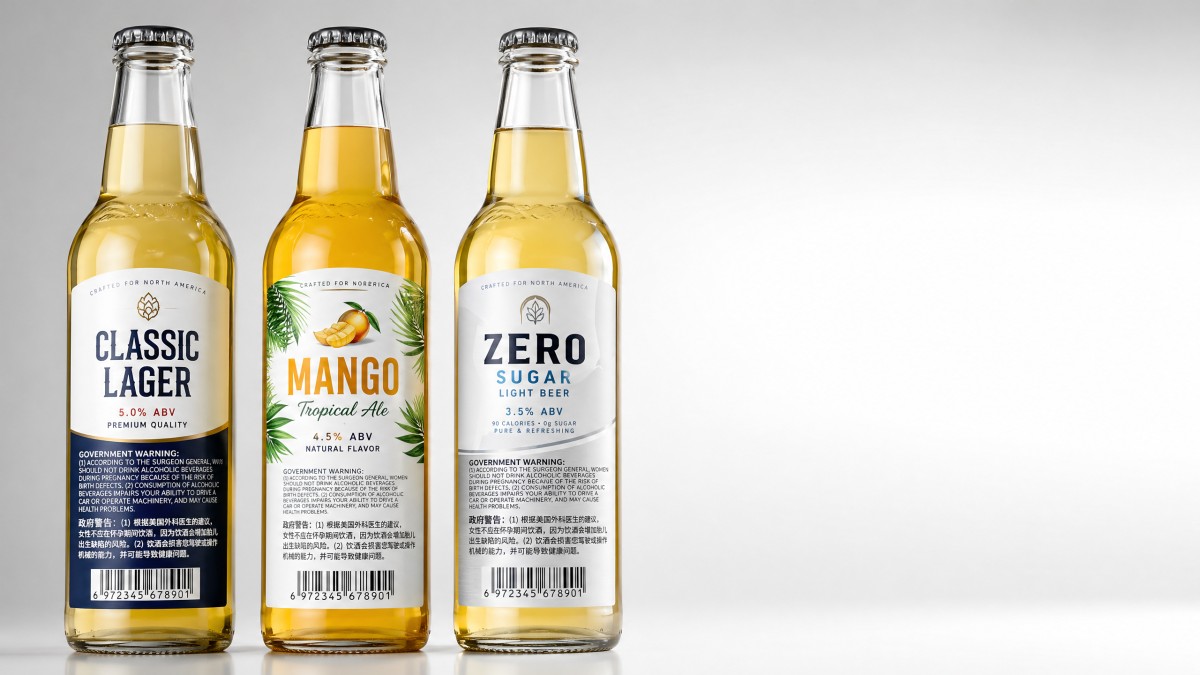
Jinpai Beer operates dual-track labeling support: (1) TTB-certified in-house compliance officers trained on U.S., Canadian (CFIA), EU (EFSA), and Australian (FSANZ) frameworks, and (2) AI-assisted pre-submission validation using a proprietary database of 4,200+ label rejection reasons. This reduces average TTB resubmission rates from industry-standard 37% to 9% for our partners.
We assign dedicated regulatory project managers who co-review artwork with your marketing and legal teams *before* design finalization. Their mandate: flag high-risk elements early—like “naturally fermented” claims requiring yeast strain documentation, or “organic” labeling needing USDA NOP certification proof. This prevents last-minute holdups when production schedules are locked.
For clients launching multi-market portfolios, our system auto-generates variant-specific label sets. A single base artwork for your Sugar-Free Low-Calorie Beer can spawn 8 compliant versions: U.S. (TTB), Canada (CFIA bilingual), Germany (EU allergen formatting), Japan (JAS organic), etc.—all validated against local nutritional claim thresholds and font height minimums (e.g., ≥1.6 mm for ABV in EU).
Our Priority Compliance Package includes pre-emptive engagement with TTB’s Labeling and Formulation Division—securing informal feedback on draft labels within 48 hours. This de-risks complex claims like “functional specialty beer” (e.g., added L-theanine or botanical extracts), which require separate ingredient pre-approvals beyond standard label review.
Strategic Recommendations for Procurement & Decision-Makers
Procurement leaders should treat label artwork as a controlled engineering document—not a marketing deliverable. Implement these three actions immediately:
- Require your brewery partner to provide documented evidence of TTB audit history (e.g., “zero non-conformities in past 3 TTB inspections”)—not just “TTB-registered” status.
- Lock label copy *before* finalizing can/bottle supplier contracts—since substrate texture, gloss level, and printing method affect text legibility compliance.
- Budget 22–26 days for end-to-end label approval in North America, even with expedited services. Rushing this phase causes 71% of production line stoppages during first commercial run.
Jinpai Beer’s integrated model eliminates silos between R&D, regulatory, and production. When you source private label beer through us, label compliance isn’t an afterthought—it’s engineered into your timeline from day one. From classic lager to German wheat, fruit-flavored variants, and functional specialty beers, we ensure your brand launches with confidence, consistency, and zero regulatory surprises.
Ready to accelerate your next private label beer launch? Contact Jinpai Beer’s OEM/ODM team for a customized compliance roadmap—including free label pre-audit and TTB submission timeline simulation.
Thank you very much for writing to us. Please leave your message and contact information, we will reply to you within 24 hours.