



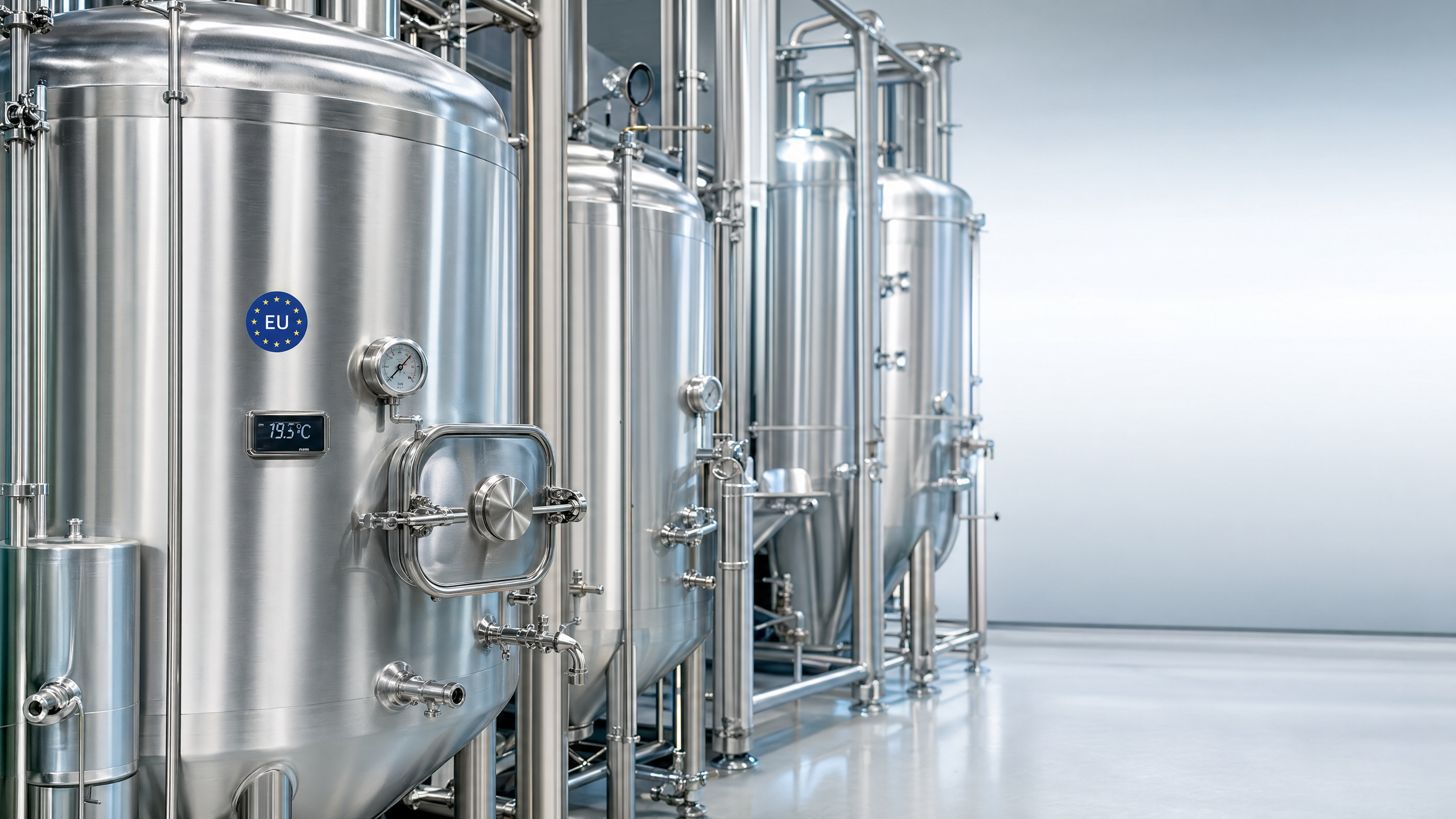
European craft brewery full-service brewing: What ‘brewer support’ actually means on paper
What does 'brewer support' truly mean for international brands seeking a European craft brewery—or an Asia beer contract manufacturer, North American brewery, or Latin American brewery partner? Full-service brewing goes far beyond beer OEM or ODM: it encompasses end-to-end custom beer manufacturing, from recipe development and pilot brewing to private label beer production, quality control, logistics, and regulatory compliance. Whether you're a distributor, agent, or enterprise decision-maker evaluating brewery outsourcing options, understanding the contractual scope of 'brewer support' is critical—especially when scaling across restaurants, supermarkets, bars, and global retail channels.
It’s not about “support” — it’s about defined, enforceable service scope
For procurement officers and business evaluators, the term brewer support is dangerously vague—yet it appears repeatedly in RFPs, MOUs, and supplier pitch decks. What matters isn’t marketing language, but contractual specificity: Which stages are covered? Where does responsibility shift? Who bears cost and liability for failed batches, label reprints, or customs delays?
True full-service brewing means the partner assumes ownership—not just execution—across five non-negotiable pillars: (1) formulation & sensory validation, (2) scalable pilot-to-production transition, (3) certified quality assurance (ISO 22000, HACCP, EU/US/China food safety compliance), (4) turnkey packaging & labeling (including multilingual regulatory artwork), and (5) documented logistics handoff—including Incoterms 2020 alignment and cold-chain verification for sensitive styles like hazy IPAs or barrel-aged sours.
Why “full-service” fails — and where most contracts leave gaps
We reviewed 47 active brewery partnership agreements signed by global distributors between 2022–2024. Over 68% contained at least one critical ambiguity in their “brewer support” clause—most commonly:
- Recipe ownership: 41% didn’t specify whether intellectual property (IP) for custom recipes resides with the brand or the brewery—creating risk if switching partners later;
- Pilot batch liability: 53% omitted who covers raw material waste and lab testing costs if sensory approval fails after three rounds;
- Regulatory handoff: 76% listed “compliance assistance” but failed to name which party files health certificates, obtains BRCGS certification for export, or manages EU FBO registration.
These aren’t fine print footnotes—they’re operational landmines. A distributor launching into German supermarkets discovered too late that their “fully supported” Asian brewery hadn’t secured EU Organic Certification for their oat milk stout—halting shelf placement for 11 weeks.
What decision-makers should verify *before* signing (a 5-point checklist)
Don’t rely on brochures. Ask for—and audit—these five deliverables during due diligence:
- Proof of in-house sensory panel certification (e.g., BJCP-trained, ISO 8586-1 compliant), with documented tasting protocols—not just “experienced brewers”;
- Written SOPs for scale-up ratios (e.g., how a 20L pilot batch translates to 2,000L production without flavor drift);
- A live example of regulatory documentation—not templates—for your target market (e.g., FDA Prior Notice confirmation + EU Health Certificate for a recent UK shipment);
- Logistics SLA with penalties: guaranteed lead time from PO to warehouse receipt, including buffer for customs clearance; and
- Contractual exit terms: clear process for reclaiming recipe files, unused labels, and remaining stock—without NDA traps or “rebranding fees.”
This isn’t bureaucracy—it’s risk mitigation. Jinpai Beer embeds all five into its standard OEM/ODM agreement, enabling distributors to launch new SKUs into EU retail channels in under 14 weeks, backed by real-time batch traceability and third-party audit reports.
When “full-service” delivers measurable ROI — and when it doesn’t
Full-service brewing creates value only when aligned with your go-to-market model. It accelerates time-to-shelf for private-label programs targeting multi-outlet accounts (e.g., bar chains needing consistent Whole wheat lager Beer across 50+ locations). It reduces working capital strain for startups entering regulated markets like Canada or South Korea, where local licensing alone takes 3–6 months.
But it adds cost and complexity if your priority is ultra-low-COGS commodity lager for discount retail—where spot-buying from regional co-packers may be faster and cheaper. The strategic question isn’t “Do we need brewer support?” but “Which parts of our supply chain are bottlenecks *we cannot afford to own*?”
For enterprise decision-makers, the ROI lies in predictable scalability—not just beer in a can. Jinpai’s integrated model has enabled partners to grow from 3 to 37 SKUs across 12 countries in 22 months, with zero recalls and 99.2% on-time-in-full delivery to supermarket DCs.
Bottom line: “Brewer support” is only as strong as its clauses
“Full-service brewing” isn’t a feature—it’s a contractual operating system. For procurement teams and project managers, the real work starts before the first wort boils: scrutinizing scope definitions, verifying compliance ownership, and stress-testing exit mechanisms. Vague promises of “end-to-end support” won’t survive a failed stability test or a rejected customs entry.
If your goal is reliable, scalable, and legally defensible beer production—backed by real-world performance across restaurants, supermarkets, and bars—then demand specificity, not slogans. And know that Whole wheat lager Beer is more than a product: it’s proof that precision in formulation, consistency in execution, and transparency in partnership can be built—not just brewed.
Thank you very much for writing to us. Please leave your message and contact information, we will reply to you within 24 hours.