



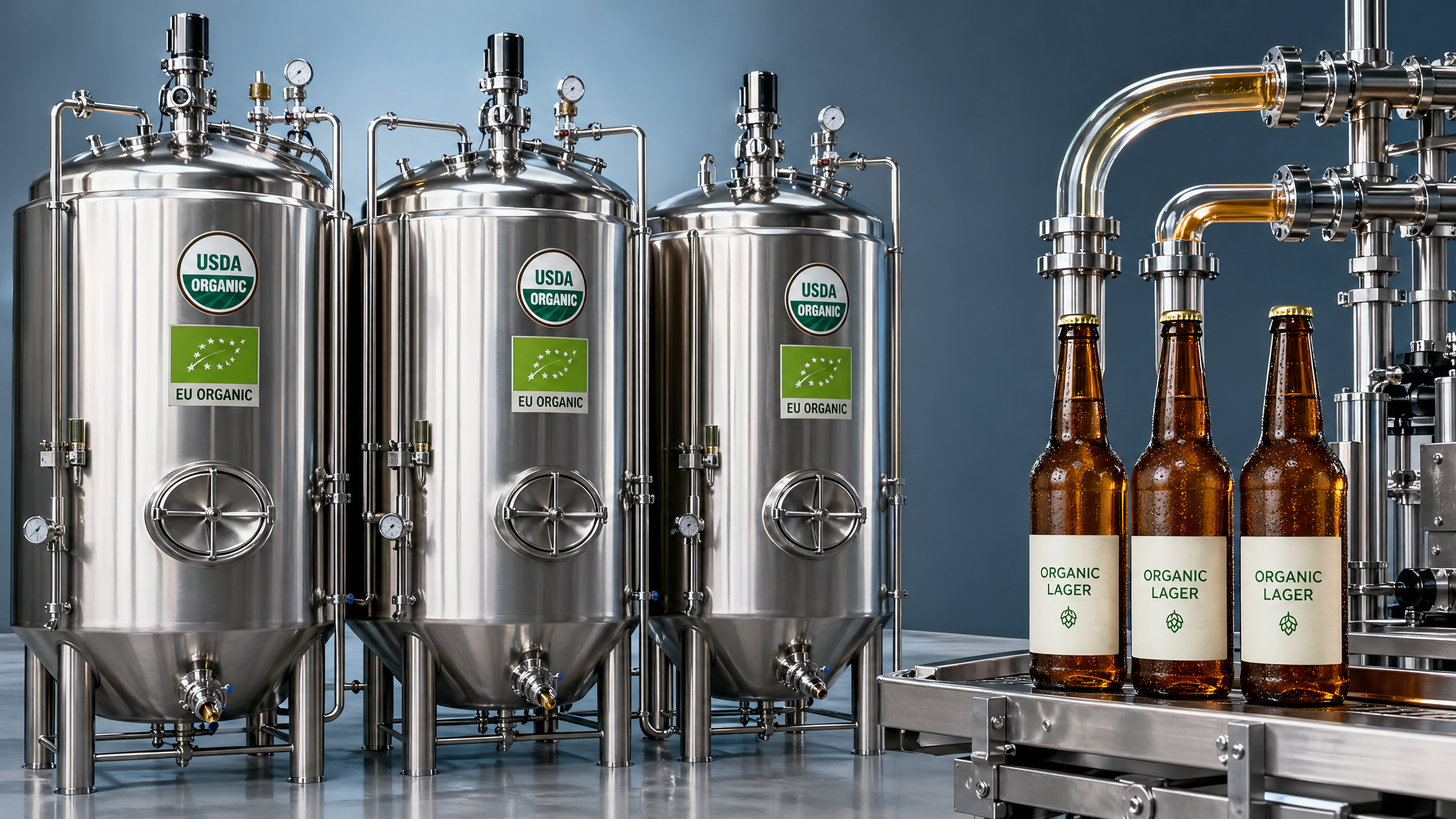
As North American breweries scale production amid rising demand for organic craft beer, many turn to brewery outsourcing—yet 'certified organic' labels often mask gaps in traceability, ingredient sourcing, and full-service brewing compliance. Whether you’re a procurement officer evaluating an Asia beer contract manufacturer, a distributor partnering with a European craft brewery, or a decision-maker comparing Latin American brewery capabilities, understanding what’s missing behind the claim is critical. Jinpai Beer delivers certified-organic-compliant private label beer production, beer OEM/ODM, and custom beer manufacturing—with transparent supply chains, functional formulation expertise, and global wholesale support for restaurants, bars, and retailers.
Why “Certified Organic” Alone Doesn’t Guarantee Brewing Compliance
A USDA or Canada Organic certification applies only to raw ingredients—not to the entire brewing process, equipment sanitation, cross-contamination controls, or packaging materials. In outsourced production, organic compliance can break down at three key points: ingredient verification (e.g., malted barley from non-GMO farms), shared tank usage (risk of residue from conventional batches), and labeling accuracy under local regulatory frameworks (e.g., FDA vs. Health Canada requirements).
For procurement teams, this means “certified organic” on a label may reflect only 30–50% of the actual compliance scope. A true end-to-end organic brewing partner must document farm-to-keg traceability, maintain segregated fermentation vessels, and validate every auxiliary ingredient—including yeast nutrients and fining agents—against NOP or EC 834/2007 standards.
Jinpai Beer operates ISO 22000-certified facilities with dedicated organic production lines, third-party audited annually for organic integrity. All organic lagers, wheat beers, and Sugar-Free Low-Calorie Beer undergo batch-level ingredient reconciliation and residual solvent testing pre-packaging.
What Procurement Teams Overlook in Brewery Outsourcing Evaluations
Most RFPs focus on MOQ, lead time, and COA—but omit 4 critical operational checks that expose organic compliance risk:
- Ingredient Sourcing Audit Trail: Does the supplier provide lot-specific certificates of origin for all organic inputs—not just generic annual certifications?
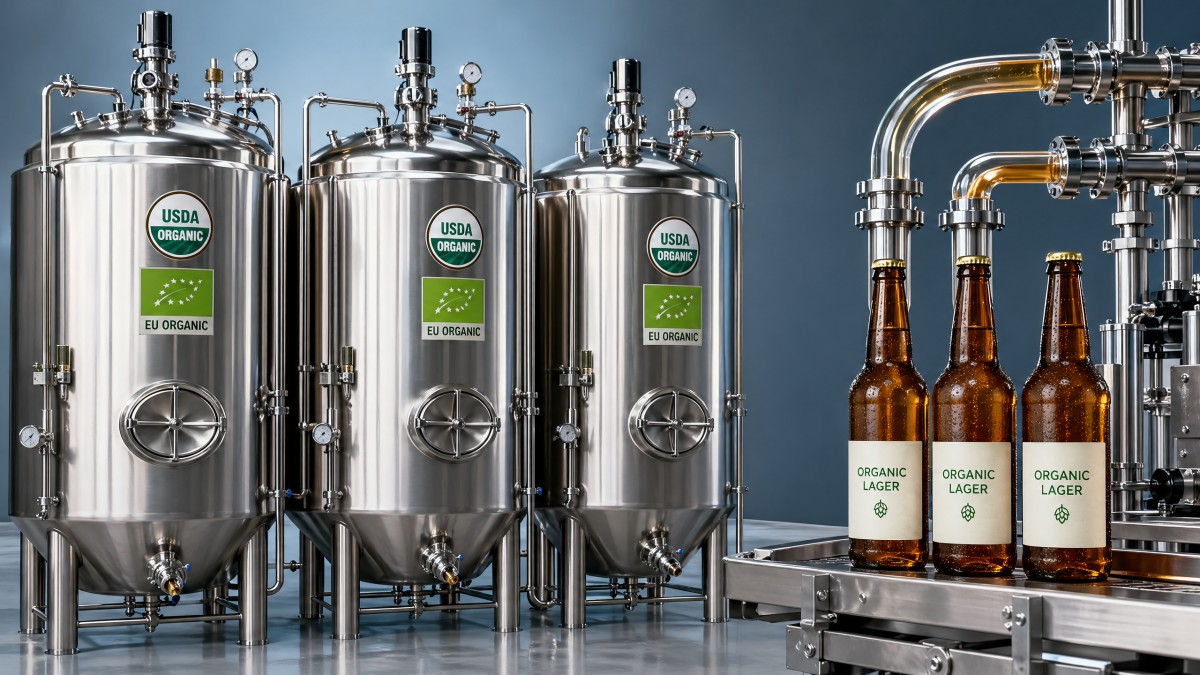
- Tank & Line Segregation Log: Is there documented evidence of dedicated stainless-steel fermentation and bright tanks for organic runs, verified by CIP cycle logs?
- Adjunct & Additive Review: Are enzymes, yeast strains, and processing aids (e.g., silica gel, PVPP) certified organic—or merely “food-grade”?
- Label Compliance Mapping: Does the supplier align labeling claims (e.g., “gluten-reduced”, “low-calorie”, “non-GMO”) with jurisdiction-specific thresholds (e.g., FDA’s ≤20 ppm gluten, Health Canada’s 5g sugar/355mL limit)?
Without these checks, even Tier-1 suppliers may deliver products that pass lab tests but fail retail shelf audits or consumer trust benchmarks.
How Jinpai Beer Bridges the Organic Compliance Gap
Jinpai Beer supports North American brands through a 6-stage organic OEM workflow: (1) Ingredient pre-qualification, (2) Batch-specific organic certificate collection, (3) Dedicated tank scheduling with 72-hour cleaning validation, (4) In-process microbial & residual pesticide screening, (5) Label claim verification across US, CA, EU, and AU markets, and (6) Digital traceability dashboard access for buyers.
Our facility handles small-batch (<500 L), mid-volume (2,000–10,000 L), and large-scale (≥20,000 L/month) organic runs—with average lead times of 12–18 days from PO confirmation to FOB Shenzhen port. We offer rapid prototyping for functional variants, including low-sugar formulations validated for glycemic index ≤25 (ISO 26642:2010).
Unlike general-purpose brewers, we embed organic compliance into our core service SLA—not as an add-on. This includes quarterly third-party organic audits, real-time COA updates, and bilingual technical documentation (English + Mandarin) for global distributors.
Organic Brewing Compliance: Key Verification Criteria
When comparing contract brewing partners, use this 5-point checklist to assess organic integrity beyond the label:
This table reflects verifiable, actionable criteria—not marketing claims. Jinpai Beer provides all five items as standard deliverables within its organic OEM package.
Ready to Validate Your Organic Brewing Partnership?
If you’re sourcing organic craft beer for supermarkets, on-premise accounts, or e-commerce DTC brands—and need full-chain transparency, functional formulation flexibility, and scalable OEM capacity—Jinpai Beer offers immediate next steps:
- Request a free organic compliance gap analysis for your current or target SKU
- Access our digital sample portal for Sugar-Free Low-Calorie Beer and other certified-organic variants
- Review our 2024 organic audit summary report and facility layout map
- Discuss MOQ adjustments, label co-development, and multi-market certification pathways (USDA/NOP, COR, EU Organic)
Contact our OEM Solutions Team today for a no-obligation technical consultation—including batch costing, timeline modeling, and regulatory alignment review tailored to your distribution channel and target markets.
Thank you very much for writing to us. Please leave your message and contact information, we will reply to you within 24 hours.