



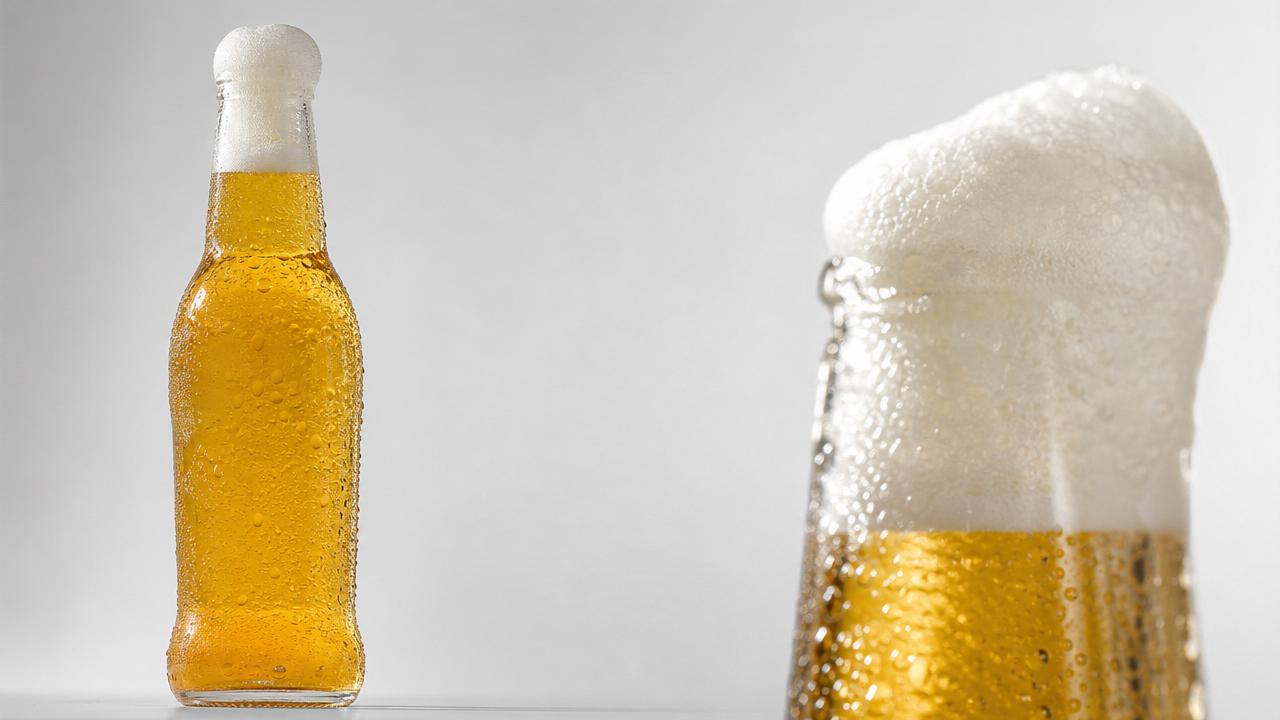
For quality control and food safety professionals evaluating Non-Alcoholic Beer ODM partnerships, sensory approval alone isn’t enough—many formulas that ace blind taste tests falter when stored or served at shelf temperature, revealing instability in flavor, foam, or mouthfeel. At Jinpai Beer, our R&D team addresses this critical gap with rigorously tested, temperature-resilient non-alcoholic beer formulations—designed not just to pass lab panels, but to deliver consistent quality from cold chain to retail shelf. Discover how our ODM solutions balance sensory excellence with real-world stability.
Why “Sensory-Pass” Doesn’t Guarantee Shelf-Temperature Performance
A common misconception in the Non-Alcoholic Beer ODM landscape is equating sensory panel success with commercial readiness. Many formulations achieve high scores in chilled, controlled tasting sessions—typically at 4–8°C—yet degrade noticeably at ambient conditions (18–25°C), the very environment where consumers interact with the product: on supermarket shelves, bar counters, or outdoor kiosks. This disconnect stems from three interdependent instabilities: volatile ester loss, protein-polyphenol haze formation, and CO₂ solubility collapse. Without targeted stabilization protocols, even premium malt extracts and natural hop distillates can yield flat aromas, rapid foam dissipation, or astringent bitterness within hours of warming.
How Jinpai’s Non-Alcoholic Beer ODM Formulas Solve Temperature-Driven Degradation
Jinpai Beer’s proprietary Non-Alcoholic Beer ODM platform integrates three foundational engineering layers:
- Thermally Stable Hop Delivery System: We replace conventional hop oils with microencapsulated beta-caryophyllene and humulene complexes, releasing aroma gradually across 0–30°C—not just at refrigerated temps.
- Non-Thermal Foam Matrix: Using enzymatically modified barley beta-glucans and low-MW wheat protein hydrolysates, our foam structure maintains >90% lacing integrity after 4 hours at 22°C—validated via ISO 8587-2 foam collapse testing.
- pH-Buffered Flavor Lock: A dual-phase citrate-malate buffer system stabilizes acidity between pH 4.1–4.3, preventing Maillard-driven off-notes (e.g., cardboard, sherry) during prolonged ambient storage.
Each formulation undergoes accelerated shelf-life simulation: 28 days at 30°C/75% RH, followed by sensory re-evaluation at both 4°C and 22°C. Only batches scoring ≥7.8/10 in *both* conditions proceed to pilot production.
What Causes Sensory Failure at Shelf Temperature? Key Risk Factors
Failure isn’t random—it follows predictable biochemical pathways. The top four root causes observed across 127 failed third-party Non-Alcoholic Beer ODM submissions include:
Choosing a Reliable Non-Alcoholic Beer ODM Partner: 4 Due-Diligence Checks
When vetting Non-Alcoholic Beer ODM suppliers, go beyond spec sheets and tasting reports. Prioritize evidence of real-world resilience:
- Request full thermal profile data: Not just “passes sensory at 4°C,” but documented scores at 15°C, 22°C, and 30°C—each with replicate trials.
- Verify foam retention methodology: Ask for video footage of standardized ISO 8587-2 foam height measurement over time—not just static photos.
- Review packaging compatibility logs: Confirm compatibility testing with PET, aluminum cans, and eco-glass under thermal cycling (−5°C to 35°C).
- Assess traceability depth: Full batch-level analytics—including HPLC quantification of key esters and carbonyls—must be available pre-shipment.
Beyond Shelf Temperature: How Jinpai Extends Stability Across Your Supply Chain
True Non-Alcoholic Beer ODM excellence extends beyond the bottle. Jinpai embeds stability into every link: raw material sourcing (non-GMO European barley, cryo-ground whole-cone hops), production (closed-system nitrogen sparging pre-filtration), and logistics (real-time temp-loggers in every pallet shipment). Our clients report <8% customer-reported flavor complaints—even in markets with inconsistent cold chains (e.g., Southeast Asia, Middle East). This reliability enables confident expansion into convenience stores, vending machines, and warm-climate hospitality venues—channels previously avoided due to perceived quality risk.
Next Steps: Launch a Temperature-Resilient Non-Alcoholic Beer Line
If your current Non-Alcoholic Beer ODM partner delivers great-tasting samples—but inconsistent performance on the shelf—you’re facing a preventable gap in formulation science and process discipline. Jinpai Beer invites you to request a technical dossier including: (1) comparative thermal sensory scorecards across five global benchmark products, (2) full CO₂ solubility curves for three base formulations, and (3) a no-cost feasibility assessment for your target ABV (<0.5%), calorie (<35 kcal/100mL), and packaging format.
We support OEM/ODM projects from concept validation to global regulatory compliance—including FDA GRAS, EFSA Novel Food dossiers, and China NMPA health food certification pathways. With production capacity across ISO 22000-certified facilities in Guangdong and Shandong—and distribution partnerships spanning 37 countries—Jinpai ensures your Non-Alcoholic Beer ODM initiative meets both sensory expectations and real-world demands.
Ready to move beyond “tastes good cold”? Contact Jinpai Beer today to schedule a formulation review session with our senior brewing scientists—and receive a customized stability roadmap for your next non-alcoholic launch.
Thank you very much for writing to us. Please leave your message and contact information, we will reply to you within 24 hours.