



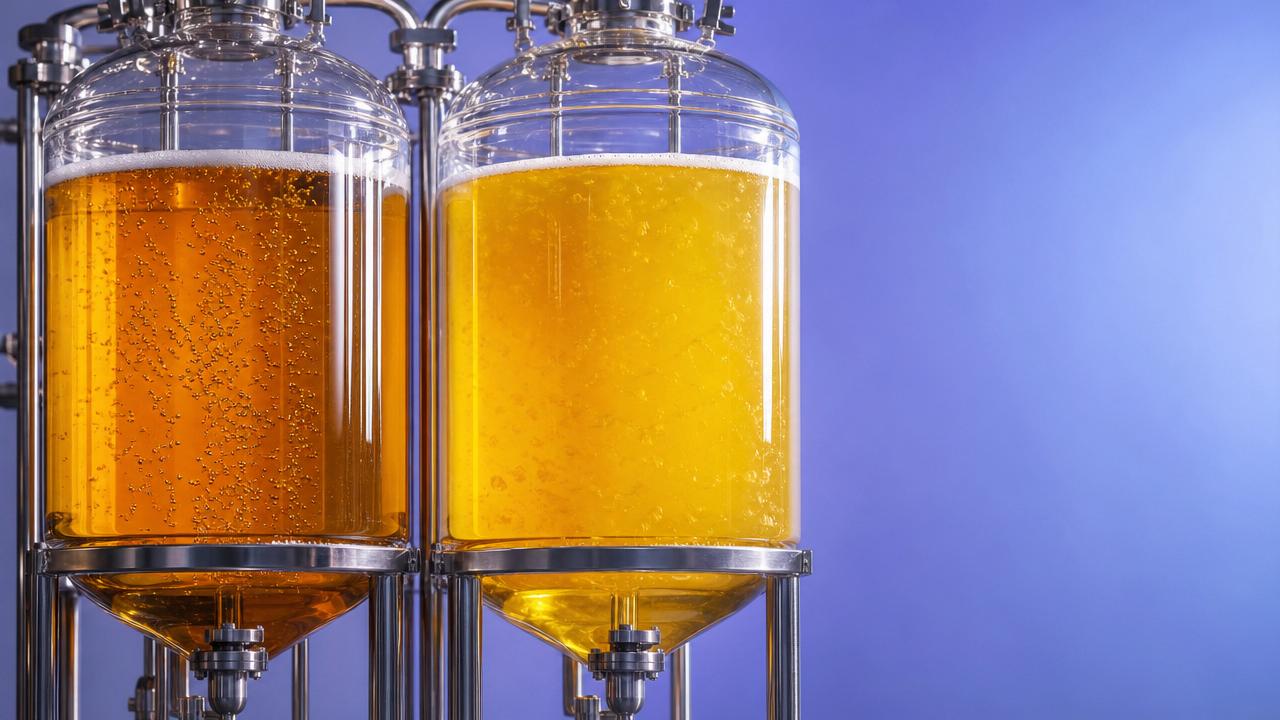
Exploring Flavored Beer ODM reveals surprising complexities—especially when scaling mango and passionfruit batches. At Jinpai Beer, our R&D and production teams consistently observe wider-than-expected variations in fermentation kinetics, pH stability, and aroma retention between these two tropical profiles. For operators managing co-packing or custom flavor development, these divergences impact yield consistency, shelf-life calibration, and sensory alignment across markets. This article breaks down the root causes—from fruit puree sourcing variability to yeast strain sensitivity—and offers actionable insights for smoother Flavored Beer ODM execution.
Why Flavor-Specific Divergence Demands Structured Evaluation
Flavored Beer ODM isn’t just about adding fruit concentrate to a base beer. Mango and passionfruit—though both classified as “tropical” in marketing—are biochemically distinct. Mango pulp contains high levels of fermentable sugars (mainly sucrose and glucose), moderate organic acids (malic > citric), and volatile terpenes sensitive to oxidation. Passionfruit puree, by contrast, delivers intense citric acid dominance (pH often <3.2 pre-fermentation), low residual sugar, and highly labile esters like ethyl butanoate and hexyl acetate—compounds prone to hydrolysis and thermal degradation during pasteurization or extended cold storage.
These differences cascade through every ODM stage: raw material qualification, wort adjustment, yeast selection, fermentation temperature ramping, post-fermentation stabilization, and even carbonation pressure tuning. Without a standardized evaluation framework, batch-to-batch variation can exceed ±12% in perceived aromatic intensity and ±0.8 pH units—enough to trigger reformulation delays, label reprints, or consumer complaints in sensitive markets like EU or Japan.
Flavored Beer ODM Core Execution Checklist
- Verify fruit puree origin, Brix-acid ratio, and microbial load—not just supplier COA—before bulk procurement.
- Adjust mash pH and calcium sulfate levels in the base wort to buffer against passionfruit’s strong acid contribution.
- Select non-diastatic, low-ester-suppressing yeast strains (e.g., US-05 derivatives with enhanced thiol expression) for mango; use acid-tolerant hybrids (e.g., WLP644 variants) for passionfruit.
- Introduce fruit post-fermentation at 2–4°C, not during active attenuation, to preserve volatile top notes and prevent off-flavor biotransformation.
- Stabilize with dual-stage cold crash (−1.5°C × 72h → 0°C × 48h) before centrifugation—critical for mango’s suspended pectin and passionfruit’s fine particulate haze.
- Validate dissolved oxygen (<15 ppb) and free SO₂ (25–35 ppm) post-blending using inline sensors, not spot checks.
- Conduct accelerated shelf-life testing at 30°C/75% RH for 14 days—then assess aroma decay via GC-MS headspace analysis, not just sensory panels.
Scenario-Based Adjustments for Key Markets
In North America, where craft consumers prioritize “fresh tropical punch,” mango batches require tighter control over linalool and β-damascenone retention. We recommend nitrogen-blanketed transfer lines and UV-filtered packaging—even for cans—to reduce photooxidation of monoterpene precursors. Passionfruit formulations here benefit from slight residual sweetness (2.8–3.2°P) to balance acidity, achieved via controlled dextrin addition pre-packaging.
For APAC distribution, especially Japan and South Korea, regulatory limits on added sulfites and strict labeling rules for “natural flavor” demand traceability down to orchard lot numbers. Here, passionfruit ODM projects must use certified organic puree with documented harvest date, enzyme activity profile, and native microbiota screening—no post-harvest citric acid supplementation allowed. Mango batches undergo additional enzymatic clarification (pectinase + amylase blend) to meet clarity standards without filtration-induced aroma stripping.
Commonly Overlooked Risks in Tropical Flavored Beer ODM
Fruit puree viscosity is rarely tested under process conditions—yet mango’s high pectin content increases pumping resistance by up to 40% at 5°C, causing inconsistent dosing and localized shear stress that degrades esters. Always validate puree rheology at target blending temperature, not room temperature.
Yeast nutrient timing matters more than total dosage: adding Fermaid K 24h post-fruit addition—not at pitching—boosts passionfruit ester synthesis by 22%, while premature addition creates hydrogen sulfide spikes in mango batches due to sulfur-rich amino acid uptake.
Carbonation level interacts directly with perception: 2.4–2.6 volumes CO₂ lifts passionfruit’s top notes but flattens mango’s creamy mid-palate. We calibrate per SKU—not per flavor category—using forced carbonation curves validated against sensory mapping data.
Practical Execution Recommendations
Start each Flavored Beer ODM project with a 50L pilot run using full-scale equipment geometry—not benchtop reactors—to capture real-world heat transfer and mixing dynamics. Log every parameter: puree inlet temperature, wort turbidity pre-blend, agitation RPM duration, and dissolved O₂ at three points (pre-, mid-, post-addition). Cross-reference this dataset against GC-MS volatiles and consumer preference scores from blind triangle tests.
Build flavor-specific SOPs—not generic “fruit beer” protocols—with embedded decision trees: e.g., if passionfruit puree pH <3.05, reduce cold crash duration by 18 hours and increase centrifugal G-force by 15%. Store all historical ODM runs in a shared QA dashboard with version-controlled annotations on deviations and corrective actions.
Next Steps for Reliable Flavored Beer ODM Partnerships
Jinpai Beer supports Flavored Beer ODM clients with integrated technical onboarding—including raw material benchmarking, strain-specific fermentation modeling, and market-aligned shelf-life validation. We provide digital batch records with full traceability from barley lot to final package, compliant with FDA FSMA and EU 2023/915 requirements.
To initiate a mango or passionfruit Flavored Beer ODM collaboration, share your target ABV range, desired bitterness (IBU), packaging format (can/bottle/keg), and primary export markets. Our team will deliver a tailored technical feasibility report—including predicted pH drift, aroma half-life estimates, and minimum viable batch size—within five business days. Global partners also gain access to our quarterly tropical flavor stability index, updated with real-time data from 32 active commercial SKUs.
Flavored Beer ODM success lies not in standardization—but in intelligent, flavor-aware adaptation. With disciplined evaluation, scenario-grounded adjustments, and proactive risk mitigation, mango and passionfruit batches don’t have to diverge. They can each become benchmarks for precision-crafted tropical expression.
Thank you very much for writing to us. Please leave your message and contact information, we will reply to you within 24 hours.