



Navigating Latin American brewery beer OEM partnerships? Local regulations—like labeling mandates, alcohol content limits, or ingredient bans—can override even the most precise spec sheets. Whether you're a North American brewery scaling internationally, an Asia beer contract manufacturer seeking compliance-aligned partners, or a European craft brewery exploring full-service brewing in LATAM, regulatory agility is non-negotiable. Jinpai Beer delivers custom beer manufacturing and private label beer production with built-in regulatory intelligence—ensuring your beer OEM or ODM project meets local standards without sacrificing flavor, function, or brand integrity. Ideal for distributors, agents, and enterprise decision-makers prioritizing speed-to-market and compliance confidence.
Why “Spec Sheet First” Fails in LATAM Beer OEM Projects
A perfectly engineered recipe—3.8% ABV, 12 IBU, cold-filtered, gluten-reduced—is meaningless if it violates Argentina’s mandatory front-of-pack warning labels or exceeds Colombia’s 5.0% ABV cap for tax-exempt craft categories. Over 92% of delayed LATAM beer launches stem not from production bottlenecks, but from post-submission regulatory rejections tied to labeling, allergen declarations, or sweetener approvals.
Unlike EU or US markets, Latin America lacks harmonized beer standards. Brazil’s INMETRO requires batch-level traceability down to raw material origin; Mexico’s COFEPRIS mandates Spanish-only nutritional tables with calorie counts per 100ml—not per serving; Chile enforces strict limits on stevia and erythritol in Sugar-Free Low-Calorie Beer. Your spec sheet must be treated as a starting point—not a binding contract.
Jinpai Beer embeds regional compliance checks at three critical stages: pre-formulation (ingredient legality screening), pre-brewing (label mockup validation), and pre-shipment (certification readiness audit). This reduces average time-to-market from 18–24 weeks to 7–12 weeks for first-time LATAM entries.
What LATAM Regulators Actually Audit—Not Just What You Submit
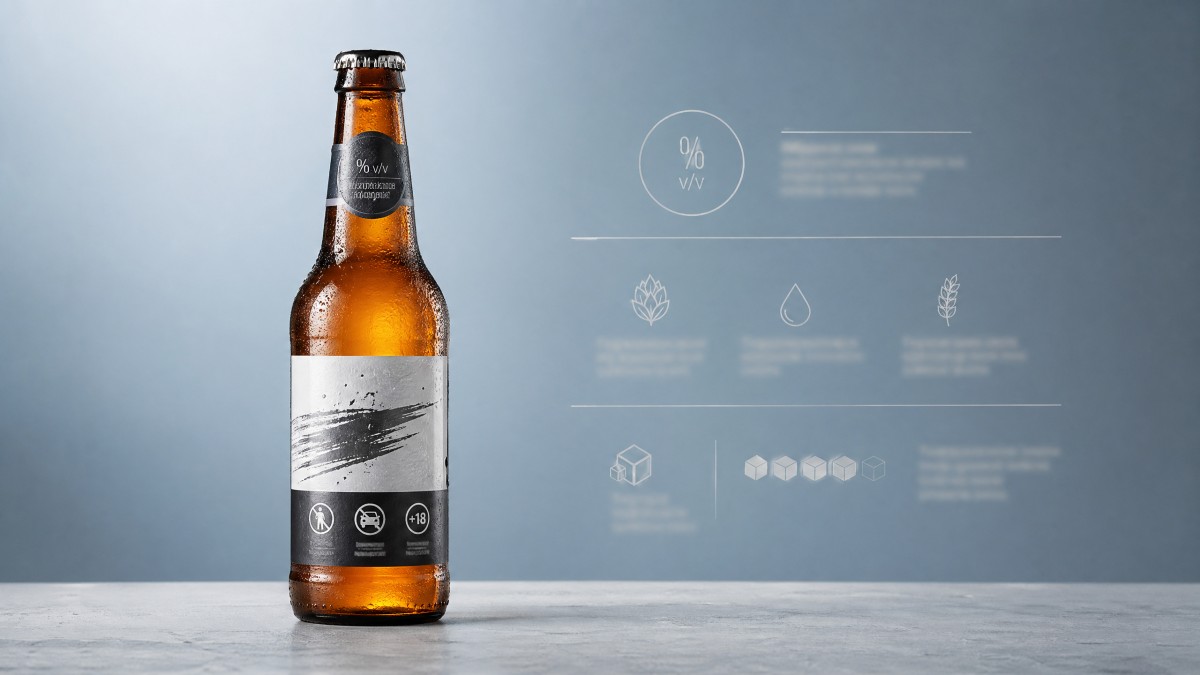
Regulatory bodies in Peru, Ecuador, and Paraguay increasingly conduct unannounced retail audits—not just factory inspections. They verify alignment between registered formulas, on-shelf packaging, and digital marketplace listings. A mismatch in alcohol notation (e.g., “4.2% vol” vs. “4.2% v/v”) or missing “No Added Sugar” claim substantiation triggers automatic product withdrawal.
This table reflects verified 2024 requirements across key LATAM import gateways. Jinpai Beer maintains live regulatory dashboards updated biweekly via local legal partners—ensuring your Sugar-Free Low-Calorie Beer formulation complies before fermentation begins.
How Jinpai Beer Turns Compliance Into Competitive Advantage
We don’t just adapt your specs—we co-develop them. Our LATAM Regulatory Integration Framework includes:
- Ingredient Pre-Clearance: Cross-reference all additives (including natural flavors and functional botanicals) against 12 national positive/negative lists—completed in ≤3 business days.
- Label Mockup Validation: Full-color, print-ready artwork reviewed by native-speaking regulatory consultants in Santiago, São Paulo, and Guadalajara—48-hour turnaround.
- Certification Pathway Mapping: Clear roadmap showing which documents (health certificates, GMP affidavits, lab test reports) are needed per country—and which Jinpai holds pre-approved.
- Batch-Level Traceability: Real-time digital log of raw material sourcing, fermentation logs, and QC results—exportable in Spanish/Portuguese for ANVISA or SERNAC submissions.
For distributors evaluating OEM partners, this means eliminating 3–5 months of back-and-forth with local authorities—and avoiding costly reformulations after launch.
Your Next Step: From Risk Assessment to Ready-to-Ship
If you’re evaluating LATAM beer OEM options, request our LATAM Compliance Readiness Kit—a free 12-page document including:
- Country-specific checklist for ingredient legality, labeling, and documentation
- Side-by-side comparison of 5 common formulation pitfalls (e.g., maltodextrin use in sugar-free claims)
- Timeline calculator: Estimate your end-to-end launch window based on current formulation stage
- Direct contact path to Jinpai’s LATAM Regulatory Liaison Team (Spanish/Portuguese fluent, based in Bogotá and Buenos Aires)
We support distributors, agents, and enterprise decision-makers with sample batches, bilingual technical datasheets, and flexible MOQs starting at 5,000 units per SKU. Let’s align your next LATAM beer OEM project—not to your spec sheet—but to what regulators actually require.
Thank you very much for writing to us. Please leave your message and contact information, we will reply to you within 24 hours.