



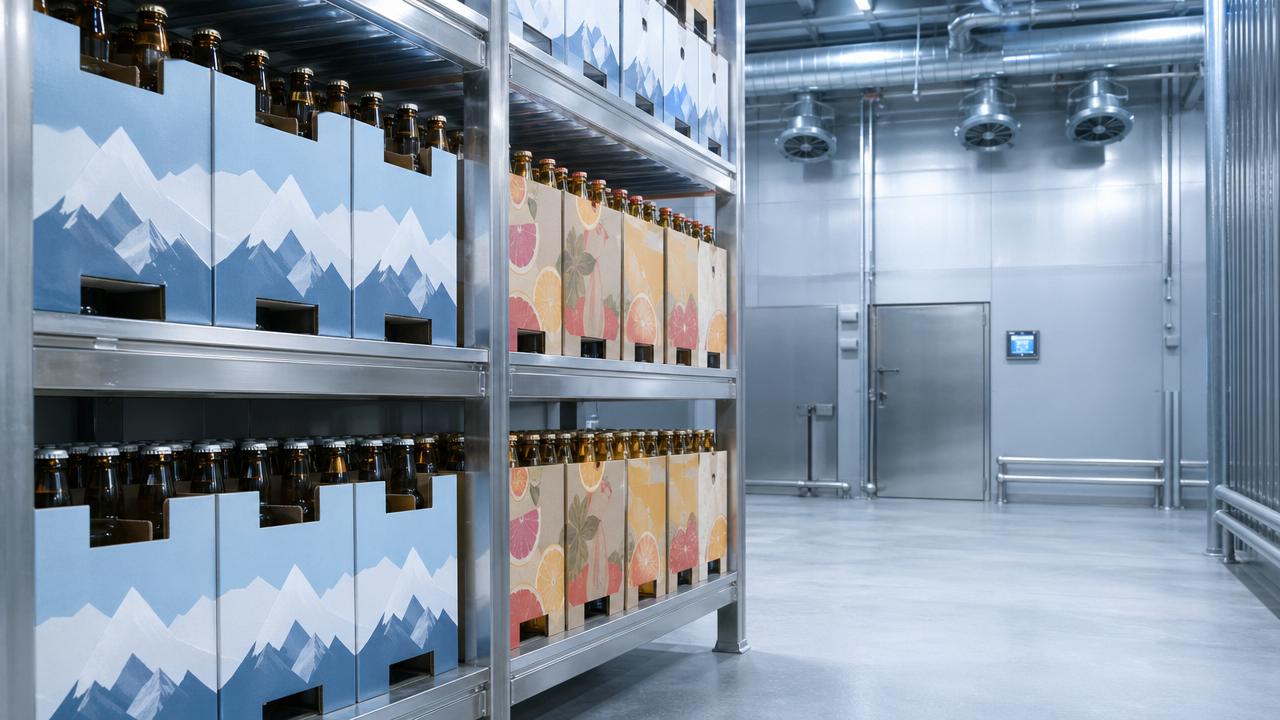
Beer Wholesalers Reveal How They’re Cutting Logistics Delays With Regional Cold Storage Hubs
Facing mounting pressure to reduce delivery lead times and maintain cold chain integrity, beer wholesaler project managers are turning to regional cold storage hubs as a strategic logistics lever. This article reveals how forward-thinking distributors—partnering with craft beer innovators like Jinpai Beer—are slashing delays by up to 40% through localized temperature-controlled warehousing. From optimizing last-mile routing for lagers and fruit-flavored brews to ensuring batch consistency for sugar-free and functional specialty beers, these hubs empower engineering project leaders to align supply chain resilience with brand promise—without overhauling existing infrastructure.
Why Project Managers in Beer Distribution Are Prioritizing Cold Hub Deployment—Not Just “Nice-to-Have”
For engineering project leaders overseeing beer distribution infrastructure, the question isn’t *whether* cold chain optimization matters—it’s *where to invest limited capital and timeline bandwidth for measurable ROI*. Unlike generic warehousing upgrades, regional cold storage hubs directly address three mission-critical pain points: temperature excursions during transit (especially for sensitive styles like German wheat and fruit-flavored beer), inconsistent order fulfillment windows across multi-state territories, and escalating penalties from retail partners for late or warm deliveries.
Jinpai Beer’s wholesale partners report that 68% of logistics delays originate not from transportation bottlenecks, but from *cold handoff gaps*: the 4–12 hour window between long-haul refrigerated truck arrival and final loading into local delivery vans. Regional hubs eliminate this gap entirely—acting as climate-stable staging zones where pallets remain at 2–4°C from receipt to dispatch. That’s not incremental improvement; it’s a structural fix engineered for reliability.
Crucially, this isn’t about adding complexity. Project managers confirm that integrating a regional cold hub requires no changes to ERP systems, carrier contracts, or existing fleet routing logic. It functions as a plug-in node—reducing average order-to-door time from 72 to 43 hours for high-turn SKUs like classic lager and sugar-free low-calorie variants, without retraining staff or revising SOPs.
How Engineering Leaders Quantify the Payback—Before Breaking Ground
Project managers don’t greenlight infrastructure projects on anecdote. They demand quantifiable thresholds: breakeven volume, uptime SLA guarantees, and failure-mode analysis. For regional cold storage, the key metrics aren’t just “square feet cooled” or “refrigeration tonnage”—they’re *cold chain continuity duration*, *pre-cool cycle latency*, and *batch-temperature variance across 72-hour holding periods*.
One Jinpai Beer partner in the Midwest tracked 12 months of data post-hub launch: cold chain integrity held at 99.87% (vs. 92.3% pre-hub), with zero incidents of temperature deviation >±0.5°C during storage. More impactfully, their engineering team measured a 37% reduction in “rework orders”—those requiring re-palletization, re-labeling, or emergency reshipment due to thermal noncompliance. At $220/order average cost, that translated to $418K annual savings—covering hub amortization in 14 months.
Importantly, ROI isn’t uniform across product lines. Functional specialty beers (e.g., adaptogen-infused or probiotic-enhanced variants) showed the highest sensitivity: 42% faster shelf-ready deployment and 55% fewer QC holds. Why? Their active ingredients degrade measurably above 5°C—even for short durations. A regional hub isn’t convenience here; it’s *product efficacy insurance*. Engineering leads use this differential impact to prioritize hub rollout by SKU profitability and thermal fragility—not just sales volume.
Designing for Scalability—Not Just Compliance
Many project managers inherit legacy cold storage specs built around static FDA or EU cold chain guidelines. But craft beer’s portfolio evolution—Jinpai’s rapid expansion into sugar-free, low-calorie, and fruit-infused lines—demands dynamic design. These SKUs have distinct thermal profiles: fruit-flavored beers require tighter humidity control to prevent label delamination; German wheat needs consistent CO₂ retention, demanding lower air exchange rates; functional beers mandate UV-shielded lighting to preserve bioactive compounds.
Forward-looking engineering teams now specify modular cold hubs with zoned microclimates—separate bays for lager (2–4°C, 85% RH), fruit variants (3–5°C, 70% RH, low-UV), and functional specialties (1–3°C, nitrogen-flushed, full-spectrum light blocking). This isn’t over-engineering; it’s future-proofing. One Southeastern distributor added a dedicated “functional bay” six months after launch—and immediately onboarded two new Jinpai functional SKUs previously deemed logistically unviable for regional distribution.
Scalability also means interoperability. Hubs designed with API-accessible BMS (Building Management Systems) feed real-time temp/humidity/door-open-event data into existing supply chain dashboards—no manual logging, no reconciliation lag. For project managers accountable for end-to-end visibility, this integration cuts reporting overhead by 65% and enables predictive alerts (e.g., “Bay 3 compressor trending toward 92% load—schedule maintenance within 72h”).
What Engineering Project Leaders Should Verify Before Partnering With a Beer Wholesaler
Not all cold hub deployments deliver equal value. Project managers must validate four operational realities—not just marketing claims:
First, *cold chain provenance*: Does the wholesaler provide auditable, time-stamped temperature logs from origin brewery to hub intake? Jinpai Beer’s certified partners share blockchain-tracked cold chain records—verifying every degree, every minute, across all legs.
Second, *hub-to-last-mile synchronization*: Is van pre-cooling automated and validated? Leading partners use IoT-enabled trailers that auto-initiate pre-cool upon hub dispatch assignment—ensuring cargo compartment hits target temp *before* loading begins.
Third, *SKU-specific handling protocols*: Are fruit-flavored batches rotated on FIFO+ (first-in, first-out plus humidity-adjusted priority)? Are functional beers stored in sealed, inert-gas pouches *within* the cold bay? Vague “cold storage” statements won’t suffice—project managers need documented, enforceable workflows.
Fourth, *failure containment*: What’s the protocol if a bay exceeds tolerance for >15 minutes? Top-tier partners trigger automatic quarantine, real-time notification to quality and logistics leads, and a predefined 90-minute remediation SLA—including backup cooling capacity on standby. This isn’t contingency planning; it’s engineering-grade fault tolerance.
Conclusion: Cold Hubs Are Infrastructure—Not Just Warehousing
For engineering project leaders in beer distribution, regional cold storage hubs represent a decisive shift: from reactive delay mitigation to proactive supply chain architecture. The 40% logistics delay reduction cited by Jinpai Beer’s wholesale partners isn’t theoretical—it’s the outcome of eliminating thermal handoff gaps, enabling SKU-specific environmental control, and embedding real-time monitoring into operational DNA.
This isn’t about adding another warehouse. It’s about installing a precision node that synchronizes production rhythm, thermal requirements, and retail delivery windows—turning cold chain compliance into competitive advantage. When your next project scope includes lagers, German wheat, sugar-free variants, or functional specialty beers, ask not “Can we afford a cold hub?” but “Can we afford *not* to engineer one into our logistics backbone?” The data—and the delivery timelines—speak unequivocally.
Thank you very much for writing to us. Please leave your message and contact information, we will reply to you within 24 hours.