



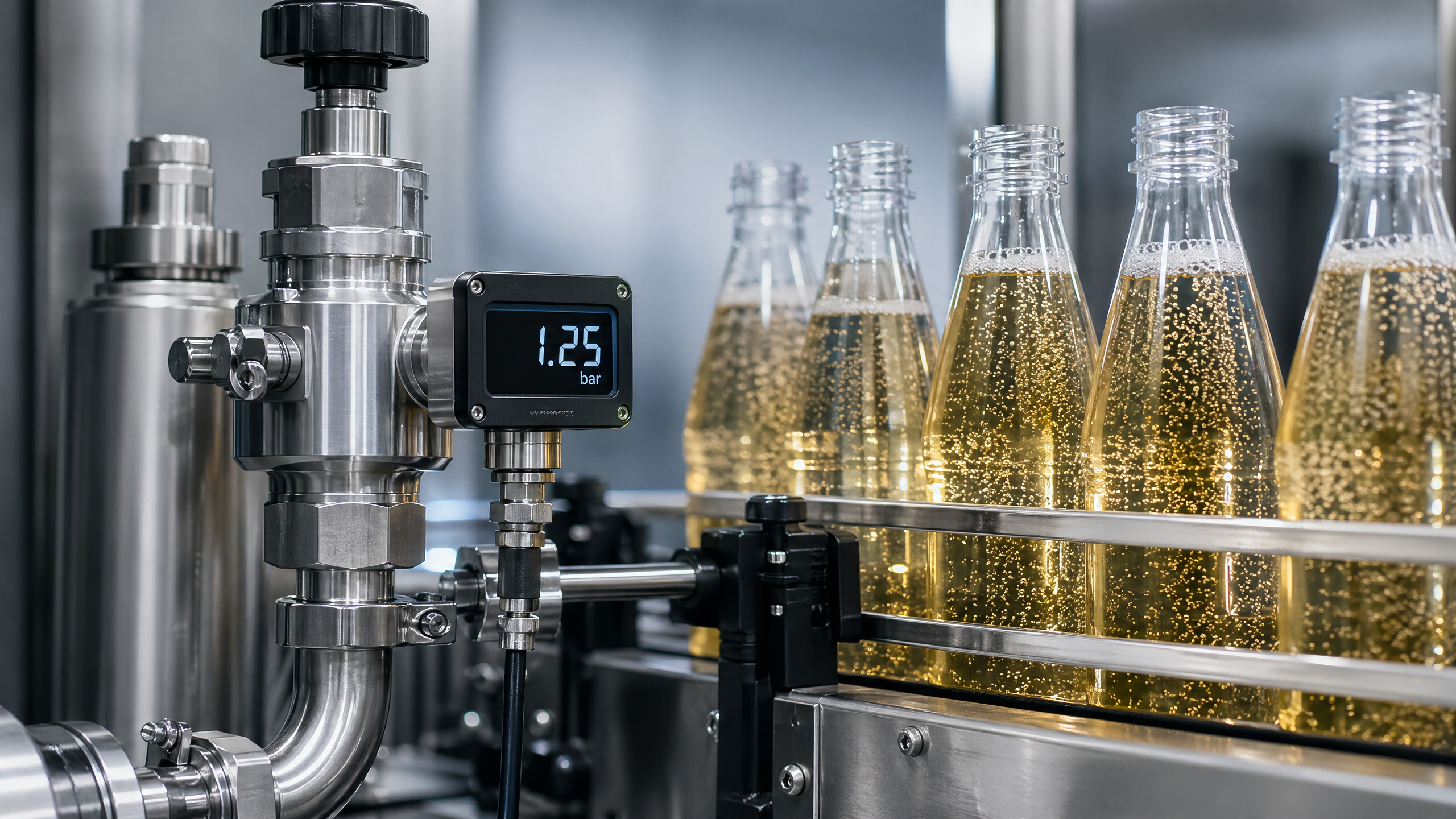
Latin American brewery beer ODM: Why carbonation pressure specs shift across altitudes
For procurement managers and decision-makers evaluating Latin American brewery partners—or comparing Asia beer contract manufacturer capabilities, European craft brewery precision, or North American brewery scalability—carbonation pressure specs aren’t just technical footnotes. They’re critical variables that shift dramatically with altitude, directly impacting foam stability, mouthfeel, and shelf-life consistency. As a full-service brewing partner offering beer ODM and private label beer production, Jinpai Beer integrates altitude-aware engineering into custom beer manufacturing workflows—ensuring reliable performance whether your Latin American brewery project targets Bogotá (2,640m) or coastal Valparaíso (near sea level). Discover why smart brewery outsourcing starts with physics-aware formulation.
Why altitude isn’t just a “location detail”—it’s a core formulation variable
When sourcing beer ODM services for Latin America, many procurement and engineering teams treat altitude as background context—not an active design parameter. That’s a costly oversight. Atmospheric pressure drops ~1 kPa per 8.5 meters of elevation gain. At Bogotá’s 2,640 m, ambient pressure is ~73 kPa—nearly 27% lower than at sea level. Since dissolved CO₂ in beer seeks equilibrium between internal bottle/can pressure and external atmospheric pressure, the *same* carbonation volume (v/v) generates significantly higher *gauge* pressure at high altitude—and conversely, lower gauge pressure near sea level. Ignoring this means inconsistent dosing, unstable foam, premature gushing, or flat beer upon distribution across regions. For distributors managing multi-altitude retail networks (e.g., Lima → Cusco → Iquitos), this isn’t theoretical—it’s daily shelf-life risk.
How carbonation specs break down in practice—and what it costs you
Let’s translate physics into procurement impact:
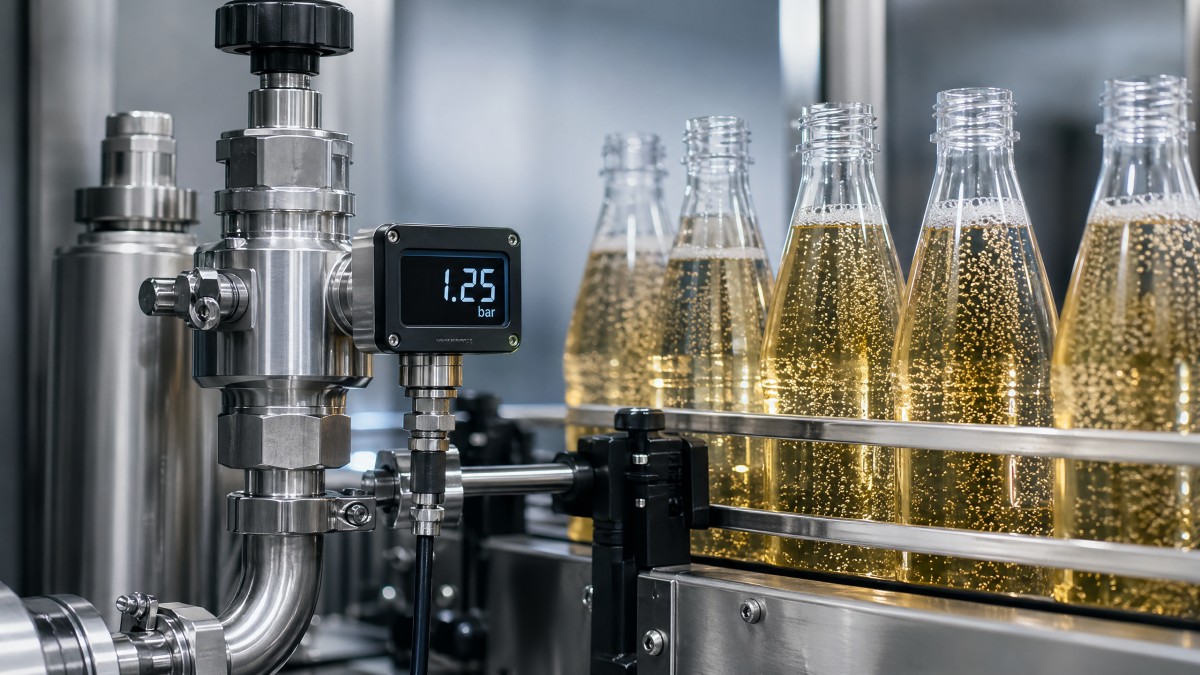
- At sea level (e.g., Valparaíso, Chile): Target 2.4 v/v CO₂ ≈ 1.8–2.0 bar gauge pressure in a sealed PET bottle at 20°C.
- At 2,000 m (e.g., Quito, Ecuador): Same 2.4 v/v requires only ~1.3–1.5 bar gauge—yet many ODM partners default to sea-level settings, over-pressurizing packaging and risking burst bottles or compromised seal integrity.
- At 2,640 m (Bogotá): 2.4 v/v equates to just ~1.1–1.3 bar gauge. Under-pressurization leads to poor head retention, oxidized notes within weeks, and consumer complaints about “flat” character—even if lab tests show correct CO₂ volume.
This isn’t about recalibrating a single batch. It’s about embedding altitude-specific pressure mapping into your ODM partner’s QC protocols, filling line validation, and stability testing—across *all* target markets your brand serves.
What to verify before signing an ODM agreement for Latin America
Procurement and engineering leads shouldn’t accept “we adjust for altitude” at face value. Ask these five operational questions—and demand evidence:
- Do you validate carbonation pressure *at the actual fill site*, using calibrated inline pressure sensors—not just lab measurements post-filling?
- Is your CO₂ dosing system dynamically compensated for real-time ambient pressure and temperature? (Not just seasonal averages.)
- Can you provide stability test reports showing foam collapse rate, dissolved oxygen ingress, and sensory panel scores across 3+ altitudes—using your exact packaging format?
- Do your filling line SOPs include altitude-triggered torque adjustments for crown caps or liner formulations for twist-off closures? (Lower pressure = less sealing force needed—but too little causes leakage.)
- When scaling from pilot batch to full production, do you re-run pressure mapping for each new facility—or assume transferability?
Jinpai Beer builds these validations into every ODM workflow. Our R&D team co-develops altitude-tuned carbonation curves with clients, then validates them in simulated high-altitude chambers and on-site at partner facilities. We also support dual-spec packaging—e.g., one SKU formulated for coastal Peru, another optimized for Andean distribution—with full traceability.
Real-world example: When “one spec fits all” backfired
A U.S.-based craft brand launched a tropical IPA across Colombia via a low-cost ODM partner. All batches used identical CO₂ dosing (2.5 v/v) and standard PET bottling. In Cartagena (sea level), foam was rich and persistent. In Medellín (1,490 m), head dissipated in under 60 seconds. In Bogotá, consumers reported “weak fizz” and “cardboard off-notes” by Week 3—even though lab CO₂ readings matched spec. Root cause? No altitude-adjusted pressure curve—only volume was controlled. The result: $220K in unsellable inventory, delayed market entry, and reputational damage in a key growth corridor. Contrast that with our Whole wheat lager Beer, which ships with region-specific carbonation profiles validated across 5 altitude bands—from Guayaquil to La Paz—ensuring consistent mouthfeel and shelf life without reformulation.
Bottom line: Altitude-aware ODM isn’t premium—it’s non-negotiable
If your Latin American beer launch spans more than one major elevation zone, carbonation pressure isn’t a “nice-to-have” engineering footnote—it’s a make-or-break variable for product integrity, consumer trust, and margin protection. The right ODM partner doesn’t just *accommodate* altitude; they proactively model, validate, and document pressure behavior across your entire distribution footprint. Jinpai Beer does this by design—not as an add-on, but as embedded protocol. Whether you’re evaluating breweries in Brazil, Mexico, or Chile—or comparing global ODM options—we engineer carbonation like the physical system it is: altitude-sensitive, package-dependent, and consumer-critical. Because great beer isn’t just brewed—it’s precisely balanced, altitude by altitude.
Thank you very much for writing to us. Please leave your message and contact information, we will reply to you within 24 hours.