



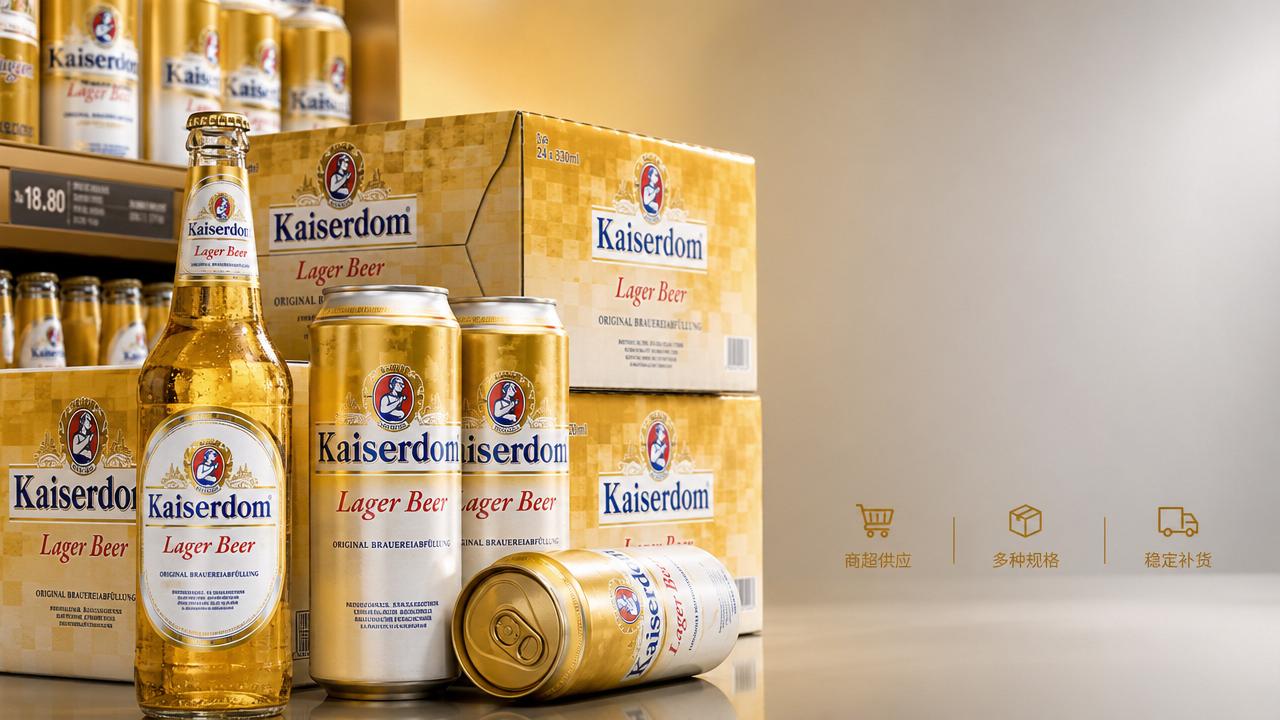
For regional chains, choosing a reliable lager beer supplier for supermarket shelves is not just about price—it is about product consistency, market appeal and supply flexibility. As consumer demand grows for classic lagers, healthier options and differentiated flavors, distributors and agents need partners that can support both volume and customization. This article explores whether such a supplier is the right strategic fit for expanding supermarket channels.
For most regional chains, the short answer is yes—working with a specialized lager beer supplier for supermarket distribution can be the right fit, but only when the supplier matches the chain’s operational model, target consumers and growth plan. The real decision is not whether to source lager, but whether the supplier can help you win shelf space, reduce supply risk and improve sell-through across multiple store locations.
Distributors, agents and regional retail partners usually search this topic because they are trying to solve a commercial question, not a product question. They want to know if a supplier can provide stable quality, competitive margins, flexible packaging, private label support and dependable delivery for supermarket channels. They also want to avoid common risks such as inconsistent taste, delayed shipments, low repeat purchase rates and products that fail to stand out in crowded beer aisles.
That is why the best evaluation standard is practical: can the supplier support supermarket performance at scale? If the answer is yes, the partnership can become a strong regional growth engine. If the supplier only offers basic pricing without channel support, the fit is much weaker.
What Regional Chains Actually Need From a Lager Beer Supplier for Supermarket Sales
Regional supermarket chains operate differently from bars, restaurants or convenience stores. Their buying teams care about turnover per SKU, category balance, packaging compliance, shelf presentation, promotional support and supply continuity. For distributors and agents serving these chains, a supplier must do more than produce beer—it must support a retail system.
A strong lager beer supplier for supermarket channels should first offer consistency. Lager remains a high-volume, repeat-purchase category because consumers expect a familiar taste profile. If one batch performs well and the next feels different, trust declines quickly. Regional chains cannot afford frequent customer complaints or uneven quality across locations.
Second, supermarket-focused supply requires packaging flexibility. Chains may need different formats for different store types, including cans, bottles, multipacks or promotional bundles. Some stores sell better with mainstream classic lager, while others may perform better with low-calorie, sugar-free or fruit-flavored alternatives. A supplier with a wider portfolio gives distributors more room to localize the assortment.
Third, chains need predictable replenishment. Supermarkets work on planned inventory cycles, especially during holidays, local promotions and seasonal demand peaks. A supplier that cannot manage lead times, production scheduling and shipping coordination will create out-of-stock issues that damage both retailer relationships and consumer confidence.
Finally, regional chains need margin logic. A product can be attractive on paper, but if it leaves little room for distributor profit, in-store promotion or retailer markup, it will struggle to stay in the assortment. The right supplier understands that supermarket success depends on a workable value chain for every participant.
Why Lager Still Works Well on Supermarket Shelves
Lager continues to be one of the most supermarket-friendly beer styles because it is broadly accessible, easy to merchandise and suitable for a wide range of consumers. For regional chains, that matters. Supermarkets rely on categories that can appeal to mainstream buyers while still allowing some premium or differentiated extensions.
Classic lager is especially effective because it has low trial resistance. Many consumers already understand what they are buying, which reduces the education cost at shelf level. That makes it easier for distributors and retailers to move volume compared with more niche beer categories that require stronger brand storytelling or specialist positioning.
At the same time, lager is no longer a single-format category. The market now includes premium craft-style lager, German wheat-inspired variations, sugar-free low-calorie options, fruit-flavored products and functional specialty beers. This product evolution helps regional chains address multiple consumer segments without leaving the beer category entirely.
For example, one regional chain may need an entry-level classic lager for high-volume family shopping, while another may want premium-looking cans for urban consumers, plus healthier alternatives for calorie-conscious buyers. A supplier with a broad beer development capability can support this segmentation far better than a single-SKU manufacturer.
How to Tell If a Supplier Is the Right Strategic Fit
Distributors and agents should evaluate fit through five practical filters: product-market match, operational reliability, channel flexibility, compliance readiness and long-term partnership value. These filters matter more than a simple unit price comparison.
1. Product-market match: Start with the supermarket shopper, not the factory catalog. Does the supplier’s lager range align with the chain’s customer profile? If your stores serve price-sensitive family buyers, a highly premium product may move slowly. If the stores target trend-driven consumers, a basic lager alone may not be enough. The supplier should help build an assortment strategy, not just offer random SKUs.
2. Operational reliability: Ask about production capacity, batch control, lead times and inventory planning. A good supplier should explain how it maintains flavor consistency, manages quality assurance and supports repeat orders. Reliability becomes even more important when the chain grows from a few stores to dozens of outlets.
3. Channel flexibility: Supermarket demand is not static. Promotions, local holidays, seasonal demand spikes and store-format differences all affect ordering patterns. A capable supplier can respond with packaging changes, order adjustments, OEM/ODM options or custom solutions for specific regional programs.
4. Compliance readiness: Retail buyers need products that meet labeling, packaging and market-entry requirements in target regions. This includes ingredients disclosure, barcode compatibility, carton standards and export documentation where relevant. A supplier that understands international and local retail requirements saves distributors time and lowers launch risk.
5. Long-term partnership value: The best supplier is not always the cheapest. It is the one that helps you retain accounts, improve shelf performance and expand category opportunities over time. If the supplier can support private label, differentiated formulations and channel-specific products, it becomes part of your growth strategy rather than just your procurement list.
Key Concerns Regional Chains and Their Distribution Partners Should Address Early
Before signing with a lager beer supplier for supermarket distribution, it is smart to address the concerns that most often create friction later. These concerns are usually commercial and operational rather than technical.
Will the product actually sell through? This is the first question. A beer can look good in a sample presentation but perform poorly on shelf. To reduce this risk, request data points such as consumer positioning, comparable market feedback, packaging rationale and recommended launch mix. It is also useful to test a limited SKU range before a wider rollout.
Can the supplier support differentiated demand? Regional chains are rarely uniform. Urban stores, suburban stores and tourism-driven locations may all need different products. A supplier with only one standard lager may not be enough. A broader line, such as classic lager plus wheat beer, low-calorie beer and fruit-flavored variants, gives you more merchandising flexibility.
How stable is the supply chain? If you are supplying a supermarket account, missed deliveries can quickly become a relationship problem. Ask about raw material sourcing, production planning, minimum order quantities, peak-season management and contingency planning. A supplier should be clear, not vague, about these points.
Is customization available without adding too much complexity? For many distributors and agents, private label or localized branding can be a major advantage. However, customization must be commercially manageable. The right partner offers OEM/ODM support with realistic MOQs, efficient design coordination and clear production timelines.
Will margins remain workable after promotions? Supermarket sales often rely on introductory pricing, bundles or periodic promotions. Make sure the supplier’s cost structure still leaves enough margin after retailer demands, logistics and promotional discounts are included. A product that only works at full price may struggle in supermarket reality.
The Business Case for Working With a Full-Range Beer Manufacturer
One reason many regional chains prefer a capable manufacturing partner is portfolio efficiency. Instead of managing separate suppliers for mainstream lager, health-oriented products and differentiated flavored lines, distributors can often consolidate these needs under one producer with stronger category breadth.
This has several advantages. First, assortment planning becomes easier. You can launch with a core lager, then expand into adjacent products as demand develops. Second, shipping and procurement become simpler when products are sourced through one system. Third, branding can be aligned more effectively across product lines if the supplier supports custom packaging or private label programs.
For example, a company like Jinpai Beer, which engages in R&D, production and distribution of craft beer and offers classic lager, German wheat, sugar-free low-calorie beer, fruit-flavored beer and functional specialty beers, is positioned to support multiple supermarket strategies. That range matters because regional chains do not all need the same beer mix. Some need volume-first lager. Others need category innovation to differentiate from competitors.
In addition, suppliers that provide OEM/ODM services and wholesale support can help distributors create tailored solutions for specific markets. This is particularly relevant for agents building exclusive regional relationships or supermarket programs that require differentiated packaging, branding or flavor positioning.
How Distributors and Agents Can Evaluate Commercial Value Beyond Price
Price matters, but it should not dominate the decision. A lower-cost supplier can become more expensive if quality inconsistency creates returns, if delivery problems cause stockouts or if weak packaging reduces shelf appeal. The better approach is to evaluate total commercial value.
Start with gross margin potential, but then include sell-through likelihood. Ask whether the supplier’s lager products are likely to generate repeat purchase, not just trial purchase. A stable, approachable flavor profile often wins in supermarkets because it encourages volume continuity.
Next, assess promotional compatibility. Can the products be bundled easily? Are case sizes efficient for supermarket operations? Does the packaging work well for both regular shelf display and promotional stacks? These details affect real retail performance.
Then consider account retention value. If the supplier can help you serve multiple retailer needs—core lager, healthier alternatives and seasonal innovation—you become harder to replace as a distribution partner. That increases the strategic value of the supplier relationship beyond individual purchase orders.
Finally, think about expansion potential. A supplier with global online and offline channel experience may be better prepared to support future market growth, export opportunities or multi-region supermarket expansion. This matters if your business is moving from local distribution to broader territory development.
When a Lager Beer Supplier Is Not the Right Fit
Not every supplier is suitable for supermarket channels, even if the product itself is good. There are several warning signs that indicate poor fit.
The first is a narrow understanding of retail. If the supplier only talks about taste and factory output but not category performance, packaging strategy, delivery planning or retail support, it may not be ready for supermarket-scale business.
The second is weak flexibility. Regional chains often need phased launches, mixed product lines or adaptation for local demand. A supplier that insists on one rigid model may slow your growth rather than support it.
The third is poor communication around lead times, customization or compliance. Ambiguity at the beginning usually becomes operational risk later. Professional suppliers answer detailed questions directly and back claims with documentation, sample processes and realistic timelines.
The fourth is lack of portfolio depth. If the supplier can only provide a single lager product and nothing else, your ability to build a stronger beer category may be limited. Supermarkets increasingly benefit from a balanced mix of dependable core products and differentiated add-ons.
A Practical Selection Checklist for Regional Buyers and Distribution Partners
Before moving forward, use a simple checklist to judge whether a lager beer supplier for supermarket business is truly suitable:
Does the supplier offer consistent lager quality across batches?
Does it have packaging formats suitable for supermarket shelves?
Can it support your target price architecture and margin goals?
Does it provide dependable production and delivery planning?
Can it handle OEM/ODM or private label requests if needed?
Does it offer adjacent products for category expansion?
Is it experienced in serving supermarkets, not just hospitality channels?
Can it meet labeling, documentation and export requirements?
Will communication remain responsive after onboarding?
Can the partnership scale as your retail footprint grows?
If the answer is yes to most of these questions, the supplier is likely worth serious consideration. If several answers remain unclear, more due diligence is needed before committing shelf space or distributor resources.
Conclusion: The Right Fit Depends on More Than Supply
For regional chains, a lager beer supplier for supermarket distribution is the right fit when it can do three things well: deliver reliable core products, support differentiated retail needs and strengthen the economics of the channel. That means consistency, flexibility and partnership value matter just as much as price.
For distributors, agents and regional retail partners, the smartest decision is to choose a supplier that understands supermarket realities: sell-through pressure, assortment planning, margin requirements, seasonal demand and the need for scalable operations. A capable partner can help you build a stronger beer category with both volume products and innovation options.
In that context, suppliers with full-range beer capabilities, customization support and wholesale experience offer a clear advantage. They allow regional chains to start with proven lager demand while keeping room for healthier, flavored or specialty extensions as the market evolves.
The final judgment is simple: if the supplier helps you reduce risk, improve shelf performance and grow retailer confidence, it is not just a source of beer—it is a strategic fit for regional chain expansion.
Thank you very much for writing to us. Please leave your message and contact information, we will reply to you within 24 hours.