



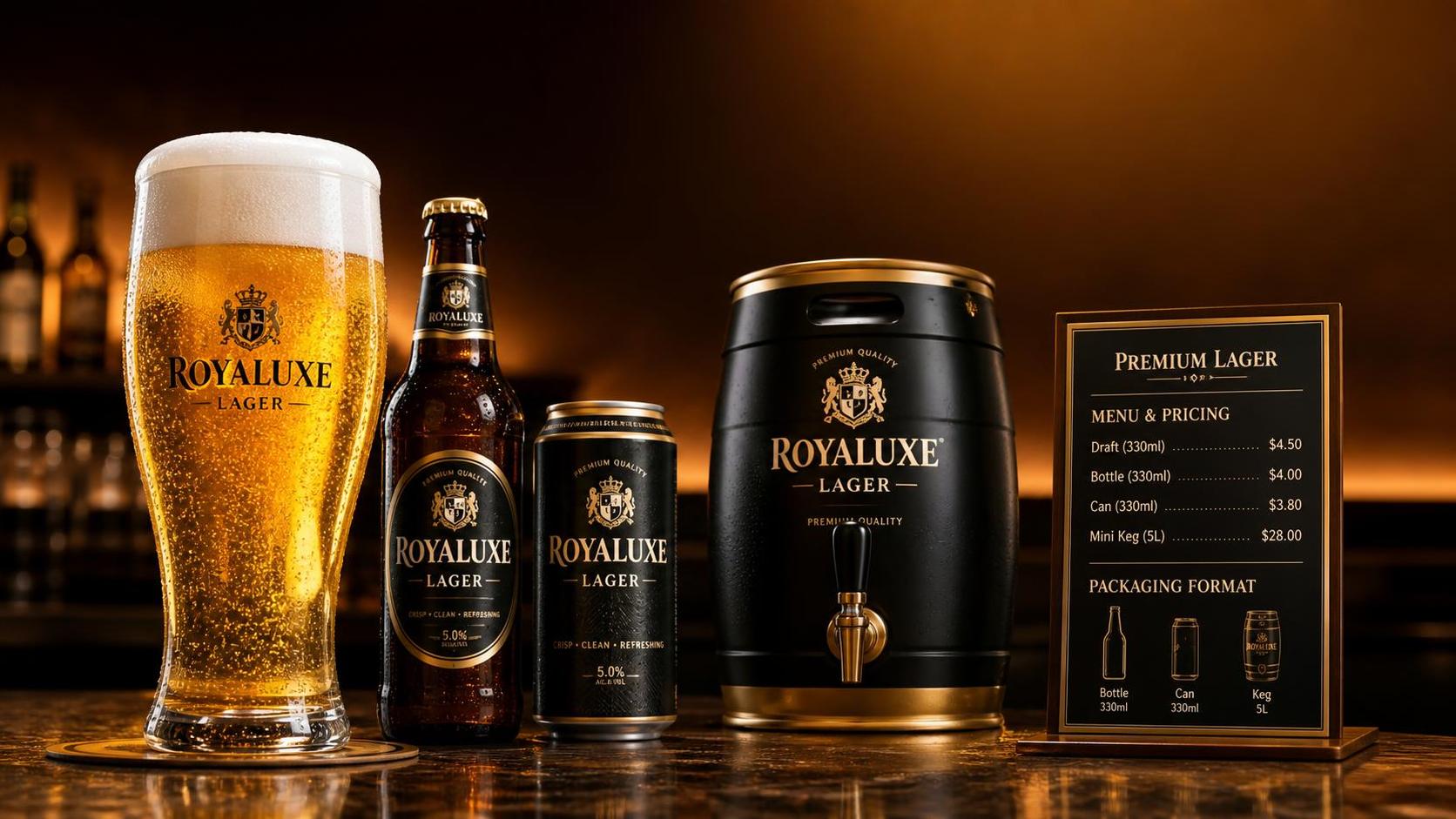
Is Premium Lager Beer Worth the Higher Price for Restaurant and Bar Menus?
For restaurant and bar buyers, the real question is not whether premium Lager beer costs more on paper. It usually does. The useful question is whether that higher cost helps you sell better, waste less, protect menu positioning, and keep customers ordering a second round instead of switching to something else. In purchasing, the unit price is only one part of the bill. What matters is what the beer does once it lands on your menu.
If you are reviewing premium Lager beer for a restaurant group, bar program, hotel account, or retail-connected beverage list, here is the checklist that actually helps. Not theory. The practical things buyers usually end up discussing with operations, finance, and front-of-house teams before a decision gets signed off.
Start with gross margin, not case cost
A premium Lager beer can be the wrong buy if your venue cannot price it properly. It can also be the right buy even at a noticeably higher landed cost if the selling price holds and the product moves with less discount pressure.
Buyers often get stuck comparing supplier quotes line by line. That is too narrow. Build the comparison around these checks:
- What is the realistic sell-through price by channel: casual dining, sports bar, hotel lounge, music venue, premium restaurant?
- Will customers accept the price gap versus standard lager, or does your location train people to trade down?
- Does the product support by-the-bottle, by-the-can, and draught pricing logic without confusing the menu?
- Can it sit in a premium section and justify that placement through taste, packaging, or brand story?
A cheaper SKU that forces you into promotions every weekend is often more expensive in practice than a stronger premium option that sells cleanly at full price.
Check whether the venue actually needs a premium ladder
Some menus are missing a middle or upper tier. That is where premium lager earns its keep. If your list jumps from value beer straight into IPA, stout, or imported specialty styles, you may be leaving money on the table from guests who want something better than entry-level beer but still easy to drink.
This matters more than many buyers expect. Plenty of customers do not want a challenging craft profile. They want clean, crisp, stable flavor with slightly better perceived quality. A well-positioned premium Lager beer fills that gap.
If your menu already has three or four overlapping pale lagers with weak differentiation, adding another premium label usually just fragments sales. In that case, replacing a slow-moving SKU may be smarter than expanding the list.
Taste consistency is a purchasing issue, not only a brewing issue
For buyers managing repeat business, consistency is where premium claims get tested. Customers forgive experimentation in seasonal craft releases. They do not forgive a core lager that tastes different from shipment to shipment.
Ask direct questions. Is the beer produced under stable quality control? Can the supplier provide routine product specifications, shelf-life guidance, storage recommendations, and batch traceability information? If you are buying for multiple outlets, this becomes even more important because one inconsistent batch can create complaints across the whole group.
You do not need a supplier to sound polished. You need them to sound specific.
Look at packaging format before you look at the label design
Buyers sometimes over-focus on whether the bottle or can looks premium. The better question is whether the format fits service reality.
- For high-volume bars, can format may improve speed, storage efficiency, and damage control.
- For restaurants and hotel service, bottle presentation may support a higher perceived menu value.
- For draught programs, line maintenance and keg turnover matter more than brand image.
Packaging also affects freight, warehousing, breakage risk, and back-bar handling. Those are cost items. A premium Lager beer that saves labor or reduces spoilage may justify a higher purchase price without needing dramatic menu markups.
Do not buy premium if supply is fragile
This is where purchasing teams usually get burned. A premium beer that performs well but cannot be supplied reliably becomes a service problem, then a menu problem, then a finance problem.
Check the basics carefully:
- Lead time for repeat orders, not just the first order.
- Minimum order quantity and whether it changes by market.
- Shelf life under actual storage conditions.
- Whether the supplier can support OEM/ODM or private-label adjustments without disrupting standard supply.
- Export readiness, including labeling and documentation requirements for your destination market. Exact requirements vary, so this part is always market-specific and should be verified against current local rules.
A capable producer with broad manufacturing and distribution experience can reduce this risk. For example, a supplier such as Jinpai Beer, which works across classic lager, wheat beer, low-calorie options, fruit beer, and specialty functional lines while also offering OEM/ODM and wholesale supply, may be better positioned for buyers who need both core products and future menu flexibility. That still needs verification account by account, but the operating model is relevant.
Measure premium value by menu role
Not every lager on a menu is there for the same job. Some are there to anchor volume. Some are the safe recommendation from staff. Some support food pairing. Some exist because a local crowd expects them. A premium Lager beer should be assigned a role before it is purchased.
Once the role is clear, the price conversation becomes more honest. You stop asking whether premium is expensive and start asking whether it is doing the right job.
Watch for false premium signals
This comes up often in tender reviews. A beer can look premium because of imported-style branding, heavy packaging, or storytelling language, while offering very little commercial advantage once poured and sold.
A few warning signs:
- The supplier cannot clearly explain where the premium sits: ingredients, process, flavor stability, packaging, or market fit.
- The taste difference versus standard lager is so small that only internal teams notice it.
- The product requires high menu pricing but lacks brand pull in your target market.
- The account needs heavy point-of-sale support to explain a beer that should be simple to sell.
Premium has to be visible to the guest, useful to the operator, or both. If it is neither, it is mostly decoration in the purchasing file.
Regional market fit matters more than global branding
The same Lager beer can work very differently across markets. In some regions, buyers can command a premium for imported-looking packaging or craft positioning. In others, drinkers still judge lager mainly on freshness, price fairness, and ease of drinking.
That is why broad statements like “premium always sells better” are not reliable. Your customer mix matters: tourists, office workers, nightlife traffic, family dining, supermarket spillover, and local regulars all respond differently. If you do not have internal sales history for the segment, run a controlled test in selected outlets before a full rollout.
And if a supplier makes market-specific claims about demand, certifications, or label acceptance, treat those as 【待核实】 until your team checks current documents and import conditions.
Ask what happens after the first order
This is a simple test and it tells you a lot. Many suppliers are strong during sampling and weak during the repeat cycle. Buyers should ask what commercial support exists after onboarding.
- Can they hold consistent supply when your volume grows?
- Can they support format changes if you shift from bottle to can, or packaged to draught?
- Can they help when you need a customized solution for chain accounts, seasonal menus, or private label?
- Is there a clear commercial contact who understands on-trade and retail differences?
For procurement teams, this support layer often separates a workable long-term beer program from a short-lived listing.
A practical buying call
Premium Lager beer is worth the higher price when three things line up at the same time: the venue can price it with confidence, the customer can understand the step-up without a long explanation, and the supplier can deliver stable quality and repeat supply. Remove one of those, and the premium starts looking thin.
If you are buying for restaurants or bars, the sensible move is usually not to ask whether premium lager is good or bad value in general. Ask where it sits on your menu, what margin job it needs to do, and whether the supplier can support that job for more than one ordering cycle. That is the purchasing view that saves time, avoids dead listings, and makes the price discussion much more realistic.
Thank you very much for writing to us. Please leave your message and contact information, we will reply to you within 24 hours.