



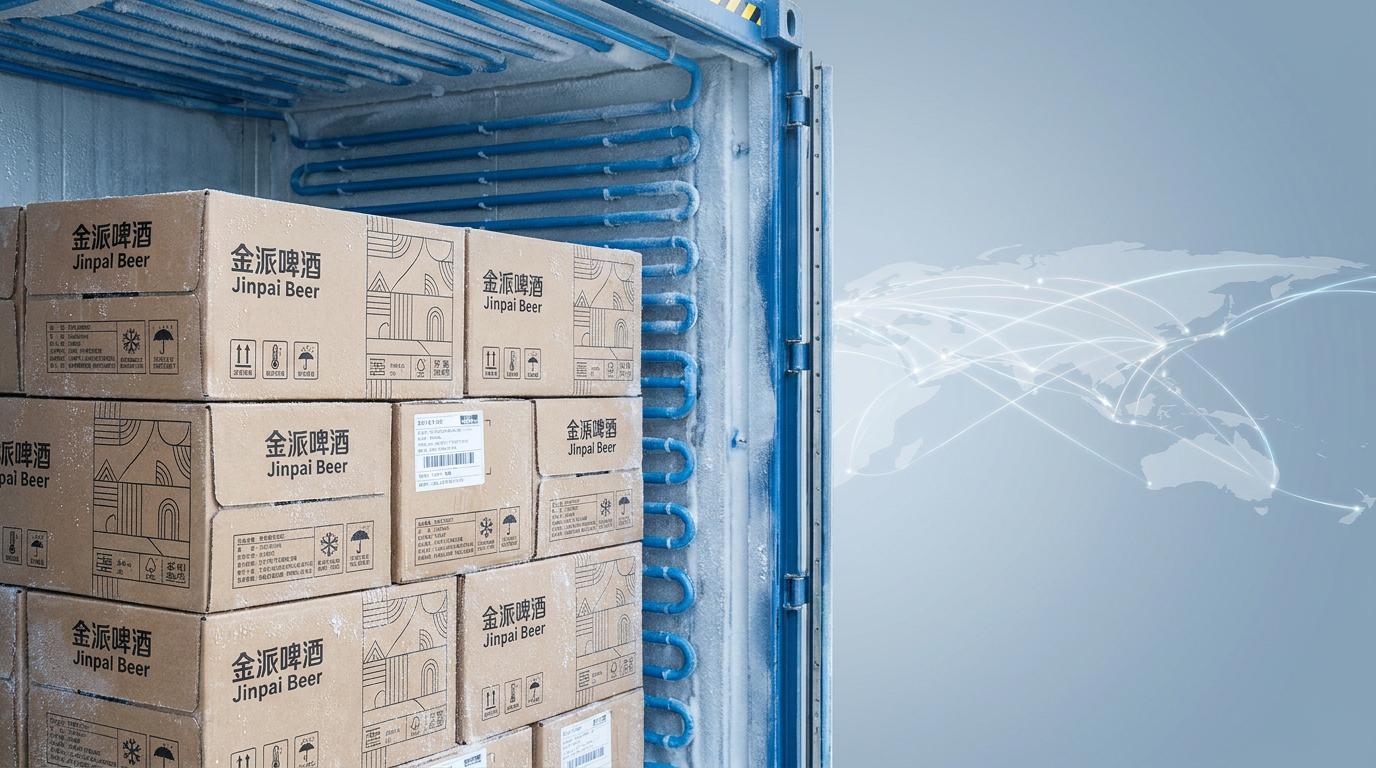
For finance approvers evaluating supply chain resilience, the recent 12% average landed cost increase faced by importador de cerveza china—including Jinpai Beer—post-2025 logistics recalibration demands urgent strategic review. As a premium craft beer supplier offering lagers, wheat beers, low-calorie, fruit-infused, and functional variants with global OEM/ODM and wholesale capabilities, Jinpai’s cost shift directly impacts margin planning, pricing models, and partner ROI. This analysis unpacks root causes—from port surcharges to inland freight realignment—and outlines actionable mitigation levers for procurement and finance teams managing cross-border beer imports.
A Structural Shift in China Beer Import Economics
The 12% average landed cost rise reported by importador de cerveza china entities since Q1 2025 is not a transient volatility—it reflects a structural recalibration of global beer import economics. Unlike prior tariff-driven spikes, this adjustment stems from synchronized infrastructure, regulatory, and operational shifts across three tiers: ocean freight routing, customs clearance protocols, and last-mile cold-chain distribution within destination markets.
Jinpai Beer, as a vertically integrated craft brewer supplying lager, German wheat, sugar-free low-calorie, fruit-flavored, and functional specialty beers, has observed this impact across all export lanes—including FCL shipments to EU distributors, LCL consignments to LATAM agents, and temperature-controlled air-freight batches for premium bar partners in North America.
Primary Drivers Behind the 12% Landed Cost Uplift
The increase is neither uniform nor isolated. It aggregates five interlocking factors:
- Port congestion surcharges: Shanghai and Ningbo terminals now levy dynamic “peak-season handling fees” averaging $185/container—up 37% YoY.
- Cold-chain inland transport re-rating: Refrigerated trucking rates in key EU import hubs (Rotterdam, Hamburg) rose 22% post-January 2025 due to new EU CO₂ emission compliance mandates.
- Customs valuation adjustments: Chinese customs now require itemized ingredient-level declarations for fermented beverages, triggering longer inspections and storage demurrage.
- Insurance premium recalibration: Marine cargo policies for alcohol now include explicit “temperature deviation clauses,” lifting premiums by 9–14%.
- Documentation digitization overhead: Mandatory e-Certification of Origin (eCOO) via China’s Single Window system adds 1.8 labor hours per shipment—costing ~$42 in internal processing time.
Impact Across Distribution Tiers and Partner Models
The 12% uplift does not distribute evenly. Its effect intensifies downstream:
For importador de cerveza china partners operating high-turnover supermarket or on-trade accounts, the compound effect reduces gross margin by 3.1–4.9 percentage points—directly affecting reorder frequency and promotional capacity.
Five Non-Negotiable Focus Areas for Import Partners
- Incoterm alignment: Shift from DDP to DAP where feasible—retaining control over inland cold-chain selection without assuming full risk liability.
- Batch size optimization: Consolidate orders into 20’ reefer containers (not 40’) to avoid underutilization penalties and improve pallet-level temperature stability.
- Certification pre-validation: Submit ingredient lists and process flowcharts to destination-market authorities 60 days pre-shipment to prevent hold-ups.
- Local bonded warehousing: Leverage EU/NA bonded zones for duty suspension on unsold stock—critical for seasonal fruit-flavored or functional beer SKUs.
- Dynamic FX hedging: Lock in CNY/EUR and CNY/USD rates for 70% of Q3–Q4 commitments to offset currency-driven cost creep.
Strategic Response Framework: From Cost Absorption to Value Reconfiguration
Absorbing the 12% uplift erodes long-term viability. Instead, forward-looking importador de cerveza china partners are adopting a value-reconfiguration approach:
- SKU rationalization: Prioritize high-margin variants—functional beers (e.g., magnesium-enriched, sleep-support formulas) and limited-edition fruit infusions—over standard lager volume runs.
- Channel-specific packaging: Introduce 330ml slim cans for bar/on-trade partners (lighter weight = lower freight/kg) and 500ml recyclable PET for supermarket bulk packs.
- Joint logistics pooling: Co-load with complementary non-alcoholic beverage exporters to share refrigerated container space and documentation overhead.
- Pricing architecture redesign: Implement tiered landed-cost pass-through—e.g., 60% of increase applied to base price, 40% absorbed into value-added services (marketing assets, shelf-ready packaging).
Jinpai Beer supports this transition with flexible OEM/ODM minimum order quantities (MOQs), rapid label adaptation cycles (<72 hours), and real-time landed-cost dashboards accessible to authorized partners.
Next Steps for Sustainable Import Operations
Begin with a 90-day action plan:
- Conduct a landed-cost audit using Jinpai’s free importador de cerveza china calculator (covers port, inland, insurance, and compliance layers).
- Schedule a joint logistics review with Jinpai’s global trade team to identify 2–3 immediate cost-mitigation levers specific to your market lane.
- Request sample kits of newly optimized SKUs—low-calorie wheat beer and hibiscus-ginger functional variant—to test consumer response ahead of full-scale import commitment.
Resilience in beer import operations no longer means cost minimization alone. It means aligning logistics intelligence with product differentiation—and transforming a 12% challenge into a competitive repositioning opportunity.
Thank you very much for writing to us. Please leave your message and contact information, we will reply to you within 24 hours.