



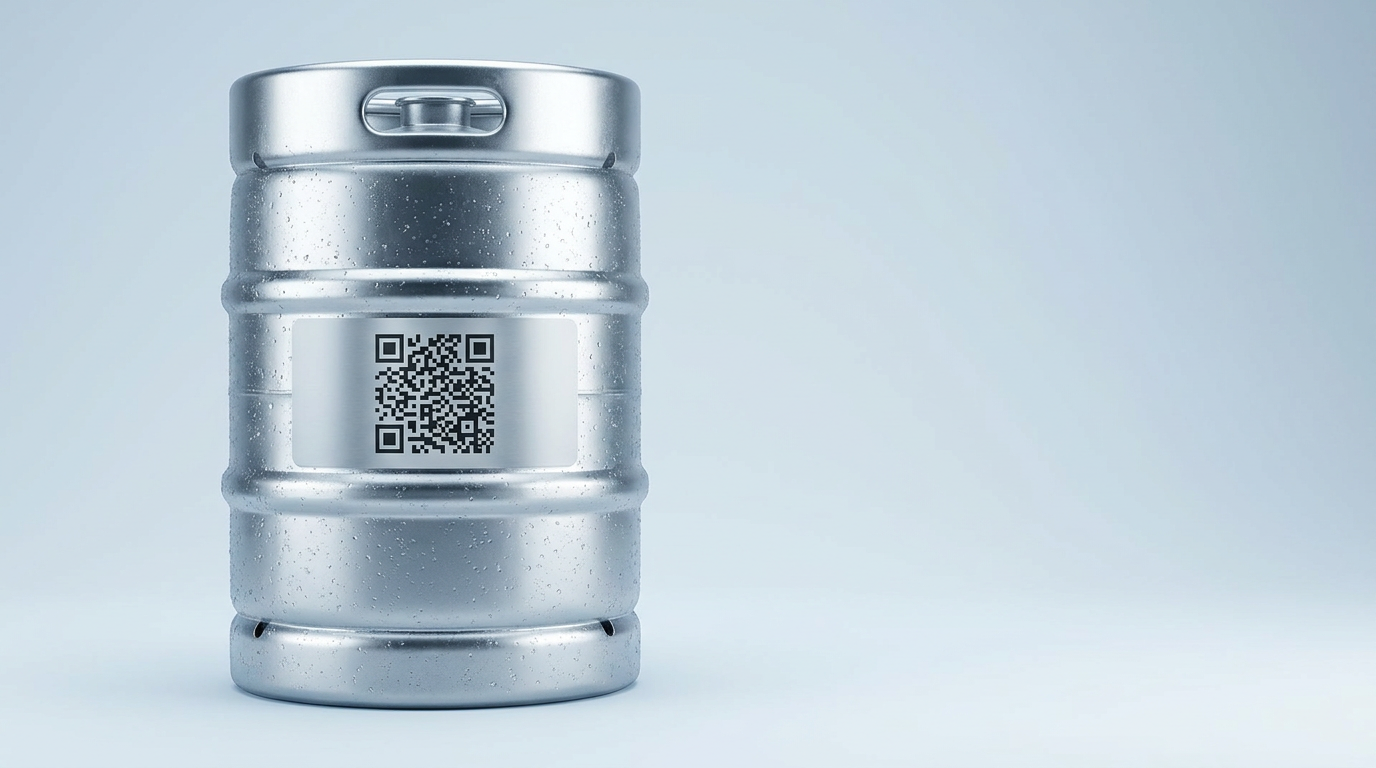
As a leading Proveedor de cerveza China, Jinpai Beer has become one of the first craft beer manufacturers in Asia to implement end-to-end traceability QR codes on keg labels—a move gaining strong interest among technical evaluators assessing supply chain transparency, quality control systems, and digital compliance readiness. This early adoption report details the architecture, verification workflow, and real-world deployment insights behind the initiative—designed specifically for stakeholders evaluating scalable traceability solutions in beverage logistics and production environments.
How Does End-to-End Traceability Work on Keg Labels?
Jinpai Beer’s keg-level traceability system embeds dynamic, tamper-evident QR codes directly onto stainless-steel keg labels during final packaging. Each code links to a secure, cloud-hosted ledger containing time-stamped data from raw material intake through fermentation, filtration, carbonation, filling, and cold-chain handover.
Unlike static batch codes, these QR codes are regenerated per keg based on real-time sensor inputs (e.g., fill temperature, CO₂ pressure, line cleanliness logs) and validated against internal SOPs and ISO 22000-aligned checkpoints. The system supports both offline scanning (cached metadata) and online verification (full audit trail), enabling rapid root-cause analysis during quality incidents or recall simulations.
What Technical Evaluators Should Assess Before Integration
For technical evaluators evaluating traceability scalability in beverage operations, five functional dimensions require validation:
- Data provenance: Are all entries timestamped, signed, and immutable? Is blockchain optional or embedded?
- Interoperability: Does the system export standardized formats (GS1 EPCIS v1.3, JSON-LD) for ERP/WMS integration?
- Hardware resilience: How does label adhesion perform under condensation, frost, and repeated handling at 0–4°C?
- Scan reliability: What is the minimum resolution and lighting condition required for successful decoding (tested at ≤1.5m distance)?
- Audit readiness: Can full keg histories be exported as PDF reports with digital signatures compliant with EU Regulation (EC) No 852/2004?
Comparative Evaluation: Jinpai’s Implementation vs. Industry Benchmarks
The table below compares key implementation attributes across three traceability approaches commonly evaluated by technical teams deploying in craft beer supply chains:
Jinpai’s solution stands out in cold-chain resilience and regulatory mapping—critical for distributors serving EU, GCC, and ASEAN markets where label integrity and documentation traceability are audited during port clearance. Unlike third-party platforms, it requires no API gateway licensing or annual subscription fees.
Which Scenarios Justify Early Adoption?
Technical evaluators should prioritize this traceability layer when any of the following apply:
- You manage multi-country distribution with divergent labeling regulations (e.g., EU allergen disclosure, GCC halal traceability, Chinese GB 7718).
- Your OEM/ODM clients demand real-time lot-level visibility for co-branded product launches.
- You operate shared cold-storage facilities where keg handover timing must be auditable per BRCGS Issue 9 Section 4.11.2.
- You supply functional specialty beers (e.g., probiotic, low-calorie, vitamin-enriched) requiring documented stability monitoring across shelf life.
Why Choose Jinpai Beer as Your Proveedor de cerveza China?
As a vertically integrated Proveedor de cerveza China, Jinpai Beer offers traceability not as an add-on module—but as a built-in capability across all keg-based SKUs: classic lager, German wheat, sugar-free low-calorie, fruit-flavored, and functional specialty variants. We support:
- OEM/ODM customization: QR code layout, language localization (EN/ES/AR/ZH), and data field selection per client requirements.
- Wholesale scalability: Full traceability enabled on orders ≥500 kegs; no minimum for sample validation.
- Global compliance support: Pre-audited documentation packages for FDA Prior Notice, EU TRACES, and Saudi SFDA registration.
- Technical handover: Onboarding includes WMS integration testing, scanner calibration guidance, and bilingual SOP documentation.
We invite technical evaluators to request: (1) a live demo of keg-level traceability verification, (2) sample keg labels with environmental stress test reports, or (3) a tailored feasibility assessment for your specific distribution footprint and compliance targets.
Thank you very much for writing to us. Please leave your message and contact information, we will reply to you within 24 hours.