



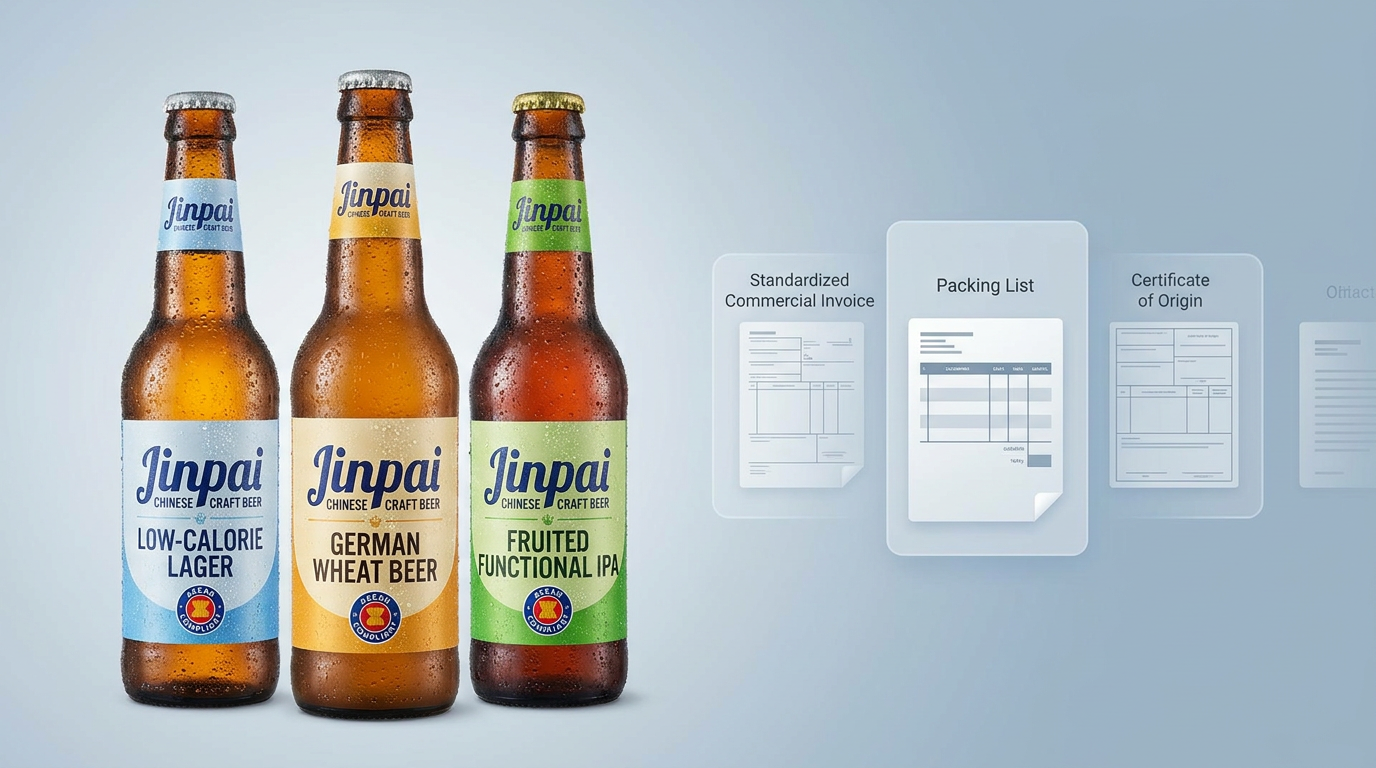
As an importador de cerveza china navigating evolving trade landscapes, you’ll need to act fast: the 2026 ASEAN Trade Protocol introduces stricter customs valuation rules that directly impact duty calculations, clearance timelines, and landed costs for craft beer imports. For procurement professionals sourcing premium Chinese craft beer—like Jinpai’s low-calorie lagers, German-style wheat beers, or fruit-infused functional brews—these changes demand proactive compliance planning. With OEM/ODM flexibility, global wholesale support, and multi-channel distribution readiness, Jinpai Beer helps importers mitigate risk while maintaining margin integrity. Stay ahead—read how to align sourcing strategy with the new regulatory framework.
New Valuation Standards Signal a Shift in ASEAN-China Beer Trade Governance
The 2026 ASEAN Trade Protocol does not introduce tariffs—but overhauls how dutiable value is determined for imported beverages, including craft beer from China. Under Article 7.3, transaction value must now be substantiated by verifiable, contemporaneous documentation covering all elements influencing final price: royalties, packaging design fees, promotional rebates, and even third-party logistics surcharges tied to brand licensing.
This is especially consequential for importador de cerveza china handling branded, value-added products—such as Jinpai’s sugar-free low-calorie lagers or functional specialty beers with added botanical extracts. Unlike commodity lagers, these require granular cost breakdowns to satisfy customs authorities across Vietnam, Thailand, Indonesia, and the Philippines.
Why ASEAN Is Tightening Valuation Discipline Now
Three structural drivers underpin this regulatory evolution:
- Revenue Protection: ASEAN members collectively lost an estimated USD 210 million in beer-related customs duties between 2021–2023 due to undervaluation via intercompany invoicing and bundled service charges.
- Level Playing Field: Local brewers increasingly filed complaints against imported craft brands citing “artificially suppressed landed costs” — prompting harmonized verification protocols.
- Digital Traceability Maturity: Real-time ERP-to-customs data sharing (e.g., Thailand’s e-ASW and Indonesia’s INSW) now enables automated cross-checking of declared values against production records, freight manifests, and payment trails.
These are not isolated policy tweaks—they reflect a systemic pivot toward transparency-first trade administration in ASEAN’s food and beverage sector.
Direct Impact Across the Craft Beer Import Workflow
The revised valuation framework affects every stage—from quotation to shelf:
- Pricing & Quotation: FOB quotes must now separate base beer cost from non-dutiable services (e.g., label design, QR-code traceability setup), or face reclassification at port.
- Documentation: Commercial invoices require itemized annexes listing all related-party payments—including OEM formulation support fees paid to Jinpai’s R&D team.
- Clearance Timelines: Average release time for Chinese craft beer shipments rose from 2.1 to 5.8 days in pilot zones (e.g., Ho Chi Minh City Port) during 2025 dry-runs.
- Landed Cost Volatility: Duty exposure may increase 12–19% for SKUs with bundled marketing support or co-branded retail kits—common in Jinpai’s bar-channel solutions.
Five Critical Compliance Priorities for Importadores
To maintain continuity and competitiveness, focus on these operational imperatives:
- Adopt dual-invoicing structures: one for goods (beer volume × unit ex-factory price), another for services (OEM development, sensory testing, label compliance certification).
- Require full bill-of-materials disclosure for functional beers—especially those with added vitamins, adaptogens, or probiotics—to pre-empt classification disputes.
- Integrate Jinpai’s batch-level QC reports into customs submissions—ASEAN now accepts certified lab results as valuation evidence for premium-grade craft batches.
- Pre-validate all promotional allowances (e.g., “buy 100 cases, get 5 free”) with local customs brokers before shipment—retroactive adjustments trigger penalties.
- Leverage Jinpai’s ASEAN-ready packaging: bottles with EU/ASEAN dual-label templates reduce post-entry relabeling delays by up to 72%.
Strategic Response Framework: From Risk to Resilience
Successful adaptation follows a three-phase rhythm:
Act Now—Align Your Next Shipment With ASEAN’s New Standard
The 2026 ASEAN Trade Protocol takes full effect on January 1, 2026—but enforcement begins retroactively for shipments arriving after October 1, 2025. Waiting until Q4 invites clearance bottlenecks, duty reassessments, and margin erosion.
Jinpai Beer supports importador de cerveza china partners with end-to-end ASEAN readiness: from custom invoice templates and bilingual technical dossiers to real-time duty simulation tools and broker-certified labeling assets.
Contact our global trade team today to request your complimentary ASEAN Valuation Readiness Assessment—including SKU-specific duty exposure modeling, documentation gap analysis, and OEM service fee structuring guidance. Let’s ensure your next container of Jinpai German wheat, fruit-flavored IPA, or functional wellness beer clears faster, costs less, and lands stronger.
Because in tomorrow’s ASEAN beer market, compliance isn’t overhead—it’s competitive advantage.
Thank you very much for writing to us. Please leave your message and contact information, we will reply to you within 24 hours.