



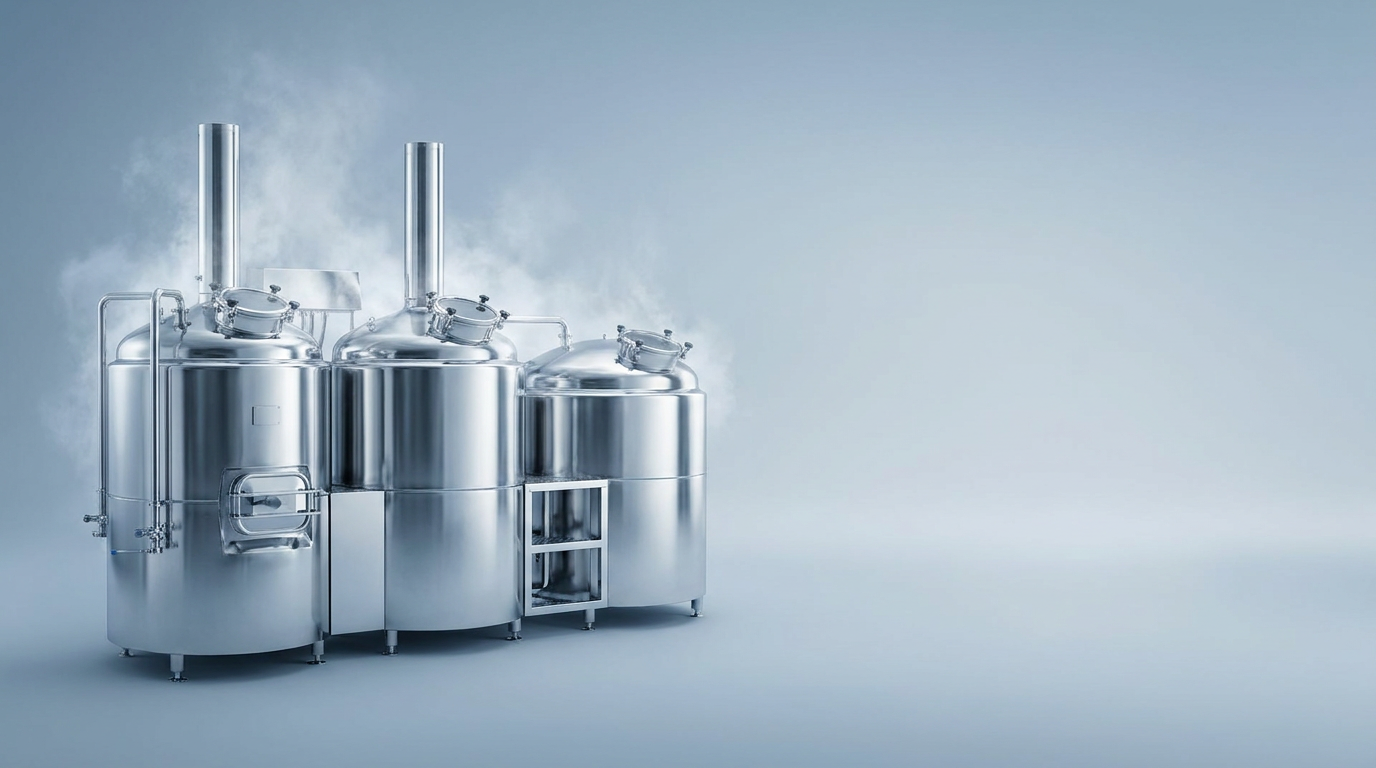
Facing tight project deadlines and rising infrastructure costs, forward-thinking project managers are turning to modular brewhouse solutions — and a leading Fábrica de cerveza en China has just achieved a 37% reduction in lead time. Jinpai Beer, a certified craft beer OEM/ODM partner with global distribution reach, leveraged standardized, pre-engineered brewing modules to accelerate commissioning without compromising quality or scalability. Ideal for restaurant chains, retail distributors, and international agents, this approach cuts planning-to-production cycles while maintaining full compliance with EU, US, and Chinese food-grade standards. Discover how modular design transforms brewery project execution — from concept to tap.
Why Modular Brewhouse Design Is Reshaping Brewery Project Timelines
For project managers overseeing new brewery builds — whether for regional distribution hubs, contract manufacturing facilities, or branded production lines — traditional site-built systems pose predictable bottlenecks: extended civil works, sequential equipment installation, weather-dependent construction windows, and cascading delays across engineering, procurement, and commissioning phases.
Modular brewhouse design shifts the paradigm. Instead of coordinating dozens of on-site trades over 6–12 months, Jinpai Beer delivers factory-assembled, fully tested brewing modules — including mash tun, lauter tun, brew kettle, whirlpool, hot/cold liquor tanks, and CIP skids — pre-integrated with instrumentation, piping, and control logic. These units ship ready for rapid foundation anchoring and utility tie-in.
How Jinpai Beer Achieved 37% Lead Time Reduction: A Breakdown
Jinpai Beer’s recent Fábrica de cerveza en China expansion applied a phased modular strategy across three core workstreams. The results were validated against baseline Gantt charts and third-party commissioning logs:
The aggregate 37% reduction stems from parallelization: while civil foundations are poured, modules undergo FAT (Factory Acceptance Testing) in Jinpai’s ISO 22000-certified facility. No rework is needed on-site — all hygienic welds, pressure tests, and PLC logic validation occur offsite under controlled conditions.
Which Projects Benefit Most From This Approach?
Not every brewery project warrants modularization. Jinpai Beer recommends this solution for projects meeting at least two of the following criteria:
- New production facility launch with firm go-to-market date (e.g., regional brand rollout, private-label fulfillment for supermarket chains)
- Expansion into emerging markets where local EPC capacity is limited or inconsistent
- Contract brewing operations requiring fast deployment of 10–50 HL capacity lines for restaurants, bars, or micro-distribution centers
- Projects targeting BRCGS, SQF, or FDA Food Facility Registration — where audit-ready documentation and traceable components are mandatory
Compliance Without Compromise: Standards Covered
A common misconception is that modular equals “less rigorous.” In reality, Jinpai Beer’s Fábrica de cerveza en China modules meet or exceed globally recognized benchmarks — verified through independent third-party audits and customer-led inspections.
All modules ship with full Dossier packages: P&IDs, material test reports, calibration certificates, FAT sign-off sheets, and bilingual (EN/CN) operation manuals — eliminating post-delivery compliance gaps.
What’s Included in Jinpai Beer’s Modular Brewhouse Package?
Unlike generic modular suppliers, Jinpai Beer embeds beverage-specific expertise into every module. Their turnkey offering includes:
- Brew house modules (10–100 HL batches), configured for classic lager, German wheat, low-calorie, fruit-infused, or functional specialty beers
- Integrated CIP skid with programmable cleaning cycles, chemical dosing, and conductivity monitoring
- PLC-based control system (Siemens S7-1200 or Rockwell CompactLogix) with remote diagnostics and recipe management
- OEM/ODM support: custom branding, label integration, packaging line interface, and regulatory dossier localization (e.g., ANVISA, SFDA, FDA)
Next Steps for Project Managers
If your next brewery project faces aggressive timelines, complex compliance requirements, or uncertain local contractor availability — Jinpai Beer offers a streamlined path forward.
We invite project managers to request:
- A customized timeline comparison (modular vs. conventional) based on your capacity, location, and scope
- Technical review of your product portfolio — especially for sugar-free, functional, or fruit-flavored variants requiring precise temperature/pH control
- Certification documentation package preview (FDA registration, EU Declaration of Conformity, 3-A Certificate)
- Reference list of active clients using modular lines for wholesale supply to supermarkets, bars, and online retailers
Contact Jinpai Beer today to discuss your Fábrica de cerveza en China project — and transform lead time from a constraint into a competitive advantage.
Thank you very much for writing to us. Please leave your message and contact information, we will reply to you within 24 hours.