



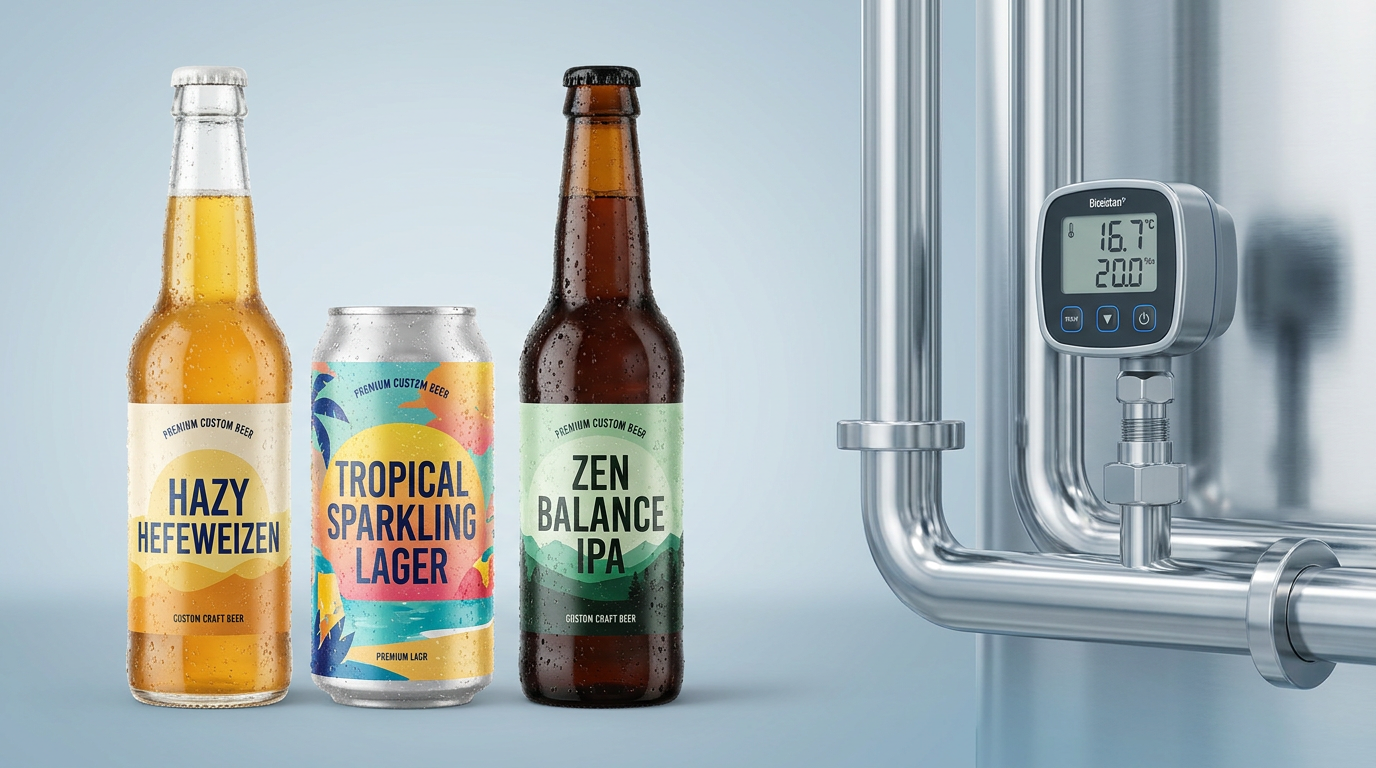
Cervecería China is redefining collaboration in the global craft beer market—shifting from traditional OEM to strategic ODM partnerships. For enterprise decision-makers seeking differentiated, brand-aligned beverage solutions, this evolution means greater control over formulation, packaging, and market positioning—without compromising scale or speed. As Jinpai Beer expands its ODM capabilities across lagers, wheat beers, low-calorie, fruit-infused, and functional specialty brews, partners gain agile co-development support, regulatory-compliant production, and end-to-end distribution readiness. Discover how Cervecería China’s ODM shift empowers your brand to stand out—and scale sustainably—in competitive retail, HoReCa, and e-commerce channels worldwide.
What Does “Cervecería China” Mean in Today’s Craft Beer Landscape?
“Cervecería China” is not a single brewery—but a strategic designation for high-capacity, export-ready Chinese craft beer manufacturers like Jinpai Beer that serve international clients with deep localization expertise.
These facilities combine German-style brewing precision, ISO 22000 and HACCP-certified production lines, and multilingual R&D teams fluent in EU, US, and ASEAN labeling requirements.
The term signals reliability—not geography. It reflects capability: scalable fermentation capacity, rapid SKU iteration, and full-service formulation-to-fulfillment execution.
OEM vs. ODM: Why the Shift Matters for Brand Integrity
OEM (Original Equipment Manufacturing) means producing an existing recipe under your label. You own the brand—but not the product design.
ODM (Original Design Manufacturing) goes further: Jinpai Beer co-develops recipes, selects yeast strains, refines mouthfeel profiles, and designs compliant packaging—all aligned with your brand voice and target consumer.
- OEM: You bring the formula. We brew and package it.
- ODM: You bring the vision. We engineer the beer—and validate it across sensory panels and shelf-life trials.
- Hybrid ODM+: Includes private-label branding strategy, regulatory dossier preparation, and multi-channel launch support.
Which Product Categories Benefit Most from Cervecería China’s ODM Model?
Jinpai Beer’s ODM pipeline prioritizes innovation-led categories where differentiation drives shelf impact:
- Low-calorie & sugar-free lagers: Precision-controlled fermentation yields <3g carbs/330ml without artificial sweeteners.
- German-style wheat beers: Authentic hefeweizen profiles with stable haze and banana-clove ester balance.
- Fruit-infused craft variants: Cold-infusion techniques preserve volatile aromatics; no pasteurization required.
- Functional specialty beers: Added L-theanine, ginger extract, or electrolyte blends—formulated for stability and label compliance.
Each category includes full technical documentation: COA, allergen statements, nutritional labeling templates, and country-specific import guidance.
How Does ODM Reduce Time-to-Market Without Sacrificing Quality?
Traditional new-product development takes 9–12 months. Jinpai Beer’s ODM workflow compresses that to 14–18 weeks through parallelized stages:
- Weeks 1–3: Co-creation sprint—flavor profiling, ABV calibration, can/bottle mock-ups.
- Weeks 4–7: Pilot batch + sensory validation + regulatory pre-check.
- Weeks 8–12: First commercial run + shelf-life testing (accelerated at 37°C/75% RH).
- Weeks 13–18: Final compliance sign-off + logistics coordination for DDP or DAP delivery.
No step waits on another. This concurrency cuts delays caused by sequential approvals or reformulation loops.
What Risks Should Partners Evaluate Before Choosing ODM Over OEM?
ODM delivers stronger brand alignment—but requires upfront clarity. Key considerations include:
Next Steps: Launching Your Cervecería China ODM Partnership
Begin with a discovery call covering three essentials:
- Your target market’s top 3 consumer expectations (e.g., “low-sugar,” “gluten-reduced,” “Instagrammable can art”).
- Preferred distribution channel mix (e.g., 40% HoReCa, 35% supermarkets, 25% DTC e-commerce).
- Timeline sensitivity—whether you need first samples in 6 weeks or require 12-week shelf-life data before launch.
Jinpai Beer responds within 48 hours with a tailored ODM roadmap—including estimated unit economics, packaging options, and regulatory pathway mapping.
Cervecería China isn’t just about making beer. It’s about building brands—with science, speed, and sovereignty.
Thank you very much for writing to us. Please leave your message and contact information, we will reply to you within 24 hours.