



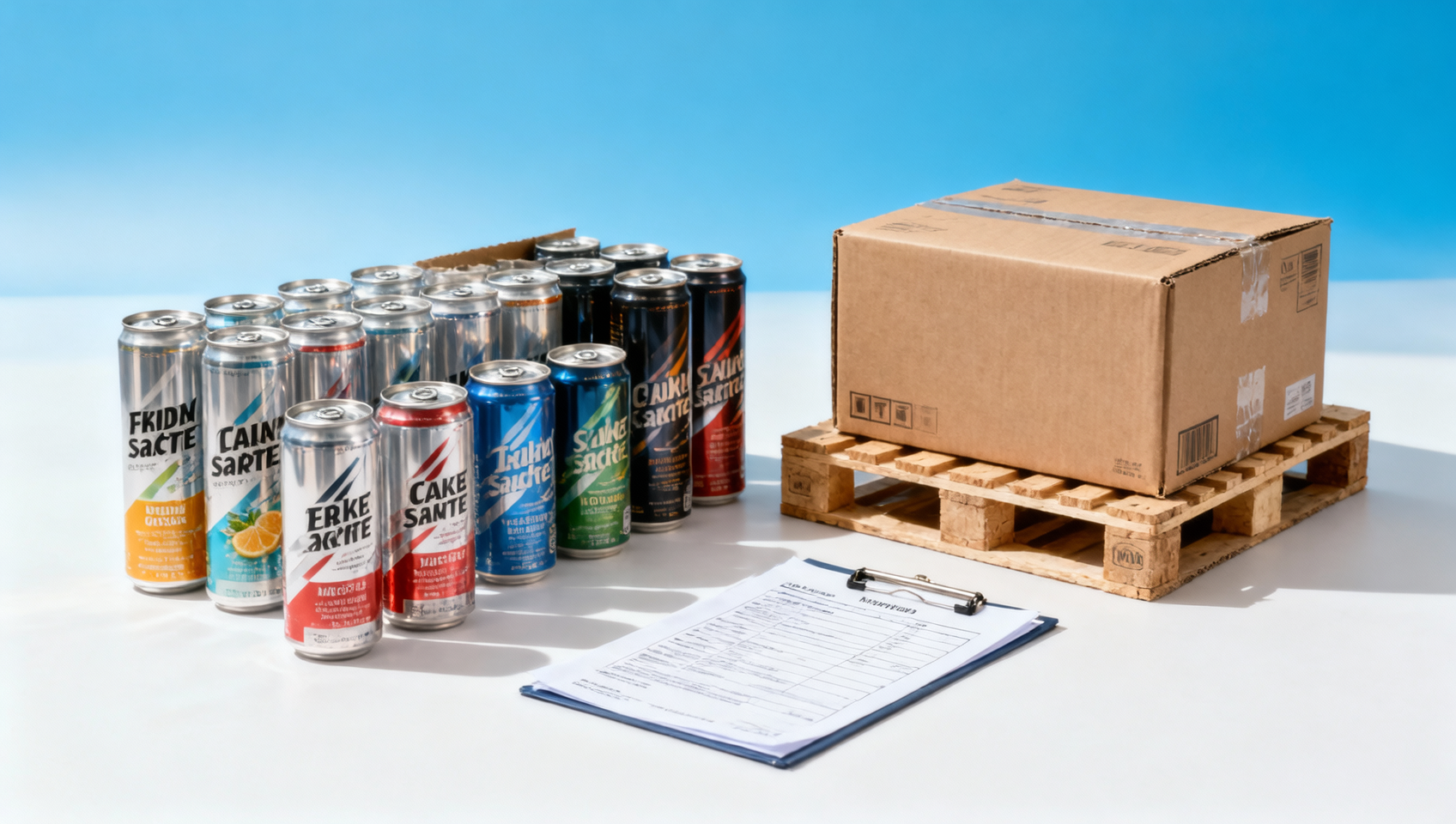
Comparing a Hard seltzer supplier on cost and MOQ is not a simple price exercise. In beverage sourcing, the lowest quote can create higher total cost if packaging limits, unstable quality, or oversized minimums slow inventory turnover. A practical evaluation looks at landed cost, flexibility, formulation support, and the supplier’s ability to support real channel demand.
Why cost and MOQ matter more in hard seltzer
Hard seltzer sits in a competitive segment shaped by flavor trends, health positioning, and fast-moving retail decisions. That makes supplier selection especially sensitive.
A low MOQ can reduce launch risk. It helps test flavors, alcohol levels, and packaging concepts before committing to large stock.
A lower unit price, however, can be misleading. If the Hard seltzer supplier requires high production volumes, warehousing pressure and slow sell-through can erase the advantage.
This is especially relevant for supermarkets, bars, restaurant groups, and online channels, where product rotation and local taste differences affect demand.
Start with the real meaning of supplier cost
Unit price is only one layer. The more useful number is total delivered cost per sellable unit.
When assessing a Hard seltzer supplier, include formulation cost, can or bottle cost, outer carton, labeling, freight, duties, and testing fees.
Also check hidden cost triggers. Some suppliers quote attractively, then add charges for flavor customization, design changes, sample rounds, or regulatory documentation.
In OEM and ODM projects, cost often changes with packaging complexity. Matte cans, special lids, mixed-flavor cartons, and custom ingredients all affect the final number.
That is why beverage companies with broader production capabilities often provide a clearer cost picture. A partner already handling craft beer, low-calorie products, fruit flavors, and specialty formulations usually understands how formulation choices affect margin.
A practical cost comparison framework
MOQ should be judged against inventory risk
MOQ is often treated as a negotiation issue. In reality, it is a demand-planning issue.
A Hard seltzer supplier may offer a strong unit price at one container load, but that only works if the product mix can move quickly across target channels.
For a new label, high MOQ can lock cash into uncertain flavors. For an established program, higher MOQ may be acceptable if it improves packaging efficiency.
The more useful question is whether MOQ matches your launch stage, replenishment model, and market spread.
What to ask about MOQ
- Is MOQ based on one flavor, one SKU, one can size, or one full order?
- Can several flavors share the same production batch?
- Does plain packaging allow a lower starting volume?
- Will repeat orders reduce MOQ after the first run?
- Does custom packaging create a separate MOQ from the liquid itself?
These details show whether the supplier is structured for flexible development or only for large-volume production.
Compare suppliers by business fit, not only factory scale
Production capacity matters, but it does not tell the full story. The right Hard seltzer supplier should fit the commercial model behind the product.
For private label launches, responsiveness and formulation flexibility often matter more than the largest output number.
For multi-channel distribution, consistency and export handling become more important. Delays in labels, documents, or pallet standards can disrupt listings.
A supplier with experience across craft beer, sugar-free beverages, fruit-flavored products, and functional specialty drinks may be better prepared for adjacent hard seltzer demands.
That background usually supports better flavor development, lower-calorie positioning, and more realistic packaging recommendations for retail or on-trade channels.
Signs of stronger supplier fit
- Clear OEM or ODM process
- Stable sample turnaround
- Ability to support online and offline distribution formats
- Experience with bars, supermarkets, restaurants, and retail channels
- Documented quality and export coordination
Quality consistency changes the real cost equation
When comparing a Hard seltzer supplier, quality consistency should sit next to price on the scorecard.
A lower-cost batch loses value if flavor drifts, carbonation drops, or packaging defects increase returns. Those problems are expensive after distribution begins.
Request sensory standards, shelf-life information, micro testing routines, and batch traceability. In flavored alcoholic beverages, small variations can affect repeat purchase quickly.
This matters even more for low-sugar or functional concepts. Formulas with cleaner positioning often require tighter control to maintain taste balance.
A capable Hard seltzer supplier should explain where consistency comes from, not simply claim it.
Customization can improve margins when used carefully
Customization is not only a branding exercise. It can shape price architecture and market fit.
Flavor direction, sweetness level, calorie positioning, and packaging format all affect how the product competes on shelf or on menu.
The right Hard seltzer supplier should help identify where customization adds value and where it only adds cost.
For example, a modest flavor adjustment may create useful differentiation. A fully custom can structure with multiple print variations may only raise MOQ and slow launch speed.
That is why suppliers offering customized solutions across beverage categories can be valuable. They often know which elements should stay standard and which deserve adaptation.
A simple comparison model for shortlist decisions
At shortlist stage, it helps to compare each Hard seltzer supplier using weighted criteria rather than relying on quotes alone.
What to do before making the final call
Before selecting a Hard seltzer supplier, align the numbers with the launch model. A supplier that looks expensive on paper may be more efficient in practice.
Build the comparison around three realities: expected sell-through, acceptable inventory window, and required product differentiation.
Then review sample quality, packaging feasibility, and reorder conditions. This creates a more reliable basis than price alone.
In beverage sourcing, long-term value usually comes from a supplier that can scale with the brand, support channel needs, and keep cost logic transparent from the first order onward.
A sensible next step is to compare two or three options using the same quote structure, the same MOQ assumptions, and the same product brief. That makes differences visible and decisions easier to defend.
Thank you very much for writing to us. Please leave your message and contact information, we will reply to you within 24 hours.