



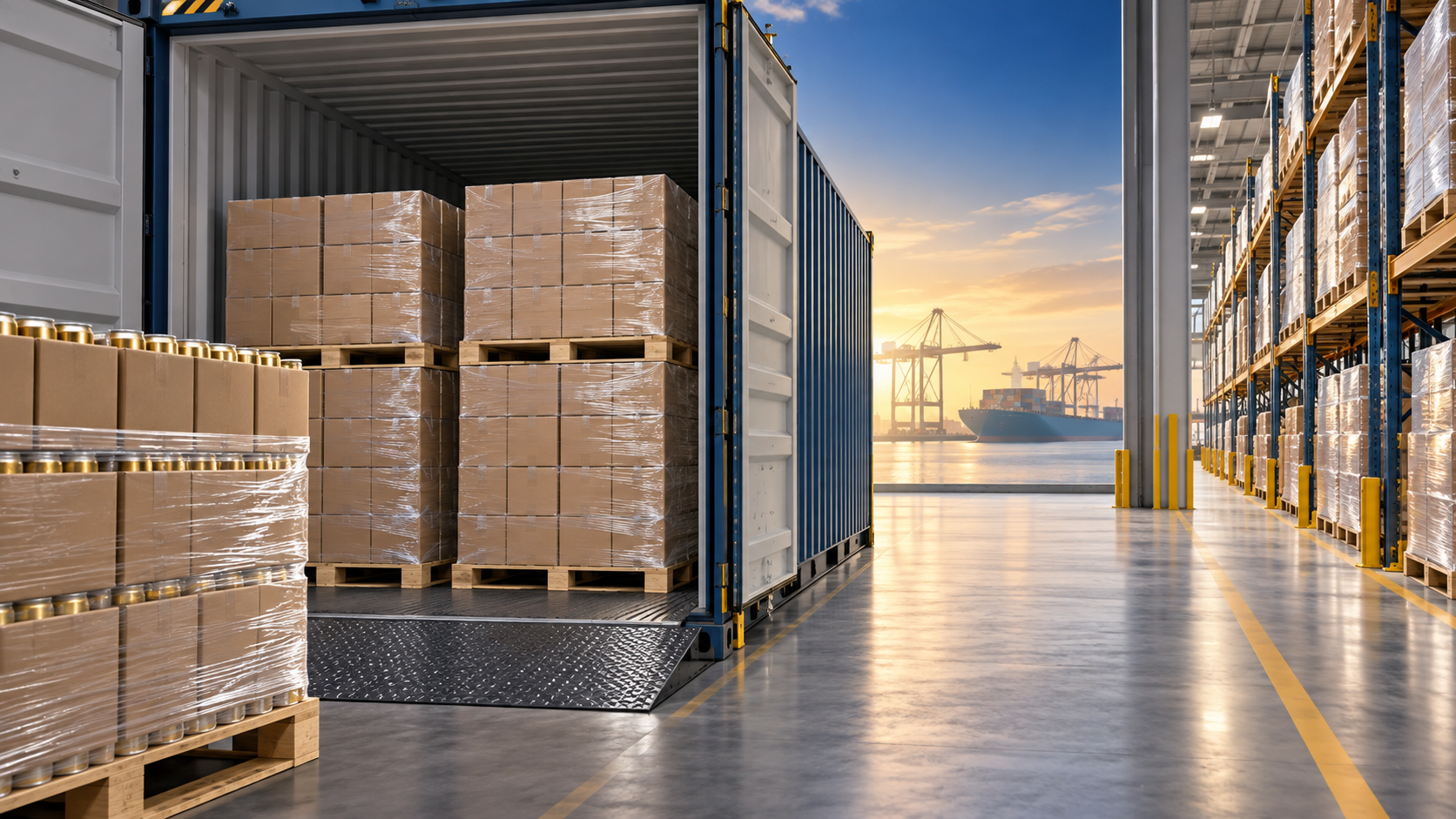
How a Brewery with Global Logistics Affects Landed Cost, Inventory Risk, and Margins
For beer importers, distributors, and retail groups, brewery selection is often treated as a purchasing comparison: product quality, ex-factory price, packaging, and minimum order quantity. Those points matter, but they do not determine the commercial outcome on their own. A beer that looks attractively priced at the brewery gate can become a slow-moving, margin-eroding SKU once freight, customs handling, damaged stock, currency movement, and aging inventory are taken into account.
That is why working with a brewery with global logistics should be evaluated as a supply-chain and finance decision, not simply a sourcing decision. The useful question is not “What is the unit price?” It is “What will this beer cost when it is available for sale in our market, how much working capital will it absorb, and how reliably can we replenish it without creating excess stock?”
In beer, logistics is unusually consequential. Glass is heavy, canned products take up space, beer has a practical freshness window even when its formal shelf life is longer, and portfolio demand can shift quickly between mainstream lager, wheat beer, low-calorie options, fruit-flavoured lines, and seasonal or functional specialty products. A logistics model that is merely adequate for a shelf-stable dry grocery item may be financially weak for a diversified beer portfolio.
Landed Cost Starts Well Before the Container Arrives
Landed cost is often described as product cost plus freight and duties. In practice, it is more useful to view it as the full cost of putting a saleable case into the customer’s hands. The calculation normally includes the supplier price, export packing, inland transport to port, ocean or air freight where relevant, cargo insurance, destination port and terminal fees, customs brokerage, import duty, excise treatment where applicable, local taxes, domestic delivery, warehousing, and the cost of losses or rework.
Not every item applies in every market. Duties, excise rules, deposit systems, labelling obligations, and tax recovery mechanisms vary substantially by destination. The finance issue is not to assume a universal formula; it is to ensure that the quotation basis and the internal landed-cost model refer to the same commercial reality.
Incoterms deserve more attention than they usually receive in beer sourcing discussions. An FOB comparison may make two breweries appear similar while leaving the buyer to manage origin handling, booking quality, freight timing, and documentation coordination. A CIF offer may simplify some elements but does not automatically mean that destination charges or risk exposure are controlled. Delivered structures can improve predictability in some lanes, but only if the responsibilities, exclusions, customs arrangements, and destination handover point are clearly written.
A brewery with established global logistics capabilities can make this analysis cleaner. It should be able to provide shipment-ready specifications, reliable carton and pallet information, loading plans, export documentation support, and realistic lead-time assumptions. Those details may sound operational, yet they affect whether a finance team can build a credible cost-to-serve model rather than relying on a headline purchase price.
The hidden cost is often variability, not freight itself
Freight cost is visible on an invoice. Variability is harder to see until it disrupts a trading period. A delayed sailing can cause stock-outs in a key retail promotion. A rolled booking can force a distributor to use expensive local substitutions. Congestion, documentation discrepancies, or unclear clearance instructions can generate storage and demurrage exposure at destination. These costs are not always large on one shipment, but they can quickly outweigh a modest saving in beer price.
For margin planning, the relevant measure is therefore not only average freight per case. It is the range of possible delivered costs and the company’s ability to absorb changes without repeatedly revising prices, promotional plans, or reorder quantities. Suppliers that coordinate production, export preparation, and shipment scheduling tend to reduce the number of handoffs where avoidable surprises occur.
Lead Time Directly Shapes Cash Requirements and Inventory Risk
Long international supply chains create a familiar trade-off. Holding more stock protects service levels but consumes cash and raises the risk that beer reaches customers later in its commercial life. Holding less stock improves apparent inventory efficiency but leaves the business exposed when a shipment is delayed, a forecast is wrong, or a large customer order lands unexpectedly.
A supply chain should be assessed from production confirmation to stock availability, not just from port to port. Brewing and packaging capacity, material availability, production queue time, quality-release procedures, vessel schedules, customs clearance, and final warehouse delivery all belong in the lead-time calculation. Some of these stages can overlap; some cannot. Treating them as one vague “shipping period” is a common source of understocking.
The financial effect becomes more pronounced when payment terms are considered. If deposits are paid before production, balance payments are due before release, and inventory then spends weeks in transit, cash is committed well before revenue is recognized. A lower unit cost may not be attractive if it requires a disproportionately large forward buy. This is particularly relevant for smaller distributors introducing a new imported brand, where demand history is limited.
A practical approach is to separate core lines from experimental lines. Classic lager or a proven wheat beer may justify a more stable replenishment rhythm. Fruit-flavoured products, sugar-free low-calorie beers, and functional specialty beers often need more cautious forecasting because demand can be channel-specific and promotional performance may vary. Restaurants, bars, supermarkets, and online channels do not necessarily sell the same mix at the same pace.
Freshness Is a Margin Issue, Even When the Product Is Within Shelf Life
Beer inventory should not be managed like a generic packaged commodity. It may remain legally saleable for a stated period, but its marketability is influenced by how long it has spent in production queues, transit, customs holds, distributor warehousing, and retail back rooms. The exact impact depends on recipe, packaging, storage conditions, and local distribution practice. Still, the commercial principle is consistent: the later beer enters a customer’s system, the less flexibility remains for normal sell-through.
This is why shipment timing should be discussed alongside brewing dates, packaging dates, and rotation expectations. It is not enough to ask whether a supplier can ship. The better question is whether the supply plan leaves sufficient selling time after arrival, including a reasonable allowance for inspection, customs clearance, distribution, and retailer receiving windows.
Freshness risk is especially relevant for a broad craft portfolio. A distributor may have confidence in the turnover of a familiar lager while still learning how quickly a fruit beer or a functional line moves in a new city. If all SKUs are ordered in equal container proportions for the convenience of loading, slow-moving variants can quietly consume the margin generated by the faster lines. Mixed-SKU logistics are therefore not merely a sales convenience; they can be a useful inventory-control tool when managed with clear minimums and realistic forecasts.
Portfolio Breadth Can Help—or Complicate—the Economics
A supplier with both brewing capability and international distribution experience can support a more deliberate portfolio strategy. Jinpai Beer, for example, develops and supplies craft beer across classic lager, German wheat, sugar-free low-calorie beer, fruit-flavoured beer, and functional specialty categories, while also offering wholesale, OEM/ODM, and customised supply arrangements. For a buyer, that breadth can reduce the administrative burden of dealing with several unrelated producers.
But consolidation should not be confused with automatic savings. Bringing multiple beer styles under one supplier may improve ordering coordination, packaging alignment, and container utilisation. It can also increase exposure if too many unproven products are loaded into the same purchase cycle. The right decision depends on whether each SKU has a defined channel, expected velocity, acceptable minimum order, and a margin that still works after destination costs.
OEM and ODM projects need particular discipline. Custom recipes, branded cans, cartons, and market-specific labels can create commercial differentiation, but they may require longer planning horizons and more committed packaging decisions. A finance approval should distinguish between the economics of a standard export product and the economics of a customised launch. Custom stock is usually less transferable if demand changes or a market entry is delayed.
A low factory price can produce a high-risk portfolio
There is a temptation to chase the lowest ex-works or FOB price, particularly when budgets are tight. In beer, that approach can lead to larger order quantities, less adaptable packaging, and a higher need for safety stock. The savings are then offset by warehousing, discounting, aged inventory, or working-capital pressure.
The more resilient position is often a supplier arrangement that supports consistent quality, shipment visibility, documentation discipline, and a replenishment model matched to the buyer’s demand profile. That may not be the lowest visible cost at the start. It can, however, produce a more stable gross margin because fewer assumptions are being left to chance.
Questions Worth Asking Before Approving a Brewery Contract
Before approving a new imported beer programme, it is worth asking the supplier and internal operations team a few questions that usually reveal whether the cost model is mature:
- What is the realistic end-to-end lead time, including production, export preparation, transit, clearance, and delivery?
- Which costs are included in the quoted Incoterm, and which destination charges remain outside the offer?
- What shipment information can be confirmed before production and before cargo handover?
- How are palletisation, loading, breakage prevention, and container utilisation handled for the intended pack formats?
- What documents, labels, language requirements, and local compliance checks must be completed before shipment?
- Can core SKUs and new trial SKUs be ordered on different replenishment logic rather than one blanket volume commitment?
- How much selling time will remain after the goods are expected to enter the local warehouse?
- For customised products, which components become dedicated inventory and what happens if the programme changes?
These questions are not designed to make procurement slower. They prevent a common mistake: approving a purchase based on a unit-price comparison, then asking finance and operations to absorb risks that were visible from the beginning.
The Better Measure of Supplier Value
A brewery with global logistics does not eliminate freight volatility, customs requirements, changing tax treatment, or uncertain consumer demand. No supplier can honestly promise that. What a capable partner can do is make those variables easier to identify, price, schedule, and manage before they become an inventory problem.
For financial approval, the strongest brewery proposal is not necessarily the one with the cheapest case price or the broadest product list. It is the one that allows the buyer to estimate true landed cost, protect freshness, order appropriate inventory, and maintain enough replenishment certainty to support the intended retail, bar, restaurant, supermarket, or online channel. When those conditions are in place, logistics stops being a back-office detail and becomes part of the margin plan.
Thank you very much for writing to us. Please leave your message and contact information, we will reply to you within 24 hours.