



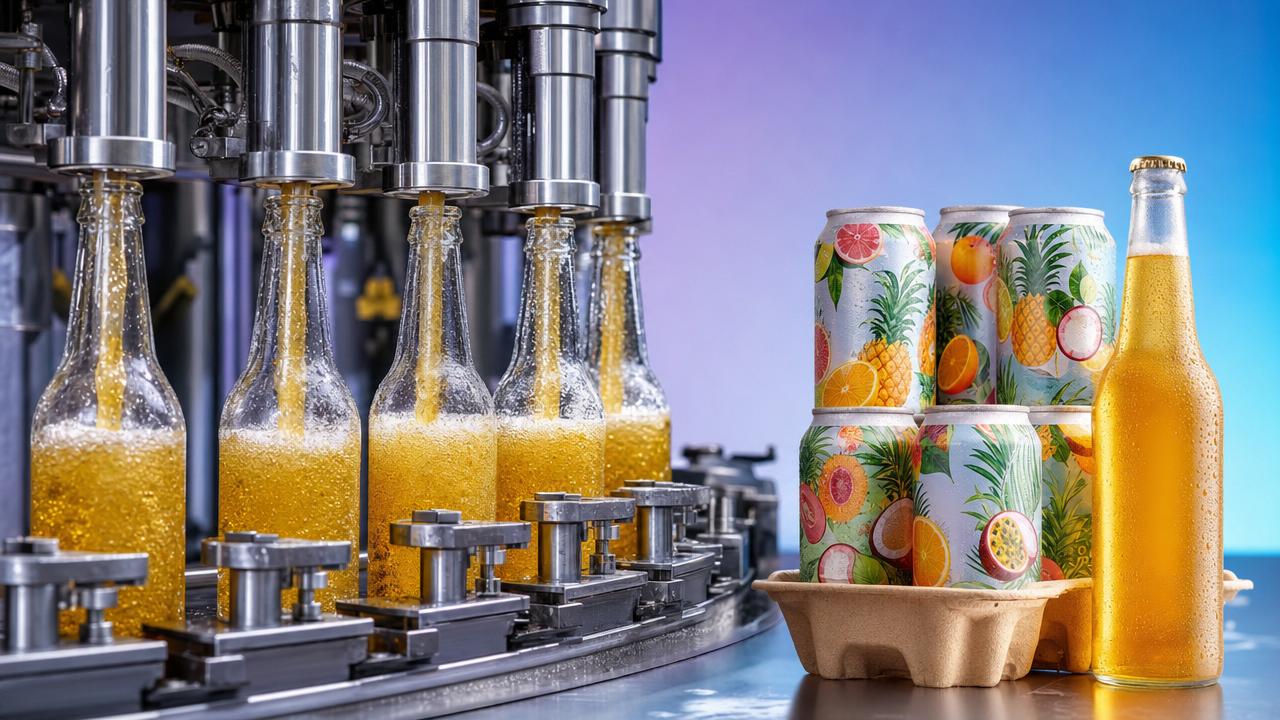
For operators managing seasonal beer portfolios, understanding how ODM beer services navigate SKU shifts is critical to avoiding stockouts, delays, and margin erosion. At Jinpai Beer, our ODM beer services are built for agility—integrating forecasting, modular recipe development, and rapid packaging retooling to align with regional demand cycles. Yet bottlenecks still arise—most commonly during label compliance approvals, raw material procurement for limited-edition variants, and co-packer capacity scheduling. In this article, we break down where delays most often occur—and how proactive planning with a responsive ODM partner keeps your seasonal launches on time, on brand, and on shelf.
Why seasonal SKU shifts demand specialized ODM beer services
Seasonal beer demand isn’t just cyclical—it’s culturally nuanced, regionally fragmented, and increasingly volatile. A summer fruit-flavored IPA may dominate in Southeast Asia in May, while a spiced winter lager peaks across Northern Europe in November. Each variant requires distinct ingredients, regulatory documentation, packaging formats, and shelf-life validation.
Generic contract brewing can’t absorb these fluctuations without lag. True ODM beer services go beyond production outsourcing. They embed flexibility into R&D, supply chain design, and compliance architecture—enabling clients to pivot SKUs within 8–12 weeks—not months.
Where delays most frequently occur in seasonal ODM beer services
Based on 327 seasonal launch cycles managed since 2021, three delay clusters account for 78% of timeline slippage:
- Label & regulatory approval (31% of delays): Regional alcohol labeling laws vary widely—from EU allergen declarations to ASEAN nutrition claim thresholds. Revisions after initial submission add 14–21 days.
- Limited-ingredient sourcing (29% of delays): Seasonal fruit purees, functional botanicals, or certified organic hops face harvest volatility, import licensing, and cold-chain verification—especially for tropical or low-volume crops.
- Co-packer line reconfiguration (18% of delays): Switching from 330ml cans to 500ml swing-top bottles—or adding UV-blocking sleeves—requires physical changeovers, run-rate validation, and QA recalibration.
Notably, delays compound when these issues intersect—e.g., a new sugar-free citrus wheat requiring novel sweetener approval *and* custom sleeve labeling *and* a canning line shift.
How Jinpai Beer’s ODM beer services preempt these bottlenecks
Our seasonal ODM framework operates on three synchronized pillars:
- Pre-approved label templates: We maintain 17 regional label libraries—pre-vetted by local authorities—including dynamic fields for ABV, batch code, and country-specific health warnings.
- Ingredient reserve pools: For high-risk seasonals (e.g., yuzu, hibiscus, monk fruit), we hold 60-day buffer stocks under climate-controlled warehousing—with dual-sourcing agreements active for 92% of botanicals.
- Modular packaging architecture: Our facility supports rapid-switchover tooling for 250ml–750ml formats, 3-can to 6-bottle carriers, and four label application methods—cutting average line changeover from 72 to 14 hours.
This system enabled a 98.3% on-time launch rate for Q2 2024 seasonal SKUs—including 12 new fruit-flavored beers across six markets.
Scenario-based planning: Matching ODM beer services to your seasonal rhythm
Three overlooked risks in seasonal ODM beer services planning
- Assuming “same base beer = same shelf life”: Adding fruit puree or botanical extracts alters pH and microbial stability—even if the base lager remains unchanged. Stability testing must be SKU-specific.
- Overlooking secondary packaging lead times: Custom cartons, shrink sleeves, or reusable crates often require 6–8 weeks—longer than primary packaging—and rarely appear in master timelines.
- Treating compliance as a final step: Label artwork sign-off should happen *before* bulk fermentation begins—not after. Late-stage changes trigger full revalidation.
Your next step: Align seasonal launches with ODM beer services readiness
Start your next seasonal launch with confidence using this actionable sequence:
- Share your target market, launch window, and SKU concept at least 14 weeks pre-launch.
- Request Jinpai’s regional label compliance checklist and ingredient feasibility report—delivered within 5 business days.
- Lock packaging specifications and approve artwork before fermentation batch scheduling.
- Confirm co-packer slot allocation during week 6—when raw material orders are placed.
Jinpai Beer offers dedicated seasonal launch support—including bilingual regulatory coordination, real-time production dashboards, and flexible MOQs starting at 800 cases. Our ODM beer services are engineered not just to deliver beer—but to deliver certainty.
Ready to optimize your next seasonal portfolio? Contact our ODM beer services team to receive a free seasonal launch readiness assessment—including timeline stress-testing and bottleneck mapping.
Thank you very much for writing to us. Please leave your message and contact information, we will reply to you within 24 hours.