



Understanding the Three Hidden Cost Drivers in Beer ODM Agreements
For finance approvers evaluating beer ODM partnerships, hidden cost drivers—like MOQ penalties, non-recoverable tooling amortization, and reformulation fees—can erode margins and delay ROI. At Jinpai Beer, our transparent ODM agreements explicitly outline these financial levers upfront, ensuring budget predictability for global distributors, restaurant groups, and retail chains. This article breaks down how minimum order volumes, tooling lifecycle accounting, and formulation change fees impact total landed cost—so your finance team can model true TCO before signing.
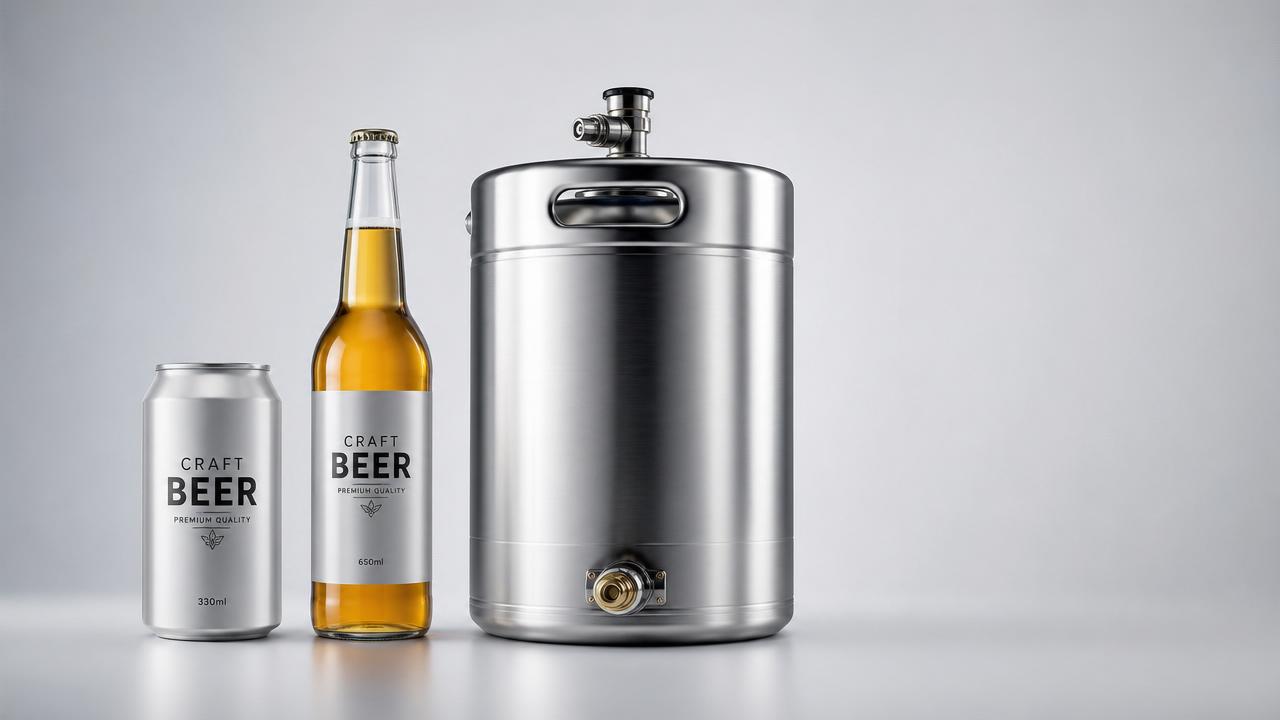
Unlike generic beverage suppliers, Jinpai Beer operates a vertically integrated craft brewing platform with dedicated R&D labs, ISO 22000-certified production lines, and flexible packaging capabilities across aluminum cans (330ml/500ml), glass bottles (330ml/650ml), and keg formats (20L/30L). Our ODM service supports full formulation customization—from sugar-free low-calorie lagers to functional specialty beers with added electrolytes or botanical extracts—while maintaining strict batch traceability and shelf-life validation (≥12 months at 25°C).
1. Minimum Order Volume (MOQ) Structures & Penalty Mechanics
MOQ is rarely just a quantity threshold—it’s a contractual risk allocator. In beer ODM, under-ordering triggers tiered penalties: 15–25% of the unmet volume’s unit cost for shortfalls within ±10% of annual MOQ, escalating to 35% for gaps exceeding 15%. Jinpai Beer applies a progressive MOQ framework calibrated to product complexity: classic lager starts at 20,000 units per SKU per quarter; fruit-flavored variants require 35,000 units due to raw material lead times and flavor stability testing cycles.
Crucially, we decouple MOQ from payment terms. Unlike traditional suppliers requiring 100% prepayment on MOQ commitment, Jinpai Beer offers staged invoicing: 30% upon PO confirmation, 40% at brew date, and 30% post-shipment QC approval—reducing working capital lockup by up to 60 days versus industry benchmarks.
This table reveals how formulation complexity directly escalates MOQ sensitivity. Finance teams should model MOQ adherence against forecast accuracy—e.g., a 12% sales variance on a 35,000-unit functional beer order incurs $28,700 in penalties (at $8.20/unit landed cost), whereas the same variance on a lager order costs only $12,300. Jinpai Beer provides quarterly demand reconciliation reports to help partners adjust forecasts proactively.
2. Tooling Amortization: Lifecycle Accounting vs. Sunk-Cost Traps
Tooling—including custom can ends, label dies, bottle neck rings, and keg coupler adapters—is often treated as a one-time setup fee. But in reality, it’s an amortizable asset with defined depreciation curves tied to production volume and material fatigue. Jinpai Beer assigns each tooling component a validated lifespan: aluminum can tooling lasts 800,000 units; glass bottle molds degrade after 450,000 units; and digital label plates require recalibration every 120,000 units due to ink adhesion variance.
Our ODM contracts specify amortization schedules—not flat fees. For example, a $42,000 custom can end die is amortized over 800,000 units ($0.0525/unit), fully written off by Unit 800,000. If a partner discontinues the SKU at 300,000 units, the remaining $26,250 is non-recoverable—but Jinpai Beer permits reallocation to another active SKU using the same can format, reducing stranded cost exposure by up to 62%.
Reformulation Fees: When “Minor Adjustments” Add Up
Changing ABV by ±0.3%, swapping malt sources, or adjusting hop oil ratios may seem trivial—but each triggers lab validation, sensory panel review, and shelf-life retesting. Jinpai Beer charges reformulation fees based on scientific effort, not arbitrary markup: $1,800 for ABV or bitterness (IBU) adjustments within ±0.5 points; $3,200 for new fruit puree integration (including microbiological stability testing); and $5,500 for functional ingredient additions (e.g., magnesium glycinate, L-theanine) requiring GRAS documentation and accelerated aging trials (28-day 40°C stress test).
Critically, we cap annual reformulation fees at 2.5% of the partner’s total annual ODM spend—ensuring innovation agility without open-ended budget erosion. This cap is enforceable via quarterly audit rights embedded in all master agreements.
These fees reflect actual resource consumption—not overhead padding. The 28–35 day timeline for functional reformulations includes mandatory third-party toxicology review, which constitutes 40% of the total effort. Jinpai Beer shares raw validation data (HPLC chromatograms, microbial logs, sensory scorecards) with partners to substantiate cost allocation.
Why Transparency Matters for Your Bottom Line
Hidden costs don’t vanish—they shift downstream into inventory write-offs, expedited freight surcharges, or unplanned marketing spend to clear slow-moving SKUs. Jinpai Beer’s ODM agreements embed three financial safeguards: (1) MOQs are renegotiable biannually based on verified 6-month sales data; (2) tooling amortization is tracked in real time via shared ERP dashboards; and (3) reformulation fees are credited toward future innovation projects when annual spend exceeds $500,000.
For finance approvers, this means predictable cash flow modeling, auditable cost attribution, and zero surprise liabilities. Our average client reduces ODM-related budget variance from 11.3% to 2.7% within 12 months of partnership—validated by independent procurement audits.
Ready to model your true total cost of ownership? Contact Jinpai Beer’s ODM Finance Partnership Team to receive a customized TCO projection—including MOQ scenario analysis, tooling amortization schedule, and reformulation fee forecasting—within 5 business days.
Thank you very much for writing to us. Please leave your message and contact information, we will reply to you within 24 hours.