



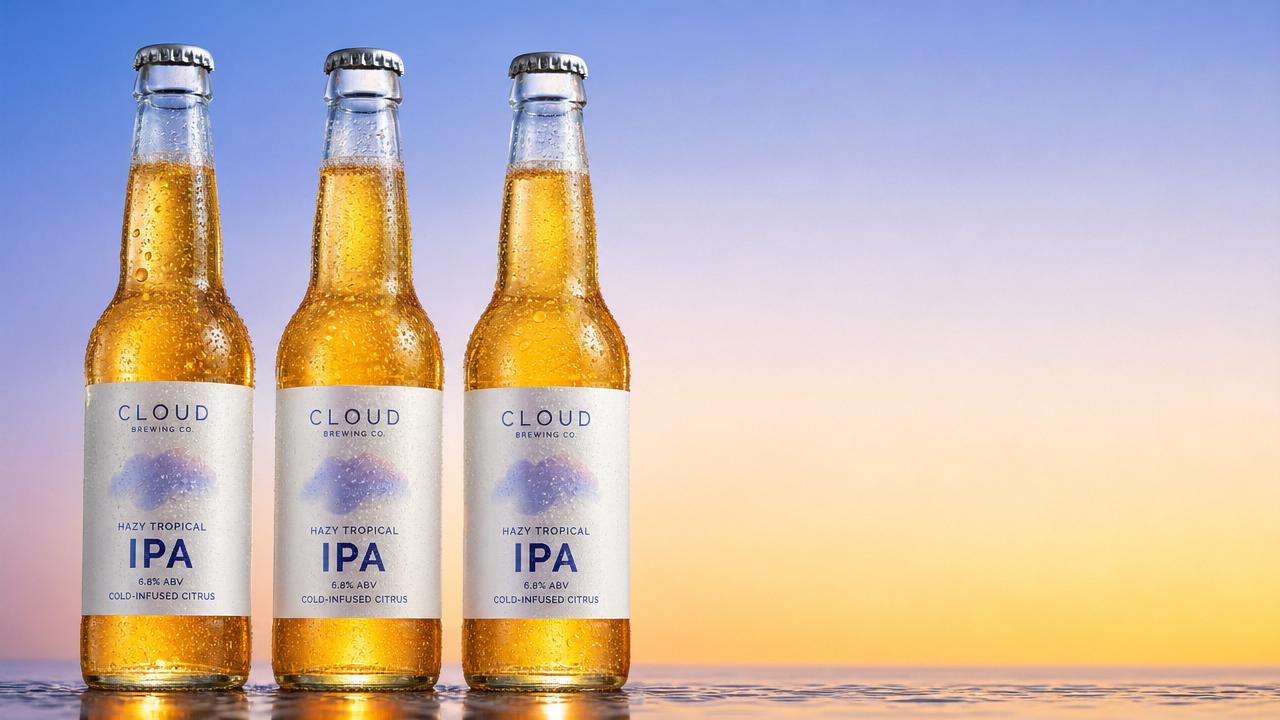
For project managers overseeing craft beer launches, choosing between beer ODM and OEM isn’t just about branding—it’s about speed, control, and market agility. At Jinpai Beer, our end-to-end ODM service enables co-development of proprietary IPAs from recipe ideation to scalable production—cutting time-to-market by an average of 5.8 weeks versus traditional OEM models. With in-house R&D, agile pilot batches, and regulatory-ready formulations (including low-calorie, fruit-infused, and functional variants), we empower global partners to launch differentiated products faster—without compromising quality or compliance.
Understanding Beer ODM and OEM: Core Distinctions
Beer ODM (Original Design Manufacturing) means the manufacturer owns the formulation, process design, sensory profile, and technical documentation—and collaboratively refines them with the client.
Beer OEM (Original Equipment Manufacturing) involves producing a fully specified product using client-provided recipes, packaging assets, and quality criteria—no shared innovation.
The distinction is operational and strategic. OEM executes. ODM co-creates. In fast-moving craft segments like IPA, where hop volatility, shelf-life sensitivity, and flavor consistency demand deep technical alignment, ODM unlocks velocity and differentiation.
Why IPA Development Is Uniquely Suited to Beer ODM
IPAs present distinct challenges: high hop oil degradation, yeast strain sensitivity, carbonation precision, and rapid consumer trend shifts.
Jinpai Beer’s beer ODM model addresses these through integrated capabilities:
- In-house sensory lab and hop stability testing protocols
- Agile 50L–500L pilot fermentation for iterative IPA trials
- Pre-vetted, GRAS-compliant adjuncts (e.g., cold-pressed citrus oils, botanical extracts)
- Regulatory documentation packages for EU, US, ASEAN, and GCC markets
- Digital batch traceability from malt lot to final carton
This infrastructure transforms IPA development from a linear, siloed process into a synchronized feedback loop—where clients validate aroma profiles, adjust dry-hop timing, and lock ABV targets in under three rounds.
Quantifying the Time-to-Market Advantage
A 2023–2024 internal benchmark across 47 IPA launch projects revealed consistent acceleration:
The net 5.8-week reduction reflects compression across four phases: formulation (−2.1 wks), regulatory prep (−1.4 wks), pilot-to-scale transition (−1.6 wks), and packaging integration (−0.7 wks).
Beyond IPA: How Beer ODM Scales Across Product Categories
While IPA exemplifies the beer ODM advantage, Jinpai Beer applies the same co-development rigor to:
- Sugar-free low-calorie beers: Enzyme-modified brewing + erythritol stabilization protocols
- Fruit-flavored beers: Cold-infusion systems preserving volatile esters; no pasteurization required
- Functional specialty beers: Adaptogen-infused variants (ashwagandha, rhodiola) with bioavailability validation
- German wheat & classic lager: Strain-specific fermentation tracking and diacetyl rest optimization
Each category leverages shared infrastructure: ISO 22000-certified brewhouse, CO₂ recovery systems, and blockchain-enabled supply chain visibility.
Selecting the Right Partner for Beer ODM Engagement
Effective beer ODM requires mutual capability alignment. Key evaluation criteria include:
- R&D ownership: Does the partner hold proprietary yeast banks, hop analytics, or sensory databases?
- Pilot flexibility: Can they run ≤3-batch iterations within 10 working days?
- Compliance readiness: Are allergen declarations, nutrition facts, and country-specific labeling pre-validated?
- Scale fidelity: Is there documented proof that 20hl batches replicate 500L pilot sensory scores (±0.3 on BJCP scale)?
Jinpai Beer meets all four—verified via third-party audit reports available under NDA.
Next Steps for Launch-Ready Collaboration
Begin your beer ODM engagement in three actionable steps:
- Share your target IPA profile (e.g., “tropical-forward, 6.8% ABV, haze-stable, 120 IBU”), distribution channel, and first-year volume estimate.
- Receive a co-development roadmap—including timeline, pilot batch options, and regulatory pathway map—within 5 business days.
- Approve the first 100L trial batch; receive full analytical data (HPLC, GC-MS, microbiological) and sensory panel report before scaling.
No minimum order volume applies to initial ODM pilots. Global logistics, bilingual documentation, and multi-currency invoicing are standard.
Jinpai Beer’s beer ODM service transforms proprietary beer development from a risk-averse procurement exercise into a strategic growth accelerator—proven across 12 markets and 200+ launched SKUs since 2021.
Ready to reduce your next IPA launch cycle by 5.8 weeks? Contact our ODM team at odm@jinpai-beer.com to initiate a confidential formulation consultation.
Thank you very much for writing to us. Please leave your message and contact information, we will reply to you within 24 hours.