



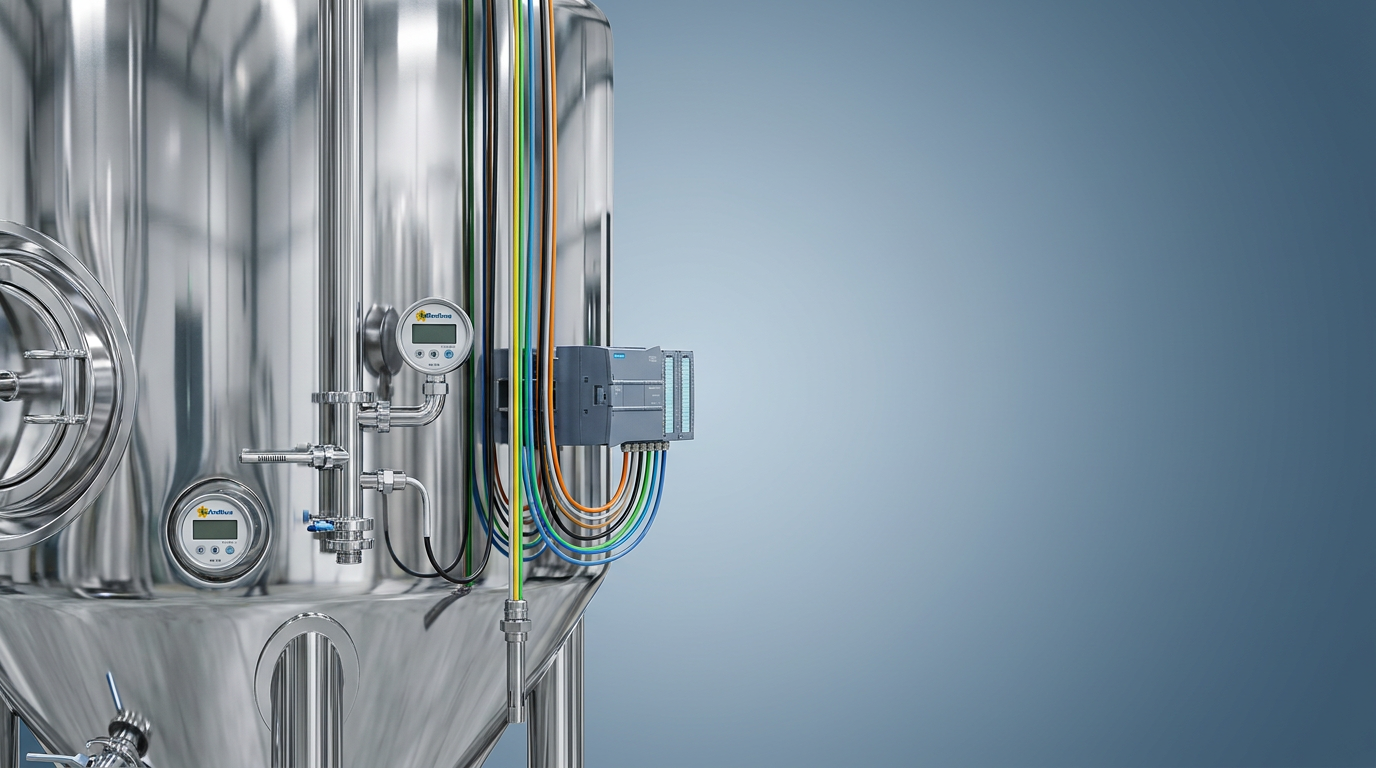
As beer OEM/ODM providers face tightening quality mandates and rising demand for batch consistency in 2026, more are migrating fermentation control from proprietary systems to client-specified hardware—enabling full transparency, audit-ready traceability, and seamless integration with brand-owned QC protocols. For technical evaluators assessing supply chain resilience and process sovereignty, this shift isn’t just about hardware compatibility—it’s a strategic pivot toward co-developed fermentation intelligence. Jinpai Beer, a certified craft beer OEM/ODM partner with ISO 22000 and HACCP compliance, supports this transition with modular, API-ready fermentation platforms tailored to client-defined control logic, sensor specs, and data governance standards.
What Does “Client-Specified Fermentation Hardware” Mean for Beer OEM/ODM?
It means the brewer no longer imposes a fixed control stack. Instead, the OEM/ODM provider configures fermentation tanks, PLCs, temperature controllers, dissolved oxygen sensors, and data loggers to match the client’s exact specifications.
This includes firmware versions, communication protocols (Modbus TCP, OPC UA), calibration intervals, alarm thresholds, and even cloud dashboard permissions. The result? Full alignment between production execution and brand-level quality assurance frameworks.
Why Is This Shift Accelerating in 2026?
- Global retailers now require real-time fermentation telemetry as part of supplier onboarding.
- New EU Food Safety Regulation (EU) 2023/2621 mandates end-to-end digital traceability for alcoholic beverages entering the bloc.
- Multi-market brands need identical control logic across contract breweries in Germany, Mexico, and Vietnam.
Jinpai Beer’s fermentation platform supports over 17 industrial protocols out of the box. Clients define their preferred hardware stack—and we validate, integrate, and certify it within 12 business days.
How Does This Affect Beer OEM/ODM Quality Assurance?
Traditional OEM/ODM QA relied on periodic lab checks and post-fermentation audits. Client-spec hardware enables continuous, automated verification.
Every temperature deviation >±0.3°C triggers an auto-log. Every pH drift outside ±0.1 units flags a corrective action workflow. All events sync directly to the client’s internal LIMS or SAP QM module.
For Jinpai Beer’s sugar-free low-calorie beer line, this reduced off-spec batches by 68% year-on-year—verified via third-party audit reports shared under NDA.
Which Beer OEM/ODM Applications Benefit Most?
Three categories see outsized ROI:
- Functional specialty beers: Requires precise yeast metabolism tracking (e.g., GABA or melatonin enrichment). Client-defined DO and ethanol ramp profiles ensure functional compound stability.
- Fruit-flavored beer variants: Demands tight pH and turbidity control during secondary fermentation. Hardware-integrated inline spectrophotometers prevent haze formation pre-packaging.
- German wheat & classic lager lines: Relies on consistent ester/phenol ratios. Client-specified fermenter jacketing logic maintains ±0.15°C thermal stability across 72-hour conditioning phases.
Common Risks When Transitioning Fermentation Control
What Should You Evaluate Before Committing to Client-Spec Hardware?
Ask these five questions before initiating the transition:
- Does your current QA documentation reference specific hardware tolerances—or only process outcomes?
- Are your internal SOPs written to accept third-party system logs as primary evidence?
- Can your existing ERP or analytics platform ingest raw sensor streams at 1Hz frequency?
- Do you require local data residency for fermentation records in target markets?
- Is your brand’s flavor signature validated against hardware-specific yeast behavior curves?
Jinpai Beer provides a free hardware-readiness assessment—including gap analysis, integration roadmap, and sample data schema mapping—to qualified beer OEM/ODM partners.
Next Steps for Beer OEM/ODM Teams
Start with one pilot SKU—ideally a high-margin functional or fruit-flavored beer where batch variation directly impacts shelf life or sensory claims.
Jinpai Beer offers turnkey client-spec fermentation deployment in under 6 weeks. This includes hardware procurement coordination, firmware signing, staff training, and live integration with your existing quality management system.
We welcome global distributors, agents, and brand owners seeking certified beer OEM/ODM services with full fermentation sovereignty. Contact our technical partnership team to request a customized hardware compatibility report and API specification package.
Keywords naturally integrated: beer OEM/ODM, fermentation control, client-specified hardware, craft beer OEM/ODM, ISO 22000 beer manufacturing, functional specialty beer production, fruit-flavored beer fermentation, sugar-free low-calorie beer OEM.
Thank you very much for writing to us. Please leave your message and contact information, we will reply to you within 24 hours.