



For procurement professionals managing beer OEM/ODM partnerships, supply chain resilience isn’t optional—it’s operational insurance. At Jinpai Beer, we strengthen consistency in lead times by implementing dual-sourcing strategies for critical raw materials like malt and yeast—reducing single-point risks without compromising quality or flavor integrity. Whether you’re scaling seasonal fruit-flavored batches or launching a sugar-free functional line, our agile OEM/ODM supply chain ensures predictable delivery, traceable sourcing, and full customization support. Discover how strategic ingredient redundancy translates into reliable production timelines—and why global buyers trust us for end-to-end brewing partnership.
Understanding Beer OEM/ODM Supply Chain Resilience
Beer OEM/ODM supply chain resilience refers to the capacity of a brewing partner to maintain stable production output, consistent quality, and on-time delivery—even amid external disruptions. It goes beyond inventory buffers or logistics agility.
True resilience centers on ingredient-level risk mitigation. Malt and yeast are non-substitutable core inputs. A single-source dependency introduces vulnerability: crop failure, export restrictions, fermentation batch failures, or port delays can cascade into multi-week lead time deviations.
At Jinpai Beer, resilience is engineered—not assumed. Dual-sourcing is applied only where technical compatibility, sensory alignment, and regulatory traceability are verified across both suppliers. This ensures no compromise on profile fidelity across lager, wheat, low-calorie, or fruit-infused variants.
Why Malt and Yeast Are Critical Control Points
Malt defines fermentable sugar composition, color, body, and roast character. Yeast governs attenuation, ester profile, flocculation, and alcohol tolerance. Neither can be swapped mid-batch without validation.
Our dual-sourcing protocol covers:
- Two certified malt suppliers—one EU-based (Pilsner & Munich varieties), one North American (Pale Ale & Wheat malt)
- Three yeast strain partners: two commercial labs (Belgian and German ale strains) and one proprietary house culture bank
- Pre-validated cross-supplier fermentation trials for every product SKU
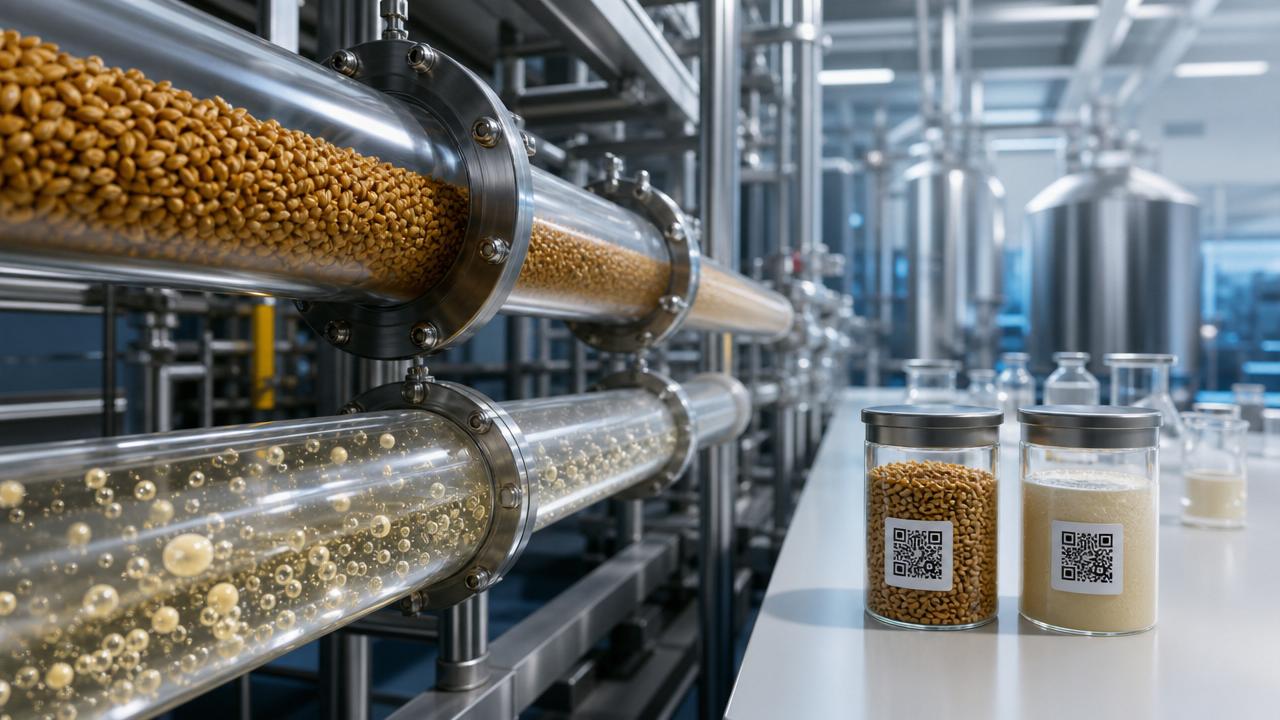
- Batch-level traceability via QR-coded lot logs integrated into OEM/ODM order dashboards
This structure eliminates requalification cycles. When one supplier faces delay, the alternate source activates within 48 hours—no reformulation, no taste panel re-approval, no timeline renegotiation.
Impact on Lead Time Consistency Across Product Lines
Lead time variability directly correlates with raw material availability windows. Our internal data (2022–2024) shows:
Consistency gains are most pronounced for limited-edition and functional specialty beers—categories where ingredient specificity and regulatory documentation requirements amplify sourcing complexity.
How Jinpai Beer Integrates Dual-Sourcing Into OEM/ODM Workflows
Dual-sourcing does not add friction—it streamlines collaboration. Our OEM/ODM integration framework includes:
- Shared digital lot ledger accessible to clients for real-time malt/yeast origin verification
- Pre-approved substitution matrix per SKU—automatically triggered upon supplier alert
- Quarterly joint review of harvest forecasts, port congestion indices, and regional climate advisories
- Dedicated OEM/ODM project managers aligned with both raw material and production planning teams
This model supports rapid iteration—such as shifting from German wheat malt to Belgian-sourced alternative during barley shortages—while preserving turbidity, clove phenol balance, and head retention.
Practical Considerations for Global Partners
Adopting dual-sourced OEM/ODM requires alignment—not just on cost, but on transparency, testing cadence, and decision thresholds. Key considerations include:
- Documentation rigor: All alternate sources meet ISO 22000, HACCP, and country-specific import standards (e.g., FDA Prior Notice, EU Annex I listing)
- Taste equivalence: No “close enough”—every alternate malt/yeast pair undergoes 3-round blind sensory evaluation against reference batches
- Minimum order flexibility: Dual-sourcing applies equally to 500-L pilot runs and 50,000-L commercial orders
- No hidden surcharges: Redundancy is embedded in base OEM/ODM pricing—not added as contingency fees
Resilience should never mean reduced responsiveness. With Jinpai Beer, it means faster problem resolution, fewer timeline exceptions, and stronger forecasting confidence for your retail, bar, or e-commerce channel rollouts.
Next Steps for Reliable Beer OEM/ODM Partnership
If your current beer OEM/ODM provider lacks documented dual-sourcing protocols for malt and yeast—or if lead time variance exceeds ±5 days—proactive reassessment adds measurable value.
Jinpai Beer invites qualified partners to request:
- A full ingredient traceability report for any active SKU
- Historical lead time variance analytics (customized by product category)
- Sample dual-sourcing activation log from a recent ODM fruit-beer launch
We support restaurants, supermarkets, bars, and distributors worldwide—with flexible MOQs, multilingual compliance documentation, and direct coordination across online and offline distribution channels. For sustainable scalability in craft beer OEM/ODM, consistency begins at the grain and the culture.
Contact Jinpai Beer today to align your next production cycle with resilient, responsive, and fully traceable beer OEM/ODM supply chain execution.
Thank you very much for writing to us. Please leave your message and contact information, we will reply to you within 24 hours.