



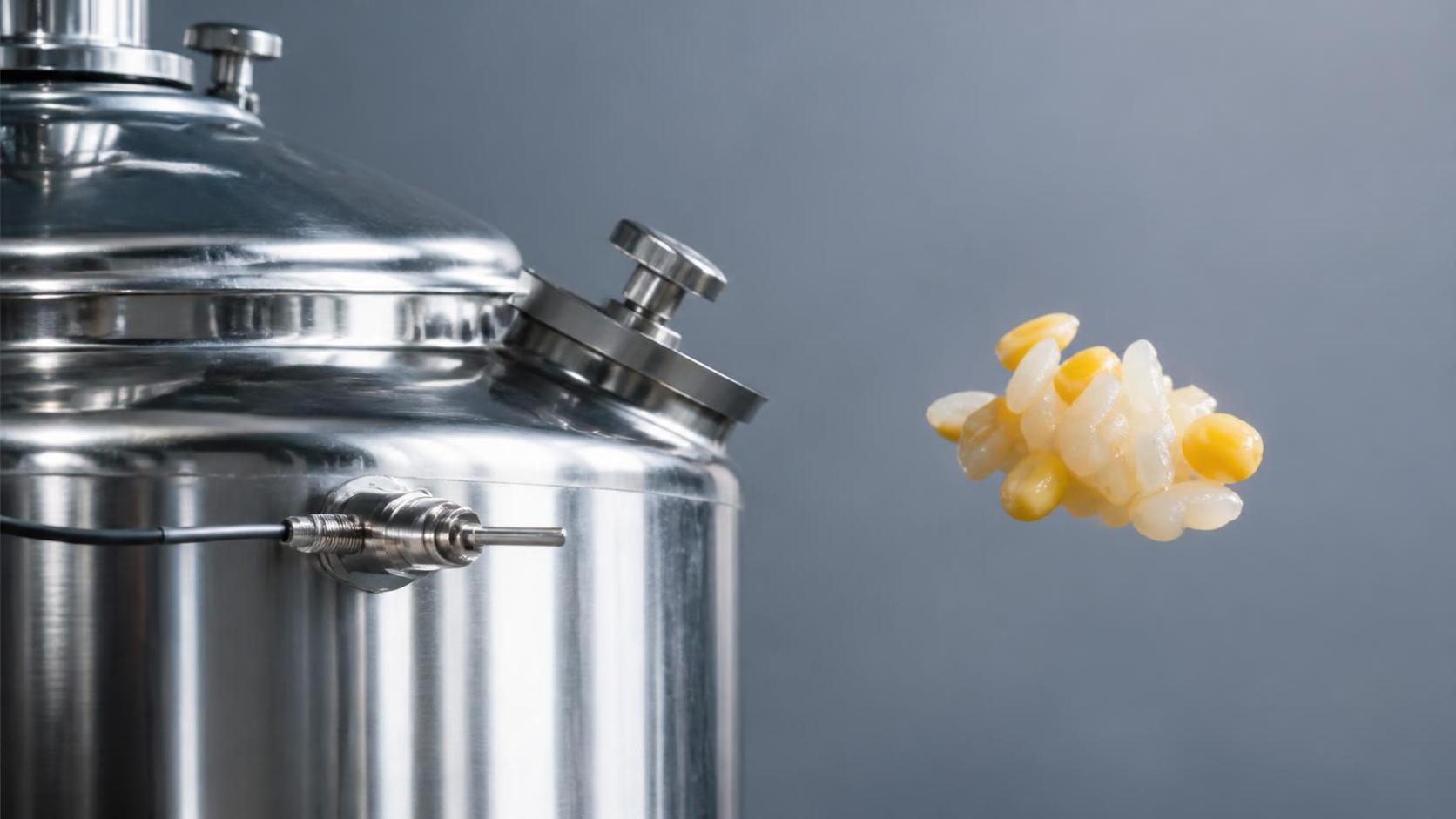
When Adjuncts Stop Being “Filler” and Start Becoming a Quality Lever
For quality control and food safety professionals working with strong lager brands—especially those scaling production or launching new SKUs—the question isn’t whether to use adjuncts. It’s how much control you retain when you do.
Rice, corn, sorghum: these aren’t just cost-saving inputs anymore. In modern strong lager production (ABV ≥ 6.5%), adjuncts serve functional roles—modulating fermentability, smoothing mouthfeel, and extending shelf stability. But each gram added shifts the sensory margin. And in a category where “crispness,” “clean finish,” and “malt clarity” are non-negotiable—even at higher alcohol—they shift it perilously close to compromise.
We see this daily in audit prep, batch review, and OEM troubleshooting: a distributor flags haze in Lot #B741; a lab report shows elevated beta-glucan; a sensory panel notes “cereal dullness” creeping into the finish. None are contamination events. All are early signals of adjunct integration drift—often masked by robust fermentation or aggressive filtration until it’s too late.
The Hidden Trade-Off in Standard Adjunct Protocols
Most strong lager factories follow one of two paths:
- Path A (Traditional): Fixed adjunct ratios (e.g., 20% rice + 80% barley) applied across all batches, regardless of malt lot variability, seasonal moisture content, or target attenuation. This prioritizes throughput—but demands compensatory steps downstream (e.g., protease dosing, extended cold crash, tighter filtration specs) that increase risk exposure for QC teams.
- Path B (Reactive): Adjusting adjuncts only after off-spec results appear—say, reducing corn when diacetyl spikes, or increasing rice when final gravity climbs. This treats symptoms, not systems. It also fragments traceability: if flavor deviation emerges six weeks post-packaging, was it the adjunct lot? The mashing profile? Or the interaction between the two?
Neither path gives QC or food safety leads predictive control. And neither accounts for how adjunct behavior changes under high-gravity conditions—where starch conversion efficiency drops, gelatinization windows narrow, and residual dextrins behave differently during lagering.
What Real-Time Adjunct Optimization Actually Requires
At Jinpai Beer, we treat adjunct integration as a controlled process—not an input decision. That means building guardrails *before* the mash tun, not filters *after* the bright tank. Here’s what that looks like on the floor—and what to verify if you’re evaluating a strong lager beer factory for OEM/ODM work:
1. Malt-Adjunct Interaction Mapping, Not Just Ratio Tracking
Every barley lot is tested—not just for extract and protein—but for alpha-amylase activity *and* thermostability. Why? Because adjunct gelatinization temperature must align with the malt’s enzymatic window. If your barley’s alpha-amylase denatures at 72°C but your sorghum slurry hits peak viscosity at 74°C, you’ll get incomplete liquefaction—even with perfect adjunct dosing. We map this per lot and adjust mash profile accordingly (e.g., stepped rests, enzyme supplementation timing). If a factory can’t show you their last three lots’ enzyme-temperature correlation charts, treat their “optimized adjunct use” as theoretical.
2. Real-Time Starch Conversion Monitoring—Not Just OG/FG
Final gravity tells you *what* fermented. Iodine test strips tell you *if* starch converted. But only inline NIR or rapid enzymatic assays (measuring dextrin-to-glucose ratio pre-boil) tell you *how completely*—and whether residual unconverted adjunct starch will later feed spoilage organisms like Lactobacillus during lagering. We run these assays every 15 minutes during saccharification. If your supplier relies solely on post-boil wort clarity or post-fermentation diacetyl checks, they’re diagnosing after the fact—not preventing.
3. Sensory Validation Tied to Process Parameters
We don’t run blind panels on finished beer alone. We run targeted triads on wort samples taken at key points: post-mash, post-boil, post-primary. Why? Because “flavor clarity” starts before yeast is pitched. A cereal note detected in post-boil wort often traces back to insufficient beta-amylase activity during mashing—not fermentation stress. Our sensory team logs descriptors *against* real-time temp/pH/enzyme data. If a factory’s sensory reports lack time-stamped process correlations, their “flavor integrity” claims rest on perception—not causality.
Where Compliance Meets Practicality: Three Non-Negotiable Checks
Before signing an OEM agreement—or approving a new strong lager SKU for retail distribution—ask for documented evidence of:
- HACCP Critical Control Points covering adjunct handling: Not just storage humidity and pest controls, but verification that adjunct milling particle size falls within validated ranges (e.g., rice flour D90 ≤ 120 µm for consistent gelatinization), and that slurry pH is monitored *during* addition—not just pre- or post-mash.
- Adjunct Lot Traceability down to harvest date and region: Especially for sorghum and non-GMO corn. Regional variations in tannin content or starch branching affect polyphenol extraction and haze stability. If batch records only cite “supplier lot #X,” push for origin documentation.
- Residual Adjunct-Derived Compounds Testing Protocol: Beyond standard QA (IBU, ABV, CO₂), ask whether they routinely screen for ferulic acid (from rice bran), hydroxymethylfurfural (HMF, from over-heated corn), or specific dextrin profiles linked to chill haze. These aren’t regulatory requirements—but they’re leading indicators of process drift.
This isn’t about adding bureaucracy. It’s about converting ambiguity into actionability. When a QC manager receives a complaint about “flatness” in a 7.2% ABV lager, the answer shouldn’t be “we’ll retest next batch.” It should be: “Was the rice lot from Q3 tested for amylopectin ratio? Did mash-in pH deviate >0.2 units during that run? Was the sensory panel’s ‘lack of lift’ descriptor flagged in post-boil wort?”
The Quiet Shift in Supplier Evaluation
Five years ago, strong lager factories competed on capacity, speed, and price. Today, the differentiator is auditable process discipline around adjunct use—because strength amplifies both intention and error. A 0.5% ABV increase doesn’t just mean more alcohol; it means longer lagering, higher osmotic stress on yeast, and narrower windows for flavor stabilization.
That’s why forward-looking distributors and specialty retailers no longer ask, “Can you make it?” They ask, “How do you prove the adjunct didn’t change the character—not just the cost?”
If your current partner treats adjuncts as static inputs, not dynamic variables, the risk isn’t just flavor inconsistency. It’s delayed root-cause identification, extended hold times, and reputational exposure when “crisp” becomes “cloying” on shelf—without warning.
Optimization isn’t about eliminating adjuncts. It’s about making their impact predictable, measurable, and reversible—before the first bottle is filled.
Thank you very much for writing to us. Please leave your message and contact information, we will reply to you within 24 hours.