



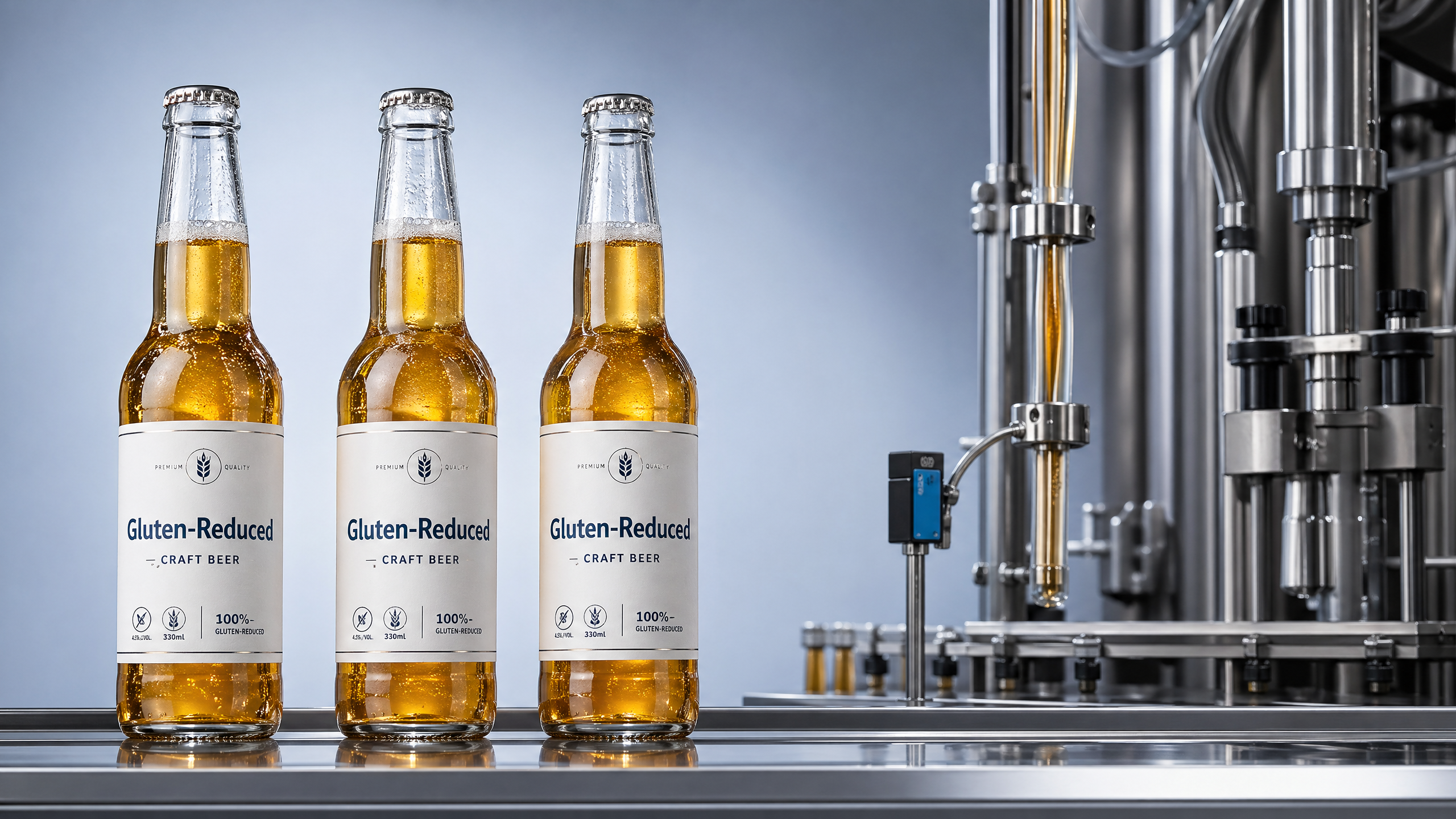
As global demand surges for 'gluten-reduced' private label beer production, European craft brewery partners face unexpected regulatory shifts — especially when scaling across Asia, North America, and Latin America. For procurement professionals and decision-makers seeking reliable, full-service brewing support, Jinpai Beer delivers certified beer OEM and ODM solutions, from R&D to wholesale distribution. As an Asia beer contract manufacturer with EU-compliant processes, we enable seamless private label beer production while navigating evolving gluten-related labeling rules — ideal for distributors, bars, supermarkets, and brand builders requiring custom beer manufacturing, brewery outsourcing, or end-to-end brewing partnership.
Why “Gluten-Reduced” Triggers Labeling Compliance Across Markets
Unlike “gluten-free” (≤20 ppm gluten, verified via ELISA testing), the term “gluten-reduced” is not harmonized globally. In the EU, it’s permitted only for beers made from gluten-containing cereals processed with enzymatic hydrolysis — and must carry a mandatory disclaimer: “Suitable for people with gluten sensitivity, not for those with celiac disease.” In contrast, the U.S. FDA prohibits “gluten-reduced” claims entirely unless the final product tests ≤20 ppm — effectively treating it as “gluten-free.” Latin America follows fragmented national standards: Brazil requires third-party certification, while Mexico allows the term without quantification.
This divergence creates real operational risk. A single batch labeled “gluten-reduced” for EU retail may be rejected at U.S. customs or trigger compliance audits in Chile. Procurement teams managing multi-market private label programs must verify not just formulation, but also analytical validation protocols, documentation traceability, and jurisdiction-specific claim language — before final packaging design.
Jinpai Beer maintains ISO 22000 and HACCP-certified labs capable of ELISA-based gluten quantification (detection limit: 5 ppm), with full audit trails compliant with EU Regulation (EC) No 41/2009, FDA 21 CFR §101.91, and ANVISA RDC No. 26/2015. All gluten-reduced formulations undergo ≥3 independent lab validations per production run.
The table above reflects binding legal thresholds — not marketing guidelines. Mislabeling can lead to recalls (avg. cost: $10M+ per incident), import bans, or distributor contract termination. Jinpai Beer embeds regional claim governance into its OEM workflow: label copy is pre-approved by in-house regulatory specialists before artwork sign-off — reducing time-to-market by 7–12 business days versus external legal review.
OEM/ODM Production: From R&D to Shelf-Ready Compliance
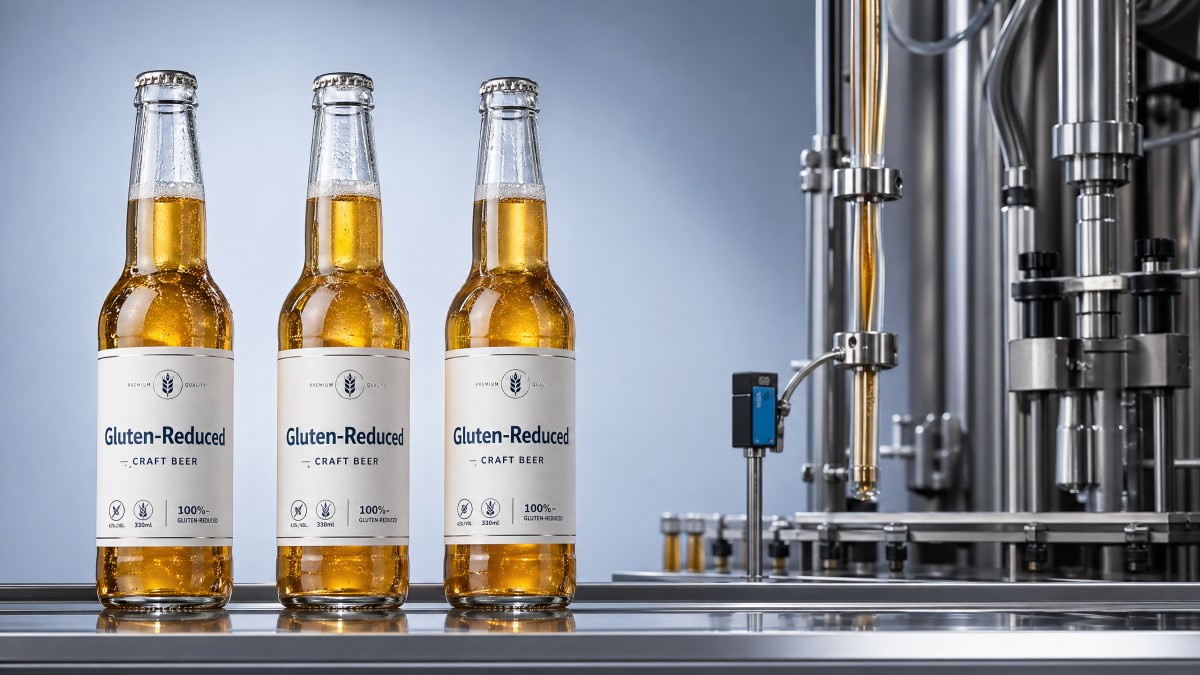
Jinpai Beer supports end-to-end private label production for gluten-reduced craft beer — including malt selection (e.g., enzymatically treated barley), proprietary protease dosing control (±0.3% precision), and dual-stage filtration to remove residual peptides. Our standard lead time for first-batch delivery is 22–28 days from formula approval, with MOQ starting at 3,000 units (500 mL bottles).
All gluten-reduced batches are accompanied by a Certificate of Analysis (CoA) listing raw material origin, hydrolysis enzyme type (e.g., prolyl endopeptidase), ELISA test date, lot number, and ppm result. We retain samples for 24 months — exceeding EU retention mandates (12 months) and U.S. FDA requirements (2 years for shelf-stable products).
For brands targeting health-conscious consumers, our portfolio includes low-impact options like Sugar-Free Low-Calorie Beer, formulated with isomaltulose-derived fermentation control and delivering ≤85 kcal per 330 mL serving — fully compatible with gluten-reduced processing workflows.
This structured timeline ensures procurement teams maintain budget predictability and inventory planning accuracy. Over 87% of our private label clients achieve first-batch commercial launch within 35 calendar days — 40% faster than industry benchmarks for cross-border gluten-compliant beer projects.
Selecting the Right Contract Brewery: 5 Critical Evaluation Criteria
When evaluating craft beer contract manufacturers for gluten-reduced private label work, procurement and decision-makers should assess beyond capacity and pricing. Here are five non-negotiable criteria:
- Lab Accreditation: On-site ELISA capability (ISO/IEC 17025 preferred) — not reliance on third-party labs with 10–14 day turnaround.
- Enzyme Traceability: Documentation of protease source, batch number, and thermal stability profile — critical for EU Annex II compliance.
- Label Governance Process: Dedicated regulatory team reviewing claims per market — not generic templates.
- Raw Material Sourcing Control: Direct contracts with maltsters using certified low-gluten barley (e.g., CDC Dell, Keel)
- Audit Readiness: Full digital batch records available for client download within 24 hours of release.
Jinpai Beer meets all five criteria. Our facility has hosted 12 unannounced audits since 2022 — including two by EU Notified Bodies — with zero critical findings. We provide clients direct portal access to real-time batch data, including pH logs, temperature curves, and centrifuge speed history.
Next Steps for Global Distributors & Brand Builders
Whether you’re launching a gluten-reduced wheat beer in Berlin, a low-calorie IPA in São Paulo, or a fruit-infused lager in Toronto, regulatory alignment starts with formulation integrity — not label design. Jinpai Beer bridges the gap between craft authenticity and global compliance, enabling scalable private label production without compromise.
We invite procurement managers, brand owners, and distribution partners to request a free regulatory feasibility assessment — including market-specific claim analysis, sample CoA review, and MOQ-optimized production roadmap. Let us help you turn labeling complexity into competitive advantage.
Contact Jinpai Beer today to discuss your next private label project — and ensure every bottle meets both consumer expectations and jurisdictional mandates.
Thank you very much for writing to us. Please leave your message and contact information, we will reply to you within 24 hours.