



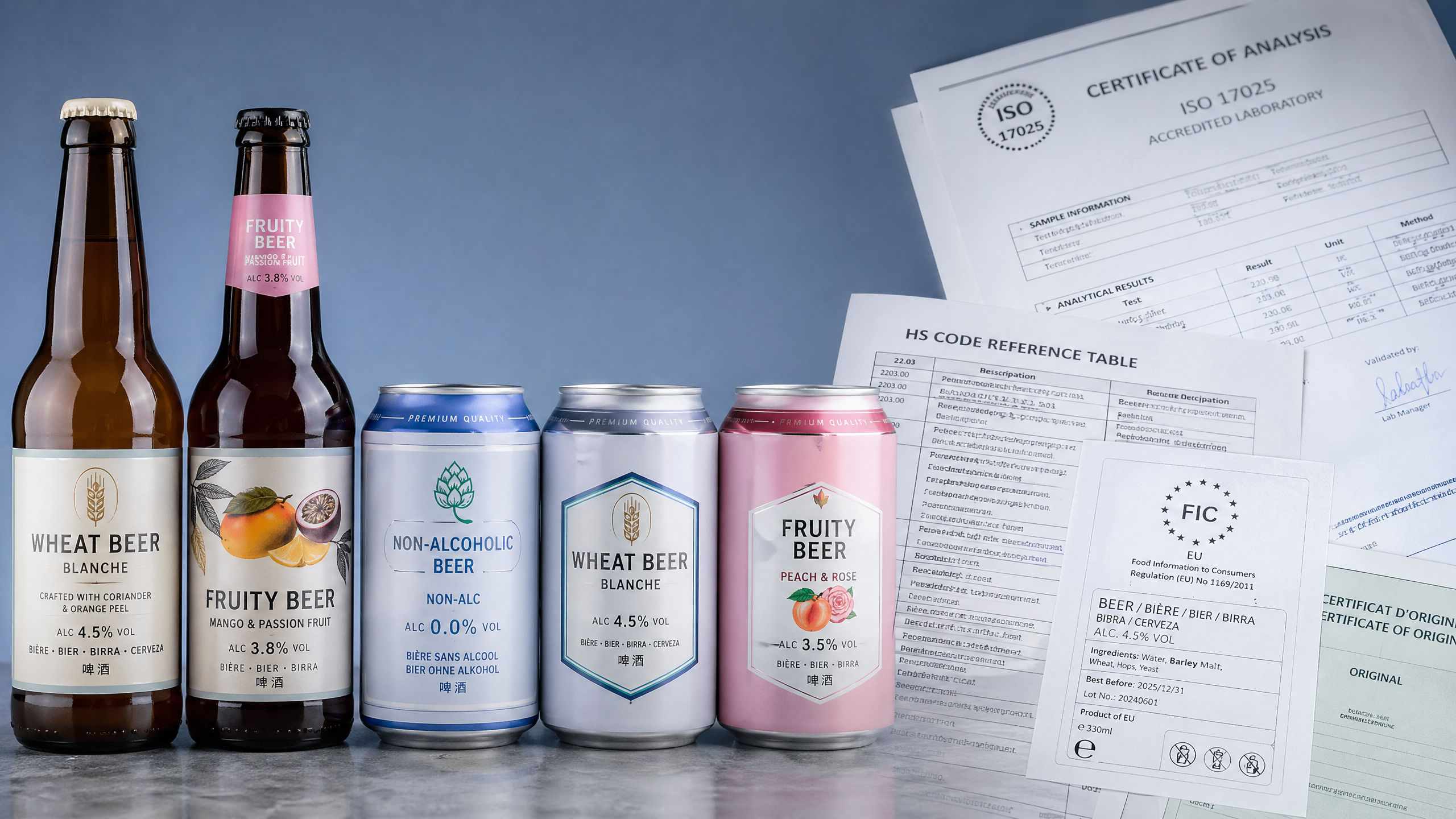
Asia beer contract manufacturer: What customs classification surprises hit at port
As an Asia beer contract manufacturer, Jinpai Beer delivers full-service brewing solutions to European craft brewery, North American brewery, and Latin American brewery partners — from beer OEM and ODM to private label beer production. Yet even seasoned procurement professionals and project managers face unexpected customs classification challenges at port, risking delays and cost overruns. If you’re evaluating brewery outsourcing or custom beer manufacturing for your distribution network, understanding these regulatory surprises is critical. Discover how our compliant, end-to-end contract brewing services mitigate trade risks — while scaling your brand across global retail, F&B, and e-commerce channels.
Why “beer” isn’t always classified as beer — and why it matters to your bottom line
When sourcing from an Asia beer contract manufacturer, procurement teams and decision-makers often assume HS code 2203.00 (“beer made from malt”) applies universally. It doesn’t. Customs authorities in the EU, US, Canada, Mexico, Brazil, and ASEAN countries routinely reclassify shipments based on formulation, packaging, alcohol-by-volume (ABV), added ingredients, or even label claims — triggering higher duties, mandatory lab testing, or outright rejection.
For example: A “sugar-free low-calorie beer” with ABV 4.2% and stevia-derived sweeteners may be reclassified under 2206.00 (fermented beverages other than beer) in the EU — subject to 12.8% duty instead of 7.5%, plus additional health certification. In the US, a fruit-flavored beer containing >10% fruit juice concentrate could fall under 2206.00.90, requiring TTB formula approval *before* release — not after arrival.
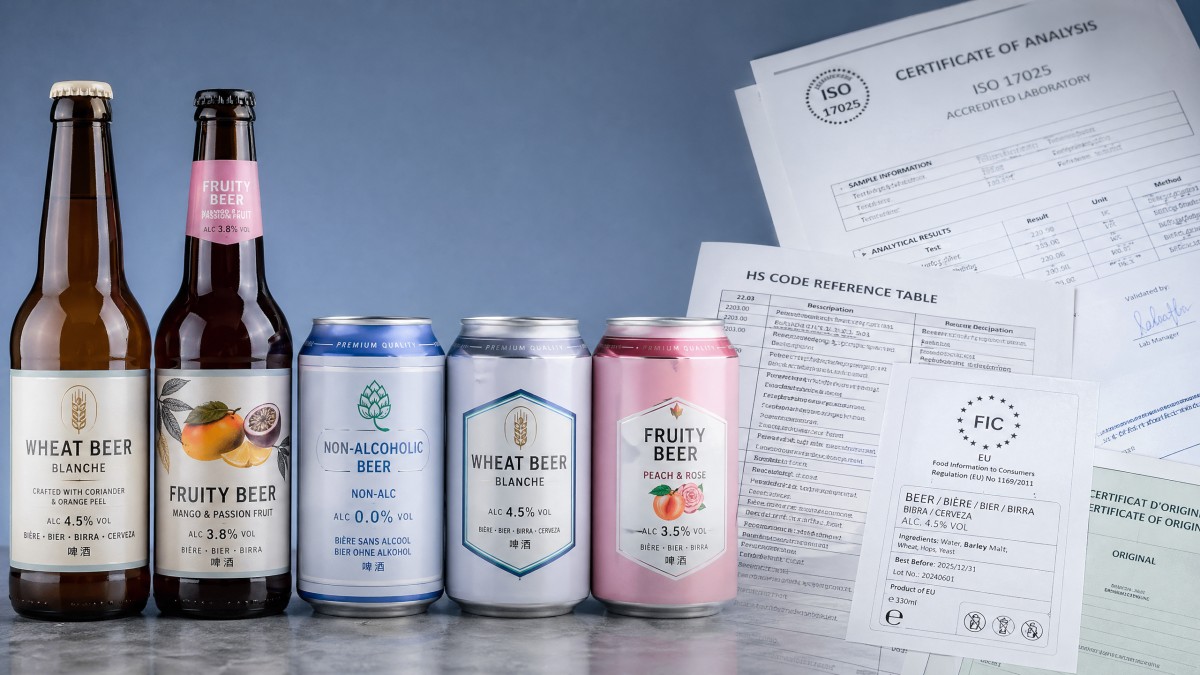
The 3 most common classification surprises — and how Jinpai Beer preempts them
1. Functional ingredients trigger beverage vs. food/dietary supplement reclassification
Beers with added vitamins, adaptogens, or probiotics (e.g., our functional specialty beers) risk being flagged as “dietary supplements” (HS 2106.90) in Canada or “novel foods” in the UK — halting clearance until full dossier submission. Jinpai’s regulatory team conducts pre-shipment HS code validation with local customs brokers in target markets, aligning formulations with tariff thresholds *before* production begins.
2. Packaging format overrides product identity
A 330ml can of Whole wheat lager Beer may clear smoothly under 2203.00 — but the same brew in a 1L glass growler with hand-applied label and no batch traceability? Often reclassified as “non-commercial sample” or “unregistered artisanal product”, requiring import licenses or special permits. We pre-certify all packaging formats against destination-country labeling and traceability rules — including QR-based batch tracking for EU FIC compliance.
3. “Non-alcoholic” claims backfire without precise ABV documentation
Even beers labeled “0.0% ABV” face scrutiny if lab reports show residual ethanol >0.05%. In Australia and South Korea, that triggers mandatory alcohol licensing and 30–50% higher duties. Jinpai provides third-party certified ABV reports (ISO 15212-1 compliant) and maintains dual-labeling templates — one for production, one pre-approved for final market — eliminating port-side disputes.
What procurement & logistics teams should verify *before* signing the OEM agreement
Don’t wait until the container docks. Ask your Asia beer contract manufacturer these four non-negotiable questions:
- Do you maintain a live, country-specific HS code matrix — updated quarterly with official customs rulings (not just tariff databases)?
- Are your lab test reports issued by ISO/IEC 17025-accredited facilities recognized by your target market’s authority (e.g., FDA, BfR, ANVISA)?
- Can you provide proof of prior successful clearance for *identical* product specs in my target port (e.g., Rotterdam, Los Angeles, Santos)?
- Is your export documentation (commercial invoice, packing list, certificate of origin) pre-audited against local customs requirements — not just WTO templates?
Jinpai Beer answers “yes” to all four — with documented clearance records across 27 countries and real-time access to customs broker networks in key ports. That’s how we turn regulatory risk into predictable lead times and landed-cost transparency.
Bottom line: Classification isn’t paperwork — it’s your supply chain’s first checkpoint
For procurement leaders and distributors evaluating an Asia beer contract manufacturer, customs classification isn’t a back-office detail — it’s the difference between a 3-day port clearance and a 45-day hold with storage fees, demurrage, and reputational damage to your brand. The right partner doesn’t just brew your beer; they engineer its regulatory journey from brewhouse to shelf.
Jinpai Beer embeds customs intelligence into every stage: R&D formulation review, label design sign-off, lab testing protocol selection, and pre-shipment documentation audit. Whether you’re launching a German wheat in Berlin, a fruit-flavored beer in Toronto, or a Whole wheat lager Beer in Santiago, our OEM/ODM framework ensures your product arrives classified correctly — the first time, every time.
Thank you very much for writing to us. Please leave your message and contact information, we will reply to you within 24 hours.