



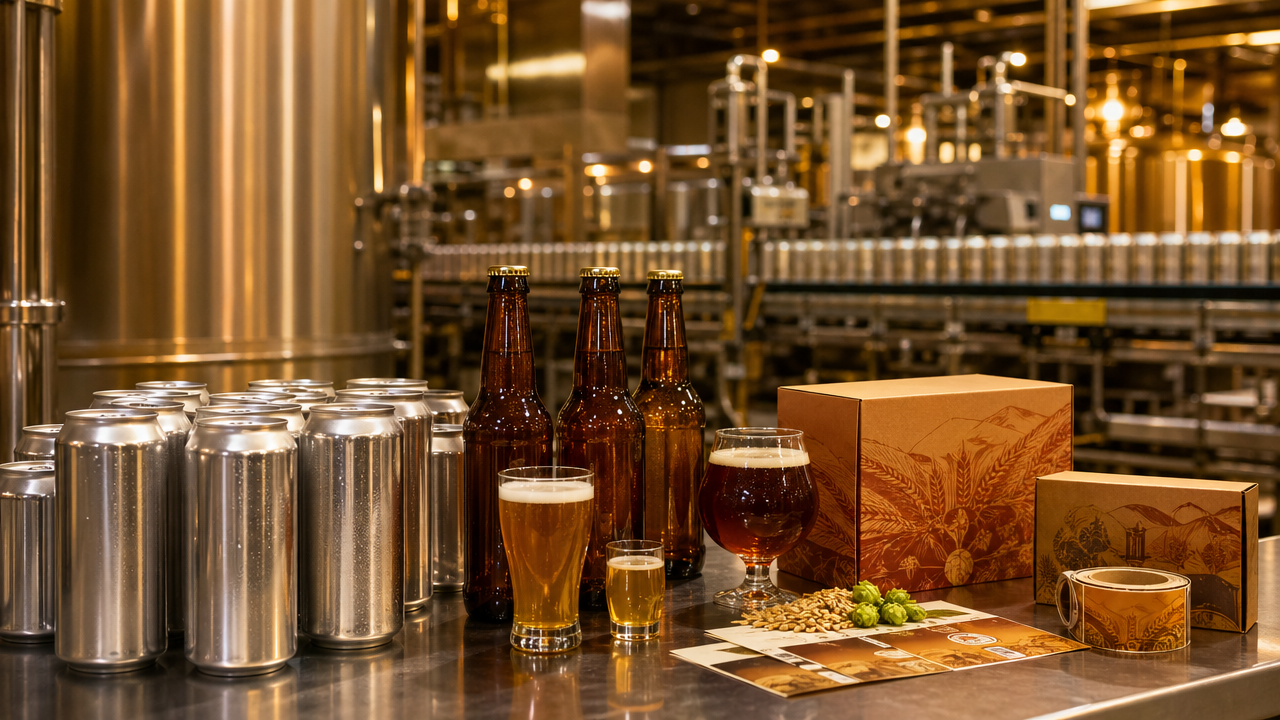
For brands, retailers and distributors evaluating custom beer manufacturing, the right timing depends on volume goals, brand positioning and supply flexibility. Working with a Chinese beer factory or beer manufacturer China can reduce costs, speed up market entry and support private label beer production. From contract brewing to recipe development, a qualified craft beer OEM China partner helps turn ideas into scalable products with global distribution potential.
When does custom beer manufacturing become a practical business decision?
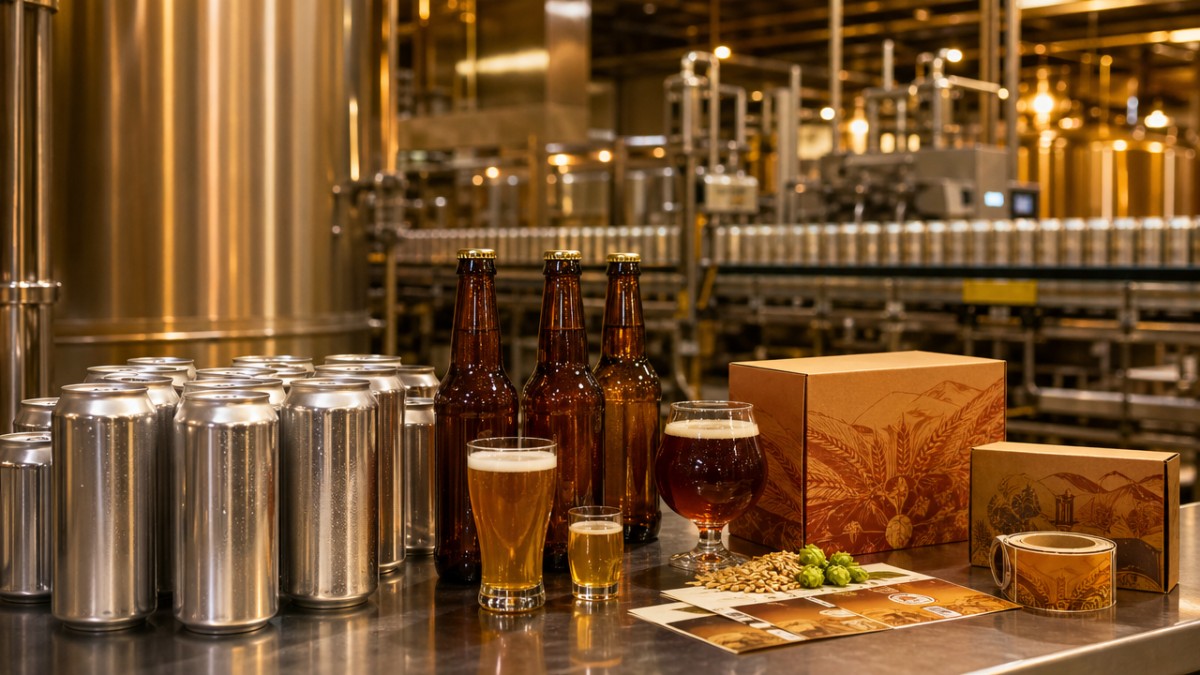
Custom beer manufacturing makes sense when a company needs more than a standard wholesale SKU. For procurement teams, this usually starts when internal sales targets, margin expectations, and brand differentiation cannot be met through off-the-shelf beer alone. In beverage distribution, the tipping point often appears within 3 common situations: launching a private label, expanding into new retail channels, or serving market niches such as low-calorie, fruit-flavored, or functional beer.
For decision-makers, timing matters because beer is not only a liquid product. It is also a packaging, compliance, logistics, and shelf-positioning project. If your expected volume is still highly uncertain and your market test window is only 4–8 weeks, standard stock products may be the lower-risk choice. If your launch horizon is 2–6 months and you need custom flavor, alcohol level, packaging, or label identity, custom beer manufacturing becomes much more attractive.
Distributors and agents often reach this stage when competing products begin to look similar. In crowded categories such as classic lager or wheat beer, the ability to create a differentiated recipe, can format, or consumer story can improve channel access. Restaurants, bars, supermarkets, and online shops also value products tailored to local preferences, seasonal promotions, or price bands.
For end consumers, custom beer is valuable when it solves a clear need: lighter drinking, lower sugar intake, fruit-forward taste, or novelty with consistent quality. That is why a capable partner matters. Jinpai Beer combines R&D, production, and global supply support across classic lager, German wheat, sugar-free low-calorie beer, fruit beer, and specialty functional styles, making custom development more realistic for both B2B and retail channels.
Three signs your business is ready for OEM or ODM beer production
- You need a target taste profile, alcohol range, bitterness level, or ingredient direction that standard wholesale beer does not cover.
- You want stronger margin control through private label beer instead of relying only on third-party brands.
- You are preparing distribution in 2 or more channels, such as bars plus supermarkets, or e-commerce plus regional agents, and need consistent packaging and supply planning.
If at least 2 of these signs apply, a structured consultation with a beer manufacturer China supplier is usually worthwhile. The goal is not to customize everything. The goal is to customize the factors that directly affect market fit, gross margin, and reorder potential.
Which buyers benefit most from custom beer manufacturing?
Not every buyer enters custom beer production for the same reason. Procurement managers often focus on unit economics, replenishment stability, and SKU rationalization. Business owners care more about channel expansion, brand control, and long-term differentiation. Distributors and agents look for exclusivity and repeatable market demand, while consumers respond to flavor relevance, packaging appeal, and price-value balance.
In the beverage industry, custom manufacturing delivers the best value when the product is tied to a clear route to market. A supermarket line may require stable flavor and price sensitivity. A bar chain may want more draft-friendly profiles and seasonal rotation. An online-first brand may emphasize visual packaging and trend categories such as low-calorie or fruit beer. The same factory partner should be able to adjust recipes, pack sizes, and production plans across these needs.
Jinpai Beer’s broad portfolio supports this kind of segmentation. A buyer can start with familiar styles such as lager or wheat beer, then extend into niche categories without changing supply partners. That reduces coordination friction across formulation, production scheduling, artwork review, and export preparation. In many cases, working with one integrated supplier can shorten communication cycles by 1–2 project stages.
The table below shows where custom beer manufacturing typically adds the most value for different buyer groups and channel goals.
The key takeaway is simple: custom beer works best when there is a defined customer, a measurable commercial objective, and enough expected volume to justify development and packaging coordination. Without those three conditions, customization can add complexity faster than it adds value.
Application scenarios that justify customization
Retail private label launch
A supermarket or convenience chain often needs 2–4 dependable SKUs with clear taste positioning, compliant labeling, and a stable reorder cycle. Here, custom beer manufacturing helps build shelf identity without starting from a fully experimental product concept.
Regional distribution expansion
Agents entering a new city or country may need exclusive packaging, local-language labels, and price bands suited to horeca and modern trade. A flexible OEM beer supplier can align those details during the early market entry phase.
Health-oriented or niche category demand
Low-sugar, low-calorie, fruit-flavored, and functional beer concepts often require more recipe control than generic stock products can provide. This is where products such as Sugar-Free Low-Calorie Beer can fit naturally into a broader channel strategy.
Custom beer vs standard wholesale beer: what should buyers compare first?
The most common mistake in beer sourcing is comparing only price per unit. In reality, the better comparison includes at least 5 dimensions: formulation flexibility, packaging options, minimum order planning, lead time, and brand control. A lower initial unit cost can become more expensive if the product limits channel acceptance or weakens your margin structure.
Standard wholesale beer is often the best choice for fast replenishment, low complexity, and immediate market supply. It can work well for test sales, temporary promotions, and buyers with no packaging customization needs. Custom beer manufacturing, by contrast, is more suitable when the buyer is building a lasting product identity or trying to improve channel leverage over a 6–12 month period.
The practical question is not whether custom is always better. It is whether custom creates enough extra value to offset development time and coordination effort. If a custom label, flavor profile, or nutrition direction can improve retail acceptance or distributor exclusivity, the additional work is often justified.
Use the comparison table below to decide which sourcing path fits your current stage.
For many buyers, the optimal path is phased. Start with 1–2 standard products to validate channel demand, then move selected high-potential SKUs into custom beer manufacturing once forecasts and brand strategy become clearer. This reduces risk while preserving long-term differentiation options.
What should be compared beyond price?
- Recipe adaptability, including bitterness, alcohol strength, sweetness balance, and flavor profile alignment with local consumers.
- Packaging compatibility, such as can or bottle choice, label language, barcode placement, and retail shelf suitability.
- Supply continuity, including production slot planning, repeat batch consistency, and export documentation readiness.
These factors often determine whether a launch becomes a repeat business line or a one-time trial. In beer sourcing, the cheapest product is not always the most profitable one.
How should buyers evaluate production, compliance, and delivery risk?
A custom beer project is successful only when recipe quality, packaging readiness, and delivery execution stay aligned. Buyers should review at least 4 risk areas before confirming an OEM or ODM order: formulation feasibility, packaging confirmation, shelf-life handling, and export-market compliance. Missing just one of these areas can delay a launch by several weeks.
For formulation, ask whether the desired flavor profile can be reproduced consistently across repeated batches. For packaging, confirm container type, artwork approval sequence, and labeling language requirements. For logistics, align packing method, shipping terms, and the expected production-to-dispatch window. In many beverage projects, these operational details are as important as the beer itself.
Compliance should also be approached practically. Requirements vary by market, but buyers commonly need to confirm ingredient declaration, labeling format, date coding, and destination-specific import documentation. If the product is aimed at health-conscious consumers, claims such as sugar-free or low-calorie should be checked carefully against the rules of the target market instead of relying on marketing language alone.
A reliable supplier should be able to support sample review, specification confirmation, and export coordination in a clear sequence. Jinpai Beer’s integrated OEM/ODM and wholesale capability is valuable here because buyers can discuss product style, packaging route, and distribution requirements with one operational partner instead of splitting communication across multiple vendors.
A practical 4-step buyer checklist
- Define the commercial target: confirm target channel, expected annual or seasonal volume, and price range before discussing full customization.
- Lock the product brief: specify style, sweetness, alcohol direction, packaging preference, and any nutrition positioning in 1 concise document.
- Review compliance needs: check label text, barcode, date marking, and import document expectations for each destination market.
- Confirm the timeline: align sample stage, artwork approval, production slot, and shipping preparation before committing to a launch date.
As a rule of thumb, buyers should allow enough time for at least 3 project phases: sampling, confirmation, and mass production. Exact timing depends on product complexity and packaging method, but structured planning almost always reduces costly rework.
Common misconceptions that delay custom beer projects
“Custom always means very large orders”
In practice, feasibility depends on the type of customization. Recipe, label, and packaging adjustments have different cost structures. Buyers should discuss the exact scope rather than assume the project is impossible.
“A good sample guarantees a smooth launch”
A sample is only one stage. Final success also depends on packaging compatibility, approval speed, transport planning, and market-specific labeling details.
“Only premium brands need customization”
Many value-focused retail lines also benefit from customization, especially when the goal is better price positioning, regional exclusivity, or category expansion through products like Sugar-Free Low-Calorie Beer.
What implementation model works best for private label beer and global distribution?
The best implementation model depends on whether your priority is speed, differentiation, or channel control. Buyers entering a market quickly may prefer a lighter customization model based on an existing proven recipe with private label packaging. Buyers building a long-term brand often need deeper ODM support with formulation refinement, sensory evaluation, and market-specific packaging strategy.
A practical framework is to choose between 3 models. First, stock-based private label for faster launch and lower development complexity. Second, semi-custom beer using an existing base style with adjusted taste or appearance. Third, deeper custom development for a more distinct market concept. Each model has a different balance of lead time, control, and commercial upside.
For global distribution, the right supplier should also match your operational reality. That includes online and offline sales support, packaging options suited to multiple retail environments, and communication that can cover sampling, production, and dispatch planning without fragmentation. Jinpai Beer serves restaurants, supermarkets, bars, and diverse retail channels, which is particularly useful for buyers managing mixed channel portfolios.
The most successful custom beer programs usually start with a narrow range. Instead of launching 6 or 8 SKUs at once, many buyers achieve better sell-through by beginning with 1–3 high-potential products, then expanding after reorder data and consumer feedback become clearer.
Recommended service flow for a structured launch
A disciplined service flow helps reduce misunderstandings between buyer and factory. The table below outlines a practical sequence for custom beer manufacturing projects in export and multi-channel settings.
This staged approach is especially useful when working across 2 or more channels or entering a new export destination. It keeps decision points visible and helps teams manage both brand ambition and operational discipline.
FAQ: what do buyers most often ask before starting a custom beer project?
How do I know whether custom beer is better than buying existing wholesale products?
If your goal is quick resale with minimal setup, existing wholesale products may be enough. If you need a distinct product identity, better margin control, or channel exclusivity over the next 6–12 months, custom beer manufacturing is usually worth evaluating. The right choice depends on brand goals, expected reorder volume, and how much control you need over recipe and packaging.
What should I prepare before contacting a craft beer OEM China supplier?
Prepare 5 things first: target market, preferred beer style, packaging format, estimated quantity, and target price range. If you already know your sales channels, such as bars, supermarkets, e-commerce, or regional distribution, include that too. A clear brief shortens communication and improves quotation accuracy.
What are the main risks in private label beer production?
The biggest risks are unclear product positioning, rushed artwork approval, and underestimating compliance and lead-time requirements. Another common issue is launching too many SKUs at once. Many buyers perform better by starting with 1–3 focused items, then expanding after real market feedback.
Can a supplier support both standard beer supply and customized development?
Yes, and this is often the best setup for growing businesses. It allows you to balance fast replenishment with planned customization. Jinpai Beer supports craft beer R&D, production, distribution, OEM/ODM service, wholesale supply, and custom solutions, which helps buyers move from test-stage sourcing to scalable branded products more smoothly.
Why choose us for custom beer manufacturing and what can you discuss with us now?
Choosing a manufacturing partner is not only about production capacity. It is about whether the supplier can connect product development, packaging, channel needs, and supply continuity into one workable plan. Jinpai Beer offers a broad craft beer range, including lager, German wheat, fruit-flavored beer, sugar-free low-calorie beer, and functional specialty beer, along with OEM/ODM, wholesale, and customized supply support.
This matters for procurement professionals and business leaders because it reduces supplier fragmentation. Instead of separately sourcing product ideas, standard supply, and custom development, you can evaluate multiple routes within one discussion. That is especially helpful when you need to compare a standard listing option against a more differentiated private label launch.
If you are assessing whether now is the right time to start custom beer manufacturing, you can discuss concrete issues rather than general interest. These include product selection, target flavor direction, packaging choice, estimated lead time, sample support, export-market labeling, and quotation structure for different order scenarios. A focused consultation can quickly show whether a stock product, semi-custom model, or full OEM/ODM solution fits best.
Contact us to review your channel plan, shortlist suitable beer styles, confirm packaging and project timing, and build a practical custom beer roadmap for retail, horeca, or distribution. If you already have a concept in mind, we can discuss specification confirmation, sample arrangements, delivery planning, and pricing communication step by step.
Thank you very much for writing to us. Please leave your message and contact information, we will reply to you within 24 hours.