



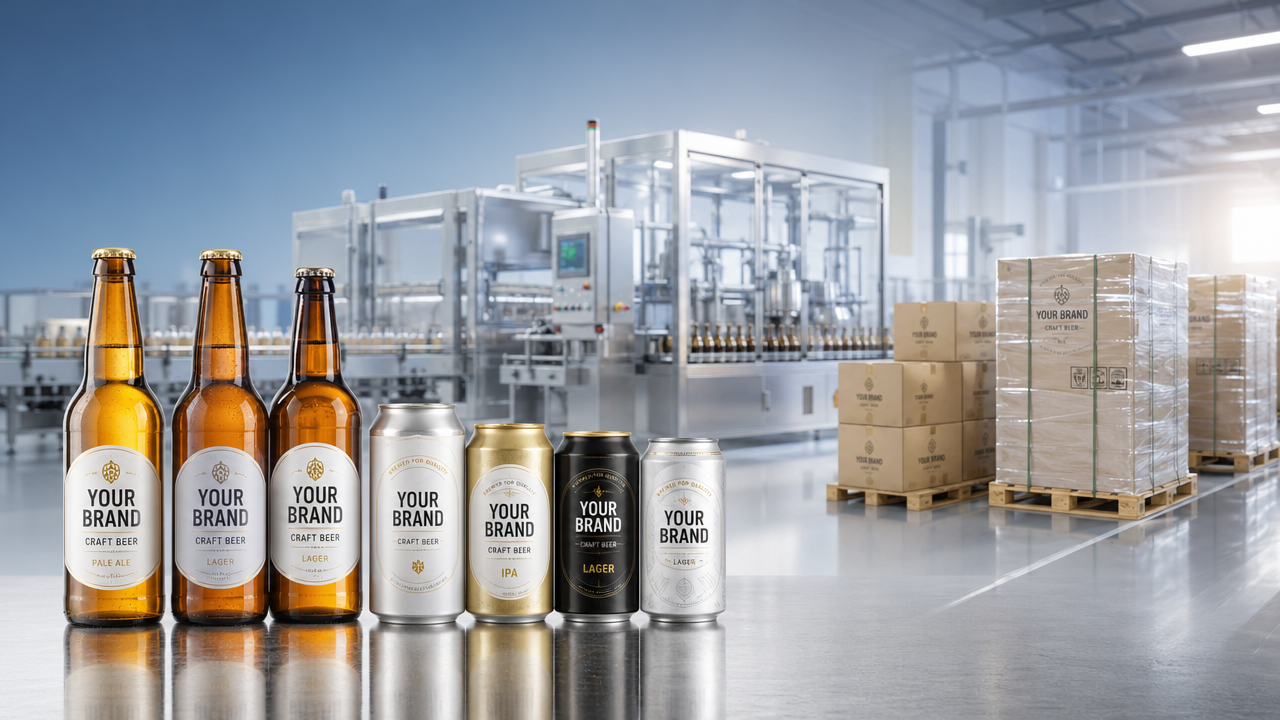
Private label beer production can unlock fast market entry, but delays in contract brewing often disrupt launches, retail schedules and distributor plans. As a private label beer manufacturer and beer manufacturer China partner, Jinpai Beer helps buyers reduce risk through recipe development, full-service brewing and export-ready coordination. This guide explains how to avoid common bottlenecks when working with a Chinese beer factory or brewery outsourcing partner.
For procurement teams, business decision-makers, importers, distributors, and retail buyers, time is not just a planning issue. A delay of 2 to 6 weeks can affect shelf booking, promotional campaigns, seasonal launches, and cash flow. In beer, where packaging lead time, formula confirmation, and export documents must all align, small mistakes early in the process often create larger problems later.
Jinpai Beer develops and produces craft beer across multiple categories, including classic lager, German wheat, sugar-free low-calorie beer, fruit beer, and functional specialty beer. With OEM/ODM support, wholesale supply, and customized product solutions, the company serves restaurants, bars, supermarkets, and multi-channel retail markets worldwide. The key to avoiding delays is not only brewing capacity, but also disciplined project management from concept to shipment.
Where Private Label Beer Production Delays Usually Start
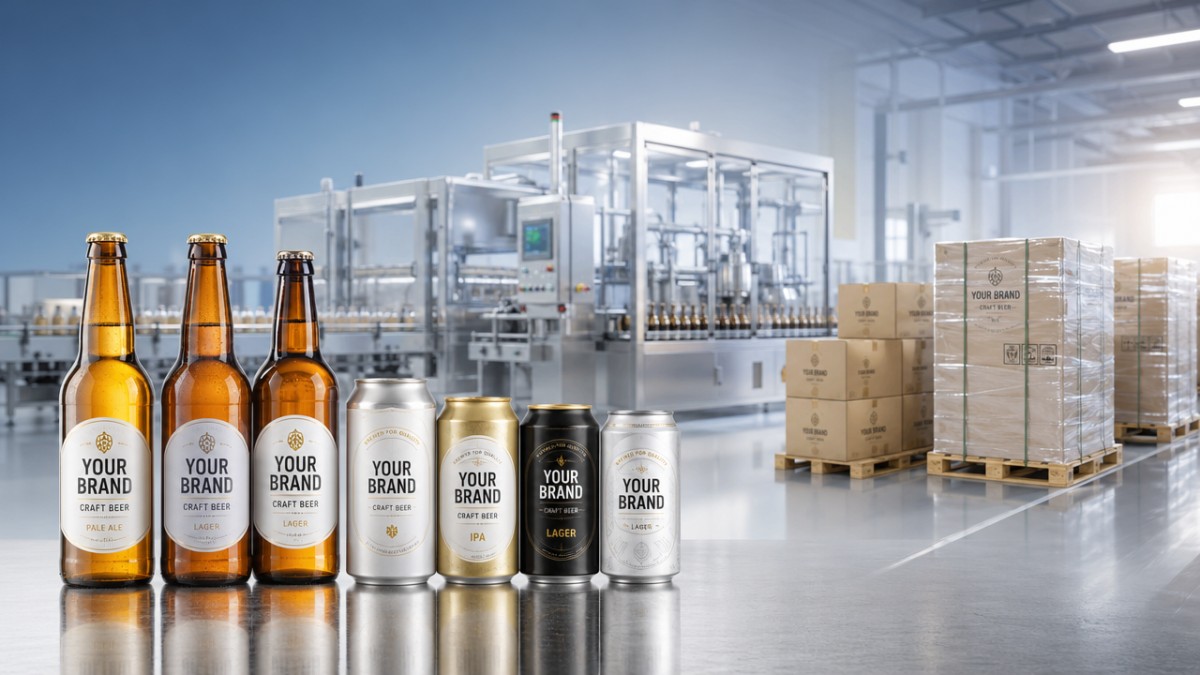
Many buyers assume delays happen only at the filling or shipping stage, but the first bottleneck often appears much earlier. In private label beer production, the most common delay points are recipe approval, packaging artwork revision, raw material scheduling, can or bottle procurement, and label compliance review for the target market. If one of these steps slips by even 3 to 5 days, the entire timeline may move.
A Chinese beer factory working on OEM or ODM orders usually handles multiple SKUs across several customers at the same time. That means planning windows matter. If a buyer confirms flavor direction late, changes ABV targets after pilot sampling, or requests new packaging dimensions after materials are ordered, production queues can no longer stay stable. This is especially true for custom beer projects with 2 or more packaging formats.
Another risk comes from unclear ownership of each task. Some buyers expect the brewery outsourcing partner to handle formula, compliance text, carton mark, and shipping marks without providing final confirmation. Others assume their sourcing team already completed those checks. When roles are not defined in the first 7 days of the project, back-and-forth revisions often consume 1 to 3 extra weeks.
Lead time risk also rises when buyers choose highly customized products. A standard lager in common can sizes is usually faster to arrange than a special fruit-flavored beer with custom sleeve design, secondary packaging, and promotional inserts. More customization can improve market differentiation, but it should be balanced against launch timing, MOQ, and material lead times.
Five early-stage causes of delay
- Late confirmation of recipe profile, bitterness, color, or alcohol range.
- Repeated packaging artwork changes after supplier ordering has started.
- Unclear target market regulations for language, ingredient list, or date coding.
- Mismatch between MOQ and actual launch quantity, forcing schedule changes.
- Insufficient buffer time for sample review, especially with international shipping.
The table below shows the most frequent delay points in contract beer manufacturing and the typical business effect on launch timing.
The main lesson is simple: most delays are not caused by one dramatic error. They are caused by small unconfirmed details that accumulate across a 4-step to 8-step supply chain. Buyers who control early-stage decisions more tightly usually gain a more predictable launch schedule.
How to Build a Realistic Production Timeline with a Beer Manufacturer China Partner
A realistic timeline should begin with the end market date, then work backward. If your retail launch is planned for week 12, you should not start talking to a brewery in week 8. In most private label beer programs, a practical cycle can range from 30 to 75 days depending on recipe complexity, packaging type, and shipping destination. Projects with custom cans, multiple flavors, or export-specific labels need more margin.
A standard process often includes 5 stages: product brief, sample development, packaging confirmation, mass production, and export shipment. Buyers should define approval deadlines inside each stage. For example, if sample feedback is not returned within 72 hours, the schedule should automatically be updated. This creates discipline on both the buyer and manufacturer side.
For procurement managers, the most useful planning method is to separate fixed lead times from variable lead times. Fixed items may include brewing cycle, fermentation period, and document preparation. Variable items often include artwork revision rounds, packaging sourcing, and label adaptation for local rules. Knowing this difference helps teams understand which delays are controllable and which are process-based.
A collaborative producer can also recommend lower-risk alternatives. If a requested bottle format takes too long to source, switching to a common can format may save 7 to 12 days. If the product concept is urgent, starting with one flagship SKU and adding more variants in the second batch can protect the first launch while keeping brand expansion open.
Recommended timeline checkpoints
- Day 1–3: Confirm target market, product style, package format, and quantity forecast.
- Day 4–10: Complete recipe discussion and sample arrangement.
- Day 11–18: Finalize artwork, barcodes, carton marks, and compliance text.
- Day 19–40: Brew, ferment, filter if needed, and prepare packaging materials.
- Day 41–60+: Fill, inspect, pack, document, and arrange shipment.
The timeline below gives a practical view of how different beer projects may vary in planning requirements.
This planning model is especially useful for distributors and agents that need to align stock arrival with market campaigns. A disciplined schedule is often more valuable than trying to compress every step at once.
Choosing the Right OEM/ODM Beer Factory to Reduce Risk
Not every beer producer is equally prepared for private label work. Some breweries are strong in brewing but weak in packaging coordination. Others can supply standard SKUs but struggle with documentation, export handling, or flavor customization. Buyers should evaluate whether the factory can manage at least 4 operational areas: product development, packaging execution, production scheduling, and shipping support.
For B2B buyers, response quality during the first 5 to 10 business days is often a reliable indicator. A capable partner should ask about target country, alcohol range, package specification, expected MOQ, channel positioning, and launch timing. If the conversation stays too general and no operational details are discussed, delays are more likely later because the project foundation is weak.
Product range also matters. A brewery that can produce lager, wheat beer, low-calorie beer, fruit-flavored beer, and specialty concepts gives buyers more room to build a portfolio under one supplier system. This lowers communication friction and can simplify repeat orders. For example, buyers exploring premium wheat-style positioning may consider products such as Whole wheat lager Beer when evaluating flavor diversity and shelf strategy.
The factory should also be honest about what is standard and what is customized. A realistic supplier will tell you whether a request needs 1 sample round or 3 rounds, whether materials must be specially ordered, and whether the shipping window depends on final document approval. Transparency reduces misunderstanding and builds a healthier purchasing decision.
Key selection criteria for procurement teams
Operational evaluation points
- Can the supplier support both OEM and ODM workflows, including recipe development and packaging adaptation?
- Does the team provide clear lead time ranges, such as 30–45 days for standard orders and 45–60 days for custom projects?
- Can they coordinate export-ready documents, labeling details, and shipping communication for global channels?
- Do they offer product categories suitable for multiple retail scenarios such as bars, restaurants, supermarkets, and e-commerce?
- Are MOQ expectations, sample cycles, and revision limits explained before order confirmation?
When these questions are answered early, buyers can compare suppliers on execution rather than price alone. In many cases, a slightly higher unit cost may still be the better choice if it reduces the risk of a missed launch window.
Packaging, Compliance, and Logistics: The Three Areas That Commonly Slow Shipment
Even after brewing is completed, a private label beer project can still be delayed by packaging mistakes, market compliance gaps, or shipment booking issues. These three areas are closely connected. A label correction may require carton updates; a carton update may change packing details; and changed packing details may affect booking data. That is why experienced beer exporters treat final packaging review as a control point, not a design afterthought.
Packaging risk is especially high when buyers use custom can sleeves, gift boxes, mixed packs, or promotional inserts. Every added component introduces another supplier, another approval step, and another chance for mismatch. If your timeline is tight, using 1 primary retail pack first and postponing value-added formats to batch 2 is often safer than launching everything at once.
Compliance should be reviewed before mass printing starts. Core checks typically include ingredient naming, alcohol declaration, net content format, production date coding method, importer information, and local language requirements. A correction discovered after 5,000 to 20,000 labels are printed can lead to direct waste plus at least several days of schedule disruption.
Logistics planning also matters more than many first-time importers expect. Vessel space, destination congestion, and document timing can all affect arrival. If the order is linked to a holiday season or a retail promotion, leave a 7 to 14 day buffer beyond the normal shipping estimate. This is a practical safeguard, not an overly cautious one.
A simple shipment-readiness checklist
Buyers who treat packaging, compliance, and logistics as one integrated process usually face fewer surprises. This is where a coordinated brewery outsourcing partner adds value beyond brewing itself.
Practical Purchasing Strategies to Keep Beer Projects on Schedule
The best delay-prevention strategy is to simplify decision flow. Start with one clear brief that includes beer style, target channel, expected retail position, pack format, forecast quantity, and desired launch month. If the manufacturer receives fragmented requests across several emails and messaging threads, misunderstanding becomes more likely. A structured brief can save multiple revision rounds.
Buyers should also distinguish between must-have requirements and optional upgrades. For instance, if entering a new market quickly is the priority, choose standard packaging, 1 or 2 core SKUs, and a flavor profile with lower development complexity. Once sales data comes in after the first 60 to 90 days, the brand can expand with seasonal variants, fruit blends, or specialty formats.
Communication cadence matters. For active projects, a weekly update is often the minimum. During sample approval, artwork finalization, or pre-shipment stages, 2 updates per week may be more effective. Fast decisions shorten idle time, especially when teams are working across time zones. In long international supply chains, delay often comes from waiting, not from manufacturing itself.
A diversified product roadmap can also support channel growth. For example, buyers may launch a standard lager first, then add wheat-style options such as Whole wheat lager Beer for restaurants or premium retail. Building this roadmap in phases helps maintain schedule control while still creating room for differentiation.
FAQ for private label beer buyers
How long does private label beer production usually take?
For standard projects, 30 to 45 days is a workable range. For custom formulas, multiple SKUs, or special packaging, 45 to 75 days is more realistic. International shipping time is additional and should be planned separately.
What should importers confirm before placing an OEM beer order?
At minimum, confirm beer style, alcohol range, package format, quantity, target market label rules, carton specification, and launch deadline. These 6 points affect almost every downstream step.
Is lower MOQ always better for a first order?
Not always. A very low MOQ may limit packaging options or increase unit cost. Buyers should compare MOQ with expected sell-through, launch timing, and channel coverage rather than viewing MOQ as the only decision metric.
What is the most common mistake in beer private label launches?
The most common mistake is approving the concept but not locking the details. Recipe, artwork, compliance text, and packing spec all need final sign-off. Without that discipline, projects can drift and delay the shipment window.
Avoiding delays in private label beer production depends on early planning, realistic lead times, disciplined approvals, and a manufacturing partner that can coordinate brewing, packaging, and export execution together. Jinpai Beer supports buyers with craft beer R&D, OEM/ODM production, wholesale supply, and customized solutions across classic and emerging beer categories. If you are preparing a new launch, expanding distribution, or comparing brewery outsourcing options, contact us now to get a tailored plan, discuss product details, and explore a schedule that fits your market goals.
Thank you very much for writing to us. Please leave your message and contact information, we will reply to you within 24 hours.