



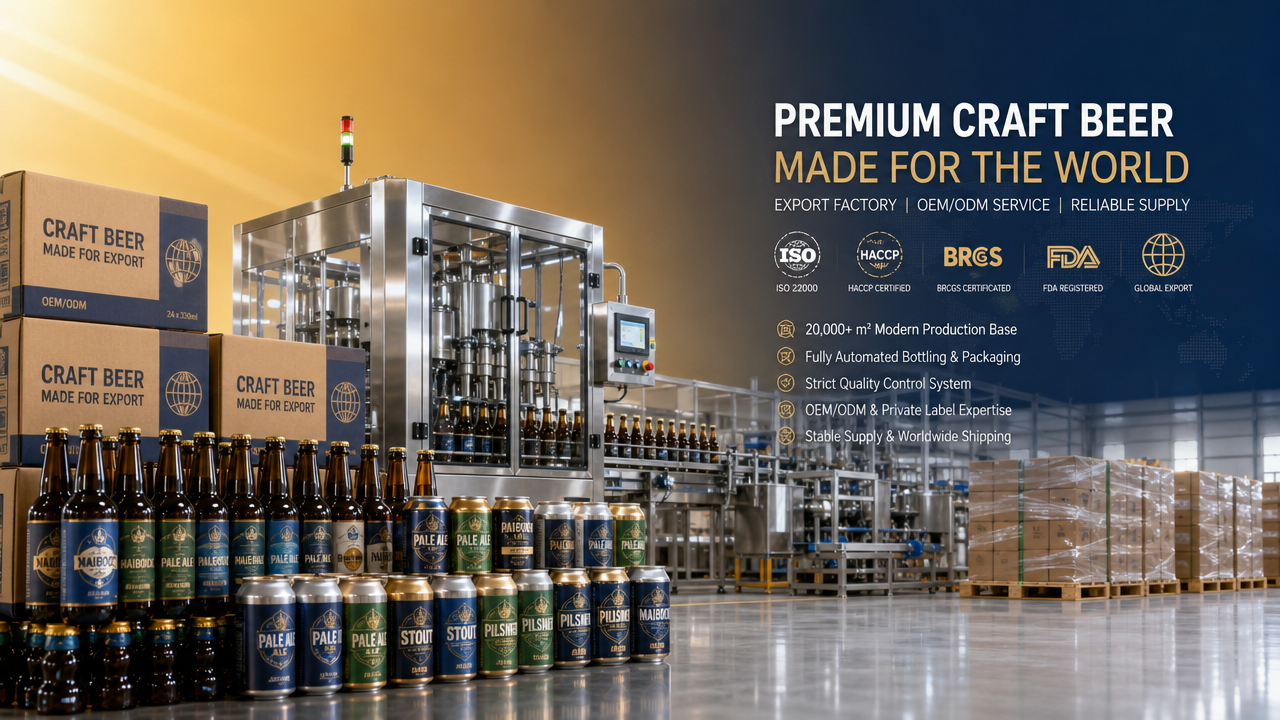
In 2026, choosing a brewery with export license is no longer optional for brands, distributors and buyers seeking stable global supply. A qualified Chinese beer factory or beer manufacturer China can simplify compliance, protect delivery timelines and support scalable growth through beer OEM, contract brewing and private label beer production. For supermarkets, bars and retail channels, the right partner means safer sourcing, stronger market access and more competitive beer products.
Why an Export License Matters More Than Ever in 2026
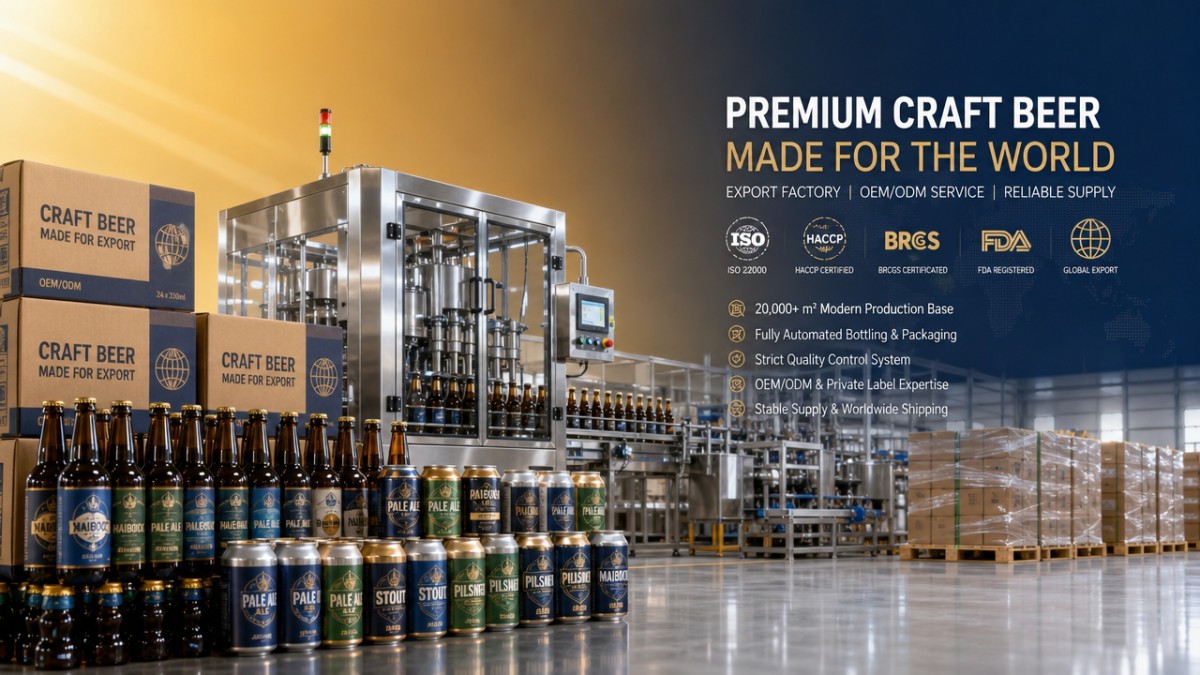
For buyers, the short answer is simple: a brewery with export license reduces risk. It is one of the clearest signs that a supplier is prepared for international trade, not just domestic production. In 2026, when import rules, documentation checks, labeling standards and cross-border traceability are becoming stricter in many markets, this matters much more than it did a few years ago.
If you are sourcing from a Chinese beer factory, the export license is not just a formal certificate. It often reflects whether the brewery can legally and efficiently handle overseas shipments, customs paperwork, product compliance coordination and long-term supply obligations. Without that capability, even a brewery with good beer may become a weak supply partner.
For procurement teams, distributors and business decision-makers, the real question is not “Can this brewery make beer?” but “Can this brewery deliver compliant beer to my market consistently, safely and on schedule?” That is why the export license has become a practical decision factor rather than a box-ticking exercise.
What Buyers Are Actually Worried About When Choosing a Beer Supplier
Most professional buyers are not searching for theory. They want to avoid costly mistakes. In real sourcing situations, the biggest concerns usually include:
- Whether the brewery can legally export to the destination market
- Whether customs clearance will be smooth and document-ready
- Whether product quality remains stable across batches
- Whether lead times are reliable during peak seasons
- Whether OEM or private label projects can be handled professionally
- Whether packaging, labeling and formula customization meet local regulations
- Whether the supplier can support growth beyond the first order
For distributors and agents, another concern is brand protection. If a brewery cannot support proper export processes, market claims, trademark use, packaging adaptation and repeat supply, the distributor takes on extra operational and legal pressure. For supermarkets, bars and retail chains, inconsistency in stock or documentation can quickly become a commercial problem.
How a Brewery With Export License Creates Business Value
A licensed exporter does more than ship products abroad. It can improve the economics and predictability of your business.
1. Lower compliance risk
A brewery with export capability is generally better positioned to prepare core shipping and trade documents accurately. This lowers the chance of customs delays, shipment rejection or costly corrections.
2. More reliable delivery planning
When a supplier understands export procedures, it can better coordinate production, loading, inspection and departure schedules. That matters for promotions, seasonal demand and launch calendars.
3. Better support for OEM/ODM projects
If you need beer OEM, contract brewing or private label beer production, export readiness often goes hand in hand with stronger packaging coordination, specification management and international communication.
4. Easier market expansion
A qualified beer manufacturer China can help buyers test multiple channels, from supermarkets and restaurants to online sales and specialty retail. That flexibility supports faster expansion with less operational friction.
5. Stronger long-term supply confidence
A brewery that has already invested in export qualification is usually more serious about standardization, traceability and long-term cooperation. That is especially important for enterprise buyers who want dependable growth partners rather than one-off factories.
What to Check Before You Sign With a Chinese Beer Factory
Not every supplier that claims export experience is equally capable. Buyers should verify practical points, not just marketing claims.
Export documentation capability
Ask what documents the brewery can provide for your market and whether it has handled similar destinations before.
Production and quality control
Review brewing standards, raw material control, batch consistency and shelf-life management. A brewery serving global channels should be able to explain its quality process clearly.
Packaging adaptability
Check whether the factory can support can, bottle, carton and display packaging formats suited to your sales channels. This is especially important for retail and supermarket distribution.
Customization capacity
If you are building a differentiated portfolio, ask about flavor development, alcohol level adjustment, label design support and category innovation. For example, growing demand in some markets has increased interest in products such as Sugar-Free Low-Calorie Beer, which can help buyers target health-conscious consumers.
Order scale flexibility
A good partner should be able to support both trial orders and scaled production as your market develops.
Communication and service response
Fast, clear and commercially aware communication is often a strong sign of how smooth the actual project will be.
Why This Matters for Different Types of Buyers
For procurement managers
Your priority is reducing supply risk while maintaining price competitiveness. A brewery with export license helps you build a more controllable sourcing process and reduces hidden downstream issues.
For business decision-makers
Your focus is return on investment, market scalability and brand stability. Choosing the right export-ready brewery supports faster market entry, fewer disruptions and stronger long-term margin protection.
For distributors, agents and wholesalers
You need products that can move through customs, arrive on time and fit local channel demand. A capable Chinese beer factory makes it easier to launch and sustain market growth.
For end consumers and retail buyers
While consumers may not ask directly about export licenses, they benefit from what it represents: safer, more stable supply and more professionally managed products. This also enables greater variety, including classic lager, wheat beer, fruit beer and modern functional options.
How Jinpai Beer Supports Global Buyers in 2026
For companies looking for a beer manufacturer China that can serve multiple channel needs, Jinpai Beer offers a broad product portfolio and flexible cooperation models. The company is engaged in the R&D, production and distribution of craft beer, covering classic lager, German wheat, sugar-free low-calorie beer, fruit-flavored beer and functional specialty beers.
For importers, retailers and brand owners, this matters because product variety alone is not enough. Buyers increasingly need OEM/ODM services, wholesale supply and tailored solutions that fit local positioning, pricing strategy and packaging requirements. Jinpai Beer supports online and offline global channels and welcomes long-term cooperation with distributors, agents and partners serving restaurants, supermarkets, bars and retail networks.
This combination of manufacturing capability, product diversity and international business orientation is exactly what many buyers should be looking for in 2026. It is not only about brewing beer. It is about supplying a market-ready product through an export-capable system.
Final Takeaway: Export Qualification Is Now a Buying Standard, Not a Bonus
In 2026, working with a brewery with export license is one of the smartest ways to reduce sourcing uncertainty and improve commercial execution. For procurement teams, distributors and brand owners, it directly affects compliance, delivery reliability, customization efficiency and long-term growth potential.
When evaluating a Chinese beer factory, look beyond product samples and price lists. Check whether the supplier can truly support global trade, OEM development and channel-specific requirements. That is where the real value lies.
The right export-ready brewery does not just help you buy beer. It helps you build a more stable, scalable and competitive beer business.
Thank you very much for writing to us. Please leave your message and contact information, we will reply to you within 24 hours.