



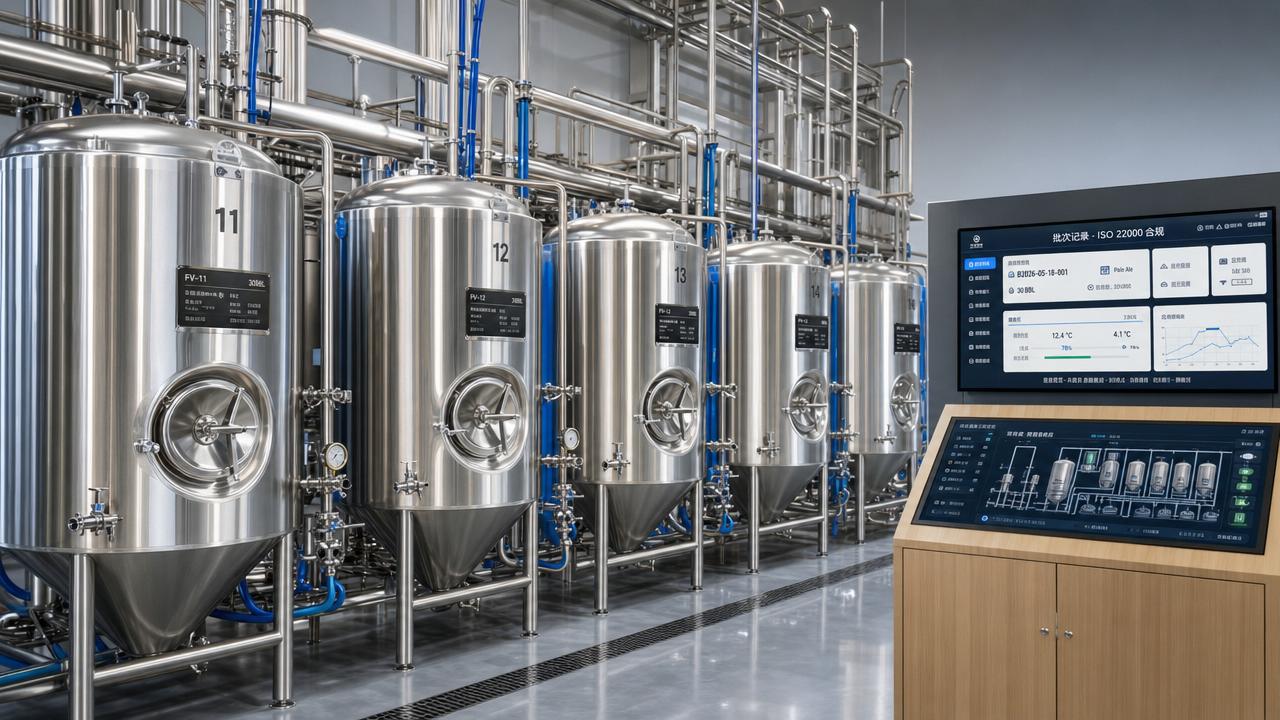
As craft brewery operators navigate unprecedented growth and complexity in 2026, strategic decisions around facility expansion, production scalability, and evolving regulatory compliance are no longer optional—they’re mission-critical. This report unpacks key spatial, operational, and policy-driven trends reshaping the global craft brewery landscape, with actionable insights for decision-makers evaluating capacity upgrades, market entry, or partnership models. For Jinpai Beer—a full-service craft brewery partner offering OEM/ODM, functional formulations, and omnichannel distribution—these shifts present both challenges and high-potential opportunities to scale intelligently and sustainably.
Why Spatial and Regulatory Intelligence Drives Craft Brewery Resilience
The craft brewery sector is transitioning from hyper-local experimentation to globally coordinated scaling. In 2026, over 68% of new craft brewery expansions involve cross-border supply chain integration—not just export—but co-manufacturing, shared warehousing, and regulatory harmonization across EU, ASEAN, and LATAM markets. Facility footprint now correlates more strongly with compliance readiness than brewing volume alone. Space planning must anticipate not only fermentation capacity but also label localization, allergen traceability systems, and real-time excise duty reporting infrastructure.
Core Expansion Checklist: Space, Scale & Compliance (2026 Edition)
- Evaluate zoning overlays for mixed-use industrial-commercial districts—many 2026 municipal approvals now require integrated taproom + logistics access within 500 meters of public transit hubs.
- Design modular brewhouse layouts with standardized 30-barrel base units that support rapid reconfiguration between classic lager, German wheat, and low-calorie fruit-beer production lines.
- Integrate digital batch records compliant with ISO 22000:2024 and EU Regulation (EU) 2023/915—mandatory for all craft breweries exporting to Europe as of January 2026.
- Allocate ≥12% of total floor area to cold-chain staging zones, including temperature-mapped storage for functional specialty beers requiring ≤4°C stability during distribution handoff.
- Pre-certify water reclamation systems under local wastewater discharge ordinances—new craft brewery permits in California, Germany, and South Korea now require ≥40% process water reuse by default.
- Embed multilingual labeling automation into packaging lines, supporting dynamic print of EU allergen declarations, US TTB nutritional panels, and APAC functional-claim disclaimers in a single pass.
- Secure third-party audit readiness for BRCGS Packaging Materials certification—required for all OEM partners supplying retail chains in Australia, Canada, and the UK.
Scenario-Specific Implications
For breweries pursuing OEM/ODM partnerships like Jinpai Beer’s model, expansion must prioritize formulation agility—not just volume. A sugar-free low-calorie variant may require separate glycol chillers, dedicated yeast propagation vessels, and non-stick stainless surfaces to prevent carryover contamination. Scaling fruit-flavored beer lines demands adjacent puree cold storage, UV-C sanitation on filler nozzles, and pH-buffered CIP cycles—all distinct from traditional lager infrastructure.
In omnichannel distribution contexts, expansion planning shifts from “warehouse square footage” to “channel-specific fulfillment velocity.” Supermarket SKUs need palletized, shelf-ready cartons with scannable GTIN-14 barcodes; bar channel orders require break-pack flexibility and chilled last-mile dispatch integration. Jinpai Beer’s dual-channel infrastructure—supporting both bulk keg logistics and direct-to-consumer insulated shipping—exemplifies the hybrid footprint now becoming standard.
Commonly Overlooked Risks in 2026 Expansion Plans
Many operators underestimate excise tax digitization mandates. As of Q1 2026, 23 national revenue authorities—including Brazil’s Receita Federal and Japan’s NTA—require real-time electronic excise filing tied directly to production batch logs. Retrofitting legacy SCADA systems often adds 11–14 weeks to project timelines.
Another frequent gap: sensory stability validation for functional ingredients. Beers containing added vitamins, adaptogens, or botanical extracts must now undergo accelerated shelf-life testing per AOAC 2025.01 protocols—not just microbiological safety—to claim functional benefits in regulated markets.
Finally, workforce certification lag poses silent bottlenecks. New EU Regulation (EU) 2025/112 mandates certified food safety supervisors on-site during all packaging operations for craft breweries exceeding €2M annual turnover—a requirement rarely accounted for in staffing projections.
Actionable Execution Steps
- Conduct a jurisdictional mapping exercise before site selection—overlay municipal zoning, national excise rules, and regional cold-chain density data.
- Engage a cross-functional team (brewing, QA, regulatory affairs, logistics) in a 3-day facility design sprint using Jinpai Beer’s OEM scalability framework as benchmark.
- Validate all proposed equipment vendors against ISO 14644-1 Class 7 cleanroom compatibility for functional ingredient handling zones.
- Integrate TTB, HMRC, and ASEAN Common Technical Dossier templates into your ERP system prior to first production run.
Conclusion & Next Steps
Craft brewery expansion in 2026 is no longer defined by tank count—it’s measured by regulatory fluency, spatial intelligence, and formulation versatility. Operators who treat space, scale, and compliance as interdependent variables—not sequential phases—gain decisive advantage in speed-to-market, cost control, and partner trust.
Jinpai Beer supports this evolution through turnkey OEM/ODM services grounded in globally aligned quality systems, functional R&D capabilities, and proven omnichannel fulfillment architecture. Whether scaling a sugar-free lager line for Southeast Asian supermarkets or launching a botanical IPA series for EU specialty bars, Jinpai Beer delivers certified production capacity without capital lock-in.
Begin your 2026 expansion assessment today: request Jinpai Beer’s free Craft Brewery Regulatory Readiness Scorecard and facility scalability audit template—designed specifically for craft breweries targeting multi-market growth.
Thank you very much for writing to us. Please leave your message and contact information, we will reply to you within 24 hours.